1

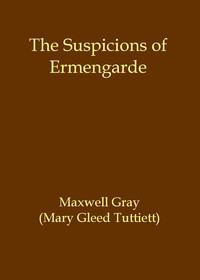
The suspicions of Ermengarde — A Reader’s Guide
(0 User reviews)
777
Project Gutenberg
2024
Not confirmed
Humorous stories; British -- France -- Fiction; Spouses -- Fiction; Riviera (France) -- Fiction
Readers of public-domain and historical texts
Project Gutenberg digital edition
en
Edition facts
Words
100,686
Reading time
438 min
Text sections
9
This digital edition of The suspicions of Ermengarde — A Reader’s Guide is described by source-level measurements including 100,686 words, 7 hr 18 min estimated reading time, and 9 detected text sections.
The text analysis averages about 23.6 words per sentence, while the detected sections provide another way to judge how the source is divided.
Project Gutenberg metadata also associates the work with “Humorous stories,” connecting these edition facts with the source record’s subject description.
Source:
Project Gutenberg record #72999
Maxwell Gray's 1908 novel follows Ermengarde, a British wife in France, whose suspicions about a mysterious woman and a sapphire necklace drive a comedy of misunderstandings, set against the Riviera's casinos and carnival.
Editorial Edition Score
4.8/5
★★★★★
★★★★★
Calculated from edition completeness, EPUB availability, text structure and catalogue metadata. Not a user rating.
How this score is calculated
- Description quality20 pts
- Title & short description10 pts
- Source metadata20 pts
- Text length15 pts
- Chapters / structure15 pts
- EPUB file integrity20 pts
Total of 100 points, scaled to a 2.5-5.0 range. Editions with an empty description or a missing EPUB file are not scored.
Edition quality
Read the Text
I. THE LITTLE RIFT II. AN INNOCENT VERY MUCH ABROAD III. THE TRAIN DE LUXE IV. THE AZURE SHORE V. ON THE RIDGE VI. MOUNTAIN SUNSET VII. THE CONVENT STEPS VIII. THE CARNIVAL IX. THE CASINO X. THE CASINO GARDENS XI. KATZENJAMMER XII. M. ISIDORE'S HEARTACHE XIII. THE PUBLISHER'S PARCEL XIV. AT TURBIA XV. AN ITALIAN LESSON XVI. THE SAPPHIRE NECKLACE XVII. THE PROMENADE DU MIDI XVIII. THE ONLY HOPE XIX. AN ACT OF JUSTICE XX. THE NECKLACE AGAIN XXI. CONNEXIONS BY MARRIAGE
The Suspicions of Ermengarde
Fog of the colour known as pea-soup--in reality amber mixed with lemon-peel and delicately tinted with smut--pervaded the genial shades of Kensington Gardens and cast a halo of breathless romance over many a "long, unlovely street" and many a towering pile of crudely hideous flats in the regions round about. It sneaked down chimneys, stalked insolently through front doors, regardless of locks, curtains and screens; it wandered noiselessly about houses, penetrating even to my lady's chamber; it permeated cosy drawing-rooms and snug dining-rooms with gloom like that of an ancestral ghost, or an unforgettable sorrow, or--the haunting horror of unpaid bills.
"Yes, _that_ is the true, the inevitable simile, the fitting word," Ermengarde said to herself with melancholy triumph, from her downy nest in the deep warm Chesterfield by the fire, "the haunting horror of unpaid bills. 'Haunting horror' is good. And it's not so much the unpaidness of the bills as the size of them--and the kind of them. The butcher's bill, for instance--how _enormous_--and yet Arthur takes it as coolly as the collection in church, or the waiter's tip, that just means a finger slipped into a waistcoat pocket and out again, without even looking. When one thinks of the lovely things one might buy with the butcher's quarterly bill and can't!"
Looking up at the ceiling as if in ecstatic vision of lovely things, she sighed deeply, and wished that man was not carnivorous, and wondered why the world went so thwartingly, and what was the matter with everything, and if civilization was worth that last, worst penalty of a real London fog--an ideally high and gamey one like this, that you might smell all the way across Dover Straits--as least, so Arthur once averred of a fog of less powerful bouquet.
All of a sudden, out of the hidden heart of darkness, whence those heavy fog-folds rolled, came, on the wings of some evil spirit of the nether pit, the deadly thought--was Arthur worth--worth what? the pains and penalties of wedded bliss? Poor old Arthur! No, no, that was unthinkable; the downy depths of the Chesterfield suddenly became void of the resting form; there was quick pacing to and fro in fire-gleam and shadow, with knitted brow and troubled glance.
The Demon Influenza was to blame for much, for everything--yes, everything, even that little rift within the lute of household joy and peace. For the little rift was there. But could the Influenza Demon be blamed for those five successive and expensive hats, that in the space of half as many weeks had to be discarded, each after either, as impossible--with her complexion--or for those two gowns, creations of a tailor of European renown, that on the second Wearing made her an absolute frump? Had the Demon so irrevocably impaired her looks and altered her figure? That was conceivable; but not Arthur's conduct on the occasion. No demon, nothing, short of original sin, could be answerable for that.
Memory flashed upon her brain a vivid picture of the Day of Judgment face with which he had contemplated those five brand-new, chic and costly hats arraigned in a row before him--the man had actually disinterred them from various dark recesses in wardrobes--and, instead of offering the balm of sympathy demanded by this five-fold affliction, had snapped out the curt, harsh condemnation, "Could any allowance stand that?" and walked off in wrath and gloom.
It was not as if she had complained of the allowance or ever so remotely suggested its augmentation by a penny. She had simply fled for succour in a crisis of ill-fortune to the one being on earth from whom she had a right to expect it--in the form of hard cash; she had asked the bread of sympathy and received the stone of condemnation--damnation, she muttered bitterly--from the man who--a sob checked the current of reflection, but was gulped down.--And he should have remembered that the Flu Demon had left her weak and depressed, a condition liable to be greatly aggravated by unbecoming hats.
Maxwell Gray opens The Suspicions of Ermengarde with a London fog so thick it becomes a character, described as 'amber mixed with lemon-peel and delicately tinted with smut.' This atmospheric detail immediately establishes the narrator's ironic voice, as Ermengarde muses on unpaid bills and the 'haunting horror' of domestic finances. The catalog subjects list 'Humorous stories' and 'Spouses — Fiction,' and the opening chapter indeed presents a marriage strained by money, with Arthur's casual dismissal of the butcher's bill contrasting Ermengarde's fretful materialism. Yet the humor is dry and self-aware: Ermengarde's internal monologue treats her own complaints as a kind of performance.
A Riviera of Misread Signals
The setting shifts to the French Riviera, where Ermengarde's suspicions intensify. The catalog subject 'Riviera (France) — Fiction' is accurate, but the excerpts show the location is not merely scenic. Ermengarde writes to her husband about a 'woman of mystery' and an 'elderly Russian Anarchist' who 'dogs my footsteps and glares at me through his detestable goggles.' The comedy arises from her melodramatic interpretation of ordinary encounters: she considers consulting the British Consul or the French police about a woman who merely tried to sell jewels. The narrator's tone undercuts her alarm, noting that the 'poor suspected woman' in the next room tosses sleeplessly, worried about money. Gray uses the Riviera's glamour—moonlit olive-groves, a 'broad, bright path of sea'—as a backdrop for domestic farce, not adventure.
The Thin Man and the Woman of Mystery
A recurring figure is 'the thin man,' Mr. Welbourne, whose indifference to Ermengarde's suspicions frustrates her. The excerpts reveal his perspective: he finds Miss Somers 'a young lady of singular charm' with 'intelligence of a high order' and a complexion of 'morbidezza.' Ermengarde reflects that 'in the sight of men of that age, beauty can do no wrong.' This observation ties to the catalog subject 'British — France — Fiction,' as the characters carry British social codes into a foreign setting. The thin man's behavior—fleeing from the 'coral-lipped, dewy-eyed' Miss Boundrish but tamed by the woman of mystery—suggests a subplot of romantic misperception. Gray builds comedy from Ermengarde's inability to read others' motives, while the reader sees the thin man's genuine attraction.
A Carnival Chain and a Plan to Sell
Ermengarde's scheme to sell a pearl-and-diamond chain thrown to her at the Carnival drives the plot forward. The excerpts show her reasoning: 'It was certainly hers, and quite as certainly she would never wear the thing.' She recalls a similar necklace at Spink's and imagines a substantial sum. This moment crystallizes the novel's blend of humor and suspense: Ermengarde's practical solution to her financial woes is also a potential source of scandal, given the chain's dubious origin. The catalog subject 'Spouses — Fiction' is relevant here, as she writes to her husband omitting nothing—'the sudden irruption of improvised aunts at Monte Carlo, or the dark intriguings'—yet her letter reveals more about her own naivety than any real intrigue. The narrator's wry tone persists: 'With this comfortable thought she folded her letter and went to bed.'
Readers should note that the excerpts cover only the first half of the novel, ending before the resolution of the necklace plot. Gray's style rewards attention to small details—the fog's color, the thin man's hiding behind a piano, Ermengarde's theatrical self-regard. The humor depends on the gap between what Ermengarde believes and what the narrator implies. Those expecting a straightforward adventure may be surprised by the domestic comedy; those seeking a satire of British expatriates will find ample material in the Riviera's social games.
There’s a certain warmth in misunderstandings, even the comedic ones, that lingers after the final page—Ermengarde’s Riviera confusion felt almost like a private smile. That same gentle, human muddle seemed to echo, oddly, when I later drifted through The 'Scots Brigade,' and other tales — Inside the Classic. Different landscapes, similar quiet puzzles of identity and place. I found myself thinking of her long after closing either book.
There are no reviews for this eBook.
There are no comments for this eBook.
Reader reflection
Before you leave, reflect on the book
Use these questions to collect your thoughts before moving on.
Your progress
0
/
10
2
How much did you enjoy the reading experience?
3
How likely are you to recommend this book?
4
How much effort did this book require?
5
How well did it match your expectations?
6
Did it raise ideas you would like to talk about?
7
Could you follow the author’s main argument?
8
How original did the book feel?
9
What changed or sharpened your thinking?
10