1

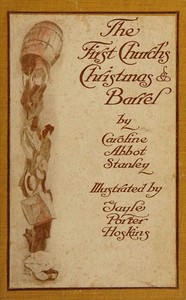
The First Church's Christmas barrel — Reading Companion
(0 User reviews)
108
Project Gutenberg
2023
Not confirmed
Christmas stories; Missionaries -- Fiction; West (U.S.) -- Fiction; Charity -- Fiction
Readers of public-domain and historical texts
Project Gutenberg digital edition
en
Edition facts
Words
10,411
Reading time
46 min
Text sections
4
For The First Church's Christmas barrel — Reading Companion, the stored edition analysis reports 10,411 words, 46 min estimated reading time, and 4 detected text sections.
The text analysis averages about 15.3 words per sentence, while the detected sections provide another way to judge how the source is divided.
Project Gutenberg metadata also associates the work with “Christmas stories,” connecting these edition facts with the source record’s subject description.
Source:
Project Gutenberg record #70294
A missionary barrel sent from a wealthy church to a Wyoming plains parsonage sparks a crisis of conscience when the recipients find it filled with cast-offs, leading to a pointed exchange of biblical texts and a reckoning with unpaid salary.
Editorial Edition Score
4.5/5
★★★★★
★★★★★
Calculated from edition completeness, EPUB availability, text structure and catalogue metadata. Not a user rating.
How this score is calculated
- Description quality20 pts
- Title & short description10 pts
- Source metadata20 pts
- Text length15 pts
- Chapters / structure15 pts
- EPUB file integrity20 pts
Total of 100 points, scaled to a 2.5-5.0 range. Editions with an empty description or a missing EPUB file are not scored.
Edition quality
Read the Text
barrel. “Aren’t these potatoes good, John? So mealy one hardly needs butter. Lucky thing, too! You didn’t know I skimped the family out of a pound of butter, did you? Yes, sir, it went into the candy money.” She meant it as a pleasantry, but somehow it failed, and she hurried on. “I wish there were more of the potatoes. Those boys do eat so! But never mind! After Christmas the hens will begin. Funny how hens can tell the time of the year, isn’t it?” She chattered on about anything and everything except the draft.
“This certainly is comfort,” he said at last, relaxing under the genial influence of food and warmth and companionship. “That’s a cold stretch coming out from town.”
“Didn’t you stop anywhere?”
“Yes. At Joe Henderson’s. Mary--his wife died!”
“Yes. Died last night. I never felt so sorry for anybody in my life. They think the baby will live; and the poor fellow doesn’t know what to do with it nor where to turn.”
“Oh, John! If only our cow weren’t going dry I would----”
“You shouldn’t do it, anyway,” he said savagely. “You have enough care now for three women!--Mary, the draft didn’t come.”
“I know,” she said quietly. “But, John, we’ll get along some way. It can’t last forever. The draft may come next week. And I was joking about the potatoes. We’ve a lot left.”
“It isn’t just the money,” he said, shaking his head despondently; “it’s the feeling of aloneness in the work. If I felt that the church back of us was doing all it could, it would not be so hard--this ‘hope deferred that maketh the heart sick.’ But sometimes I think--they don’t care.”
“They do, John--they do! Don’t allow yourself to think that. Why, look at this barrel! I know this is from some missionary society, and would any church send us this unless they knew about our work and were thinking of us? Why, of course not! Tell me about the barrel.”
“Well, I went to the post-office the first thing to get the draft. I found instead a letter from this First Church, saying they had sent us a barrel. I went over to the freight office and there it was. I didn’t have enough--”
“How providential that it came before Christmas!” she interrupted. “I’m crazy to see what’s in it! Aren’t you?”
He did not answer the question directly, being far from feeling her jubilance about it. “We’ll open it after a while,” he said evasively. In his heart he was protesting, “No! I don’t want their barrel! I want my money!”
“But not until the children are off. There will be Christmas things in it that they mustn’t see.... You got the candy, John? But of course you did.”
Her question was unanswered, but she did not notice it.
“Now I really think the animals will have to come in,” she said gayly. “You can be trainer for an hour while this keeper clears up the dishes.”
And with a whoop they were upon him--lion, tiger, kangaroo, and baby bear.
When the children were asleep they brought out the barrel--“our charity box,” the minister called it, half bitterly.
“I can’t help it, John. It may show an impoverished state of the blood--or of the spirit, I don’t know which--but when I think of all the things these children need I am glad of this box. I _am_--‘charity’ though you call it! I am almost sorry you spent the money for candy, for of course there will be a lot of it in here. Well, they will have enough for once in their lives! And they are so starved for candy.”
Again he started to speak, but she swept on in full tide of happy talk:
The story opens on the Wyoming plains, where a missionary, John Haloran, returns numbly from a cold drive to find his wife waiting with the question, “Dead, John?—or only half?” The barrel that arrives—labeled for Rev. John F. Haloran, Blue Lick, Wyoming—becomes the catalyst for a sharp comedy of manners. His wife instantly recognizes it as a “missionary barrel” and greets it with ironic cheer, but the contents soon reveal a mismatch between the donors’ intentions and the recipients’ needs.
The Barrel’s Contents as Accusation
The packing of the barrel, done during closet-clearing, yields “the lame, the halt, and the blind.” As the Halorans unpack, each item becomes a text. The wife’s response is to pin Scripture to the rejects and return the barrel. The excerpts show her using Malachi and Deuteronomy to accuse the First Church of offering “the blind for sacrifice” and oppressing the hired servant. The church’s Missionary Society, initially shocked, realizes the insult is their own doing: the barrel poorly represented them because they had given surplus, not sacrifice.
A Church Confronts Its Own Delinquency
At the church meeting, the treasurer reveals that the minister’s salary has not been paid because the congregation has not paid its pledges. A well-groomed woman asks, “What do we have a Board for if it isn’t to attend to such things?” The treasurer’s blunt reply—that the Board cannot pay what was not given—forces a silence. The women then hear a letter from Mrs. Haloran, who accepts only one item: a little half-worn suit from a mother who lost her child. That single garment, sent with a note, breaks through the church’s defenses.
The Gift That Cannot Be Returned
Mrs. Haloran’s second letter, written after “a night of self-abasement,” regrets her action but cannot recall it. The story hinges on this reversal: the barrel, meant as charity, becomes a mirror. The church’s “well bred” surface cracks under the weight of biblical texts they had never noticed. The excerpts do not reveal the final resolution, but the tension between the plains parsonage and the urban congregation is drawn with precise, ironic detail—from the stage driver’s remark about the wind to the wife’s theatrical “Hooray!”
Readers should attend to the way objects carry meaning: the barrel is both a plot device and a moral scale. The story’s brevity (under 11,000 words) rewards attention to its layered dialogue and the strategic use of Scripture. The illustrations by Gayle Porter Hoskins, referenced in the front matter, likely underscore the contrasts between Eastern comfort and Western hardship. No complete resolution is given in the excerpts, leaving the outcome of the salary dispute and the church’s response open.
I’ve often thought about that Wyoming parsonage, weighing charity against pride, and it reminds me of another quiet reckoning—one where a small object holds more than it seems. Both stories whisper about what we owe each other, and how we read intention in gifts. The amulet: A novel — Reading Notes lingered with me the same way, a tender ache in the pages.
There are no reviews for this eBook.
There are no comments for this eBook.
Reader reflection
What did you think of this book?
Answer a few questions and save a private reflection on this device.
Your progress
0
/
10
2
Was reading this book enjoyable?
3
Would you recommend this book to another reader?
4
How demanding did the text feel?
5
What was its emotional impact?
6
Did you relate to its people, ideas, or situations?
7
Did the book meet your expectations?
8
What did you think about the pace?
9
Which lesson or insight stayed with you?
10