1

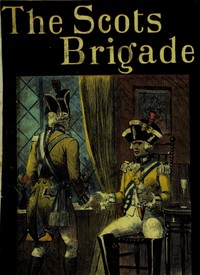
The 'Scots Brigade,' and other tales — Inside the Classic
(0 User reviews)
1651
Project Gutenberg
2024
Not confirmed
Soldiers -- Fiction; Adventure stories; Short stories, English -- Scottish authors
Readers of public-domain and historical texts
Project Gutenberg digital edition
en
Edition facts
Words
63,062
Reading time
275 min
Text sections
6
Before opening The 'Scots Brigade,' and other tales — Inside the Classic, the edition data offers a quick orientation: 63,062 words, 4 hr 35 min estimated reading time, and 6 detected text sections.
The text analysis averages about 27.8 words per sentence, while the detected sections provide another way to judge how the source is divided.
Project Gutenberg metadata also associates the work with “Soldiers -- Fiction,” connecting these edition facts with the source record’s subject description.
Source:
Project Gutenberg record #72700
James Grant's 1882 collection blends military adventure with romance across ten tales. The opening novella, 'The Scots Brigade,' uses brisk dialogue and a camp-song epigraph to establish a voice that shifts from domestic argument to battlefield action. Later stories, like 'The Bugle-Boy of Badajoz,' rely on historical reports and direct address to build pace.
Editorial Edition Score
4.7/5
★★★★★
★★★★★
Calculated from edition completeness, EPUB availability, text structure and catalogue metadata. Not a user rating.
How this score is calculated
- Description quality20 pts
- Title & short description10 pts
- Source metadata20 pts
- Text length15 pts
- Chapters / structure15 pts
- EPUB file integrity20 pts
Total of 100 points, scaled to a 2.5-5.0 range. Editions with an empty description or a missing EPUB file are not scored.
Edition quality
Read the Text
'And you will not accompany me to call on these ladies, uncle?' said the young man persuasively.
'Certainly not, boy; do you take me for a fool--der Duyvel!' was the snappish rejoinder, as the General tossed his silver-mounted meerschaum on the table, and thrust his chair back on the polished oak floor, 'I have suspected you for some time past, and know, from old experience, that a young fellow in love is lost to the service and himself; among women he is as helpless as a rudderless ship among the thousand shoals of the Zuyder Zee! You are my heir, as you know, provided your conduct and obedience satisfy me. I am rich enough for both of us, and I had begun to hope that, like me, you would go through the world without the encumbrance of a wife. I shall not see you make a fool of yourself, without making an effort to save you. I shall give you a Beating Order, and send you to recruit for the Brigade in Scotland; or how would you like to roast on detachment at Guayana, or among the Dutch Isles in the Caribbean Sea?'
'Such a separation would be death to me, and to Dolores too.'
'Dol--what?' roared the General, grasping the knobs of his arm-chair and glaring at the speaker; 'how familiar we are, it seems! Where the devil did she get that absurd name?'
'From a Spanish ancestress, and with the name much of her beauty,' replied the younger man, who had a very pleasant voice and manner, which, if somewhat sad and soft, possessed the charm of cultured influences and refinement.
'Dolores--a very Donna Dulcinea, no doubt! Well, my young cock-o'-the-game, it is useless in me to repeat what you don't want to hear, and in you to say the same thing over and over again, as you have been doing for the last hour. So far as you and this--Dolores are concerned, my mind is made up--yes, by the henckers' horns!'
The speaker was no Dutchman, as his interjection might lead the reader to infer, but, like his nephew, a native of the northern portion of our isle, being Lieutenant-General John Kinloch, of Thominean in Fifeshire, Colonel-Commandant of the six battalions of the Scots Brigade, in the service of their High Mightinesses the States-General of Holland--a corps which boasted itself 'the Bulwark of the Republic'--a veteran of more than twenty years' hard service, though still in the flower of manhood.
His hair was powdered and queued, as was then the fashion; his handsome face was well bronzed by long exposure to the tropical sun, and his hands, which had never known gloves, contrasted in their brown hue with snow-white ruffles of the finest lace at the wide cuffs of his uniform coat.
His nose was straight; his mouth expressed firmness and decision, and his dark eyes, which were sparkling then with no small amount of anger, had somewhat shaggy brows that nearly met in one, and gave great character to his face.
His nephew, who stood near him, playing with the gold knot of his sword, and trying to deprecate his anger, was Lewis (or as he was generally called Lewie) Baronald of that Ilk in Lanarkshire (the only son of a baronet attainted after Culloden), and now a handsome young lieutenant in the Earl of Drumlanrig's Battalion of the Scots Brigade, in quarters, where we find him, at the Hague.
His face wore a droll expression just then, in spite of himself, as he knew that his uncle and patron was well known in the Brigade, and in Dutch society, as a misogynist--a genuine woman-hater, under the influence of some never-forgotten disappointment he had endured in early life, and who never omitted by the exertion of his advice, influence, or actual authority, to mar--if possible--the matrimonial views and wishes of the officers and men under his command.
When any of his brother officers would venture to express their surprise that one who was evidently so good-hearted and warm by nature, and who--though in all things a perfect soldier--was apparently fond of domestic life, should have omitted to share it with a help-mate, their remarks only invoked a torrent of grotesque invectives upon the sex, and put the General in such exceeding bad humour, that they were glad to beat a retreat and leave him to himself.
The collection opens with a camp-song epigraph that immediately sets a martial, nostalgic tone: 'Holland's Bulwark—in many a battle of yore.' The first tale, 'The Scots Brigade,' then launches into a heated domestic exchange between a young lover and his uncle, a general. Their dialogue is sharp and colloquial, with the general dismissing love as making a man 'as helpless as a rudderless ship among the thousand shoals of the Zuyder Zee.' This conversational opening gives way to broader narrative, but the voice remains direct and scene-driven.
Later stories, such as 'The Bugle-Boy of Badajoz,' adopt a more reportorial style, citing newspapers like the Portuguiz Telegrafo and the Jornal de Commercio to ground the action in historical record. The pace quickens in battle passages, where short, declarative sentences and repeated place names—Salamanca, Busaco, Albuera—create a sense of rapid movement and accumulating danger.
Dialogue as a Driver of Pace
In 'The Scots Brigade,' Grant uses dialogue to control tempo. The opening argument between the young man and the general is a rapid exchange of short, emphatic lines: 'Certainly not, boy; do you take me for a fool—der Duyvel!' The general’s interruptions and exclamations keep the scene brisk. Later, when the general threatens a 'Beating Order' or exile to Guayana, the lover’s reply—'Such a separation would be death to me, and to Dolores too'—slows the rhythm, introducing a note of sentiment. This alternation between heated retorts and softer confessions gives the prose a push-and-pull quality, mimicking the tensions of courtship and duty.
The Shift from Domestic to Military Register
Grant’s narrative voice changes markedly when moving from drawing-room scenes to the battlefield. In 'The Bugle-Boy of Badajoz,' the language becomes more formal and documentary: 'It was on the 6th of March, 1812, that the army of Wellington broke up from its cantonments.' The sentences lengthen, and the prose accumulates proper nouns and military terms—'Cazadores,' 'Arapiles,' 'Latour-Maubourg'—to convey scale and historical weight. Yet Grant also inserts intimate details, such as the bugle-boy’s belief that 'the spirit of his dead mother accompanied him wherever he went,' which momentarily slows the narrative and personalizes the conflict.
Recurring Structural Motifs: Epigraphs and Embedded Reports
Grant frequently uses epigraphs and quoted documents to frame his tales. The collection’s title page includes a camp-song, and later stories cite newspapers and official records. For instance, the Jornal de Commercio is quoted to attest that José de Castro was 'ever foremost in the path of danger.' These embedded sources serve a dual purpose: they lend authenticity and create a pause in the narrative flow, as the reader shifts from Grant’s prose to a different voice. The effect is a layered pace—the main narrative moves forward, but these inserted texts act as momentary anchors, reinforcing the historical setting.
Readers attentive to shifts in tempo will notice how Grant alternates between clipped, conversational scenes and expansive, detail-laden battle sequences. The collection rewards those who track these changes in register, as they often signal a transition from personal stakes to larger historical forces. Pay particular attention to the way quoted materials—songs, newspaper clippings, official reports—interrupt the narrative; they are not mere decoration but deliberate pacing tools that ground the fiction in a documentary style.
There’s something oddly comforting in how Grant’s soldiers bicker over soup one page and charge a breach the next—life’s texture, not its drama. It’s the same unhurried warmth I found later in The quare women — Inside the Classic, where the quiet moments between people feel just as urgent as any siege. A different century, same pulse.
There are no reviews for this eBook.
There are no comments for this eBook.
Reader reflection
Take a moment to reflect on this book
Create a short personal record of your experience with this book.
Your progress
0
/
10
2
How much did you enjoy the reading experience?
3
Is this a title you would suggest to others?
4
How easy was the book to follow?
5
Did the book meet your expectations?
6
Which part made the strongest impression?
7
Did any part of the book feel personally relevant?
8
How original did the book feel?
9
What changed or sharpened your thinking?
10