1

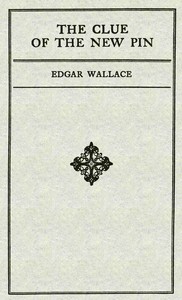
The clue of the new pin — Themes and Context
(0 User reviews)
1035
Project Gutenberg
2023
Not confirmed
Detective and mystery stories; Murder -- Investigation -- Fiction; Millionaires -- Fiction
Readers of public-domain and historical texts
Project Gutenberg digital edition
en
Edition facts
Words
75,098
Reading time
327 min
Text sections
41
For The clue of the new pin — Themes and Context, the stored edition analysis reports 75,098 words, 5 hr 27 min estimated reading time, and 41 detected text sections.
The text analysis averages about 14.6 words per sentence, while the detected sections provide another way to judge how the source is divided.
Project Gutenberg metadata also associates the work with “Detective and mystery stories,” connecting these edition facts with the source record’s subject description.
Source:
Project Gutenberg record #70882
Edgar Wallace's 1923 mystery novel uses the contrast between Yeh Ling's Chinese restaurant and its fashionable Golden Roof extension to structure a detective story centered on a millionaire's murder. The narrative moves between these spaces, with recurring images of opium, locked rooms, and a new pin as a clue.
Editorial Edition Score
4.8/5
★★★★★
★★★★★
Calculated from edition completeness, EPUB availability, text structure and catalogue metadata. Not a user rating.
How this score is calculated
- Description quality20 pts
- Title & short description10 pts
- Source metadata20 pts
- Text length15 pts
- Chapters / structure15 pts
- EPUB file integrity20 pts
Total of 100 points, scaled to a 2.5-5.0 range. Editions with an empty description or a missing EPUB file are not scored.
Edition quality
Read the Text
gilded elevator to carry you to the first and second floors where the private dining-rooms were--these had doors of plate glass, curtained diaphanously. Yeh Ling thought that this was carrying respectability a little too far, but his patron was adamant on the matter.
Certain rooms had no plate glass doors, but these were very discreetly apportioned. One such was never under any circumstances hired to diners, however important or impeccable they might be. It was the end room No. 6, near to the service doorway which led through a labyrinth of crooked and cross passages to the old building in Reed Street. This remained almost unchanged as it had been in the days of Yeh Ling’s earlier struggles. Men and women came here for Chinese dishes and were supplied by soft-footed waiters from Han-Kow, which was Yeh Ling’s native province.
The patrons of the old establishment lamented the arrival of Yeh Ling’s prosperity and sneered at his well-dressed customers. The well-dressed customers being, for the most part, entirely ignorant that their humble neighbours had existence, ate their expensive meals unmoved and at certain hours danced sedately to the strains of The Old Original South Carolina Syncopated Orchestra, which Yeh Ling had hired regardless of expense.
He only visited the fashionable part of his property on one day of the year, the Chinese New Year, a queer little figure in a swallow-tailed coat, white-vested, white-gloved and tightly, as well as whitely collared.
At other times, he sat at ease midway between the desert and the sown in a pokey little parlour hung about with vivid pictures which he had cut from the covers of magazines. Here, in a black silk robe, he pulled at his long-stemmed pipe. At half-past seven every night, except Sundays, he went to a door which opened on to the street, and was the door of one of those houses which linked the two restaurants, and here he would wait, his hand upon the knob. Sometimes the girl came first, sometimes the old man. Whichever it was, they usually passed in without a word and went up to Room No. 6. With their arrival Yeh Ling went back to his parlour to smoke and write letters of great length and beauty to his son at Han-Kow, for Yeh Ling’s son was a man of great learning and position, being both a poet and a scholar. He had been admitted a member of the Forest of Pencils, which is at least the equivalent to being elected an Academician.
Sometimes, Yeh Ling would devote himself to the matter of his new building at Shanford and dream dreams of an Excellency who would be its honoured master--for all things are possible in a land which makes education a test of choice for Ambassadorial appointments.
He never saw the two guests depart. They found their way to the door alone, and soon after eight the room was empty. No waiter served them; their meals were placed in readiness on a small buffet and as No. 6 was veiled from the observations of the curious by a curtain which stretched across the passage, only Yeh Ling knew them.
On the first Monday of every month, Yeh Ling went up to the room and kow-towed to its solitary occupant. The old man was always alone on these occasions. On such a Monday, with a large lacquered cash-box in his hand and a fat book under his arm, Yeh Ling entered the presence of the man in No. 6, put down his impedimenta on the buffet and did his reverence.
“Sit down,” said Jesse Trasmere, and he spoke in the sibilant dialect of the lower provinces. Yeh Ling obeyed, hiding his own hands respectfully in the full sleeves of his gown. “Well?”
“The profits this week have fallen, excellency,” said Yeh Ling but without apology. “The weather has been very fine and many of our clients are out of town.”
He exposed his hands to open the cash-box and bring out four packages of paper money. These he divided into two, three of the packages to the right and one to the left. The old man took the three packages, which were nearest to him and grunted.
“The police came last night and asked to be shown over the houses,” Yeh Ling went on impressively. “They desired to see the cellars, because they think always that Chinamen have smoke-places in their cellars.”
“Humph,” said Mr. Trasmere. He was thumbing the money in his hand. “This is good, Yeh Ling.”
He slipped the money into a black bag which was on the floor at his feet. Yeh Ling shook his head, thereby indicating his agreement.
“Do you remember in Fi Sang a man who worked for me?”
The old man agreed to the appellation.
The novel opens by establishing Yeh Ling's establishment as a place of two halves: a humble Chinese restaurant on Reed Street and a glittering Golden Roof extension on the main thoroughfare. This spatial division—between the 'desert' of Bennet Street and the 'sown' of theatreland—becomes a structural principle. The narrative shuttles between these zones, each with its own clientele, atmosphere, and rules. The private dining rooms, especially Room 6 with its labyrinthine passage to the old building, hint at concealed connections. Wallace uses this geography to orchestrate entrances, exits, and surveillance, making the building itself a puzzle.
Movement Between Two Worlds
The story repeatedly crosses between the Golden Roof's gilded tiles and Yeh Ling's original premises. The old building remains 'almost unchanged' from earlier struggles, staffed by soft-footed waiters from Han-Kow. The new wing, with its rosewood panelling and syncopated orchestra, caters to a different crowd. Characters like Wellington Brown move through both: he wakes in the old building after an opium bout, then later sits in a park, then heads 'instinctively for the lights.' Inspector Carver visits the Golden Roof, while Brown slips away through a narrow passage. This back-and-forth creates a rhythm of concealment and exposure, as if the mystery itself inhabits the threshold between these spaces.
Recurring Images of Opium and Withdrawal
Opium use is not merely a character trait but a recurring motif that shapes the narrative's pacing. Wellington Brown wakes 'feeling extraordinarily refreshed' after a bout, his craving temporarily spent. The pipe is brought with whiskey and water; he rejects it with a proverb exchange with Yo Len Fo. Later, the reaction of his bout makes him truculent. The drug's presence lingers even when absent—Brown's 'clouded brain' and 'parched mouth' are described as habitual. The novel uses these cycles of intoxication and clarity to mark time and to explain Brown's erratic behavior, including his confrontation with a stranger in the park. The opium den itself, with its 'uncarpeted stairs,' is a fixed point in the shifting geography.
The New Pin as a Material Clue
The title object appears only briefly in the excerpts, but its nature as a 'new pin' suggests a manufactured, possibly deliberate clue. Unlike a dropped handkerchief or a torn button, a new pin implies recent use or placement. In detective fiction of this period, such an item often points to a specific trade or habit. The pin may connect to the millionaire Trasmere, mentioned by Brown, or to the locked rooms and private dining spaces. Wallace's method is to let small, tangible details—like the pin—anchor the plot, while the larger movements between settings provide the frame. Readers should watch for how this object is introduced and what it physically links.
Voice and Dialogue as Character Markers
Wallace distinguishes characters through their speech patterns. Wellington Brown uses colloquial, aggressive English: 'That's a damned lie,' he snarls. The Chinese characters, Yo Len Fo and Yeh Ling, speak in formal, proverb-laden English ('If the Illustrious will stay'), a stylistic choice common in period fiction. The contrast is sharp—Brown's bluntness versus the indirectness of 'your Excellency.' This verbal texture helps readers track who is speaking and from which world they come. The dialogue also carries the plot: Brown's muttered suspicion of 'old devil Trasmere' and his recognition of a stranger in the park are delivered in quick, naturalistic exchanges that advance the mystery without exposition.
Because the excerpts cover only the opening chapters, the full trajectory of the investigation remains unknown. The novel's structure, however, suggests that the physical layout of Yeh Ling's establishment will continue to dictate the action. Pay attention to who uses which entrance, which rooms are curtained or locked, and how characters navigate the labyrinth. The new pin may be the key to these movements, but its significance will emerge only as the story unfolds across the 41 text sections.
Yeh Ling’s locked rooms and gleaming golden roofs always made me think of those quiet afternoons when the house settles—and one holds a single, heavy amulet, feeling its weight without explanation. Wallace’s new pin, so small yet decisive, shares that amulet’s stillness. Both objects hold secrets patiently, waiting for a reader’s unhurried gaze. The amulet: A novel — Reading Notes sits beside that memory, as familiar as dust motes in lamplight.
There are no reviews for this eBook.
There are no comments for this eBook.
Reader reflection
Your personal reading reflection
Build a private reading journal entry for this title.
Your progress
0
/
10
2
Did this book hold your interest?
3
Would you pass this book on to a friend?
4
How much effort did this book require?
5
How much did the book move you?
6
What did you appreciate most?
7
Would this book work well in a reading group?
8
Was the book what you thought it would be?
9
What did this book teach you most?
10