1

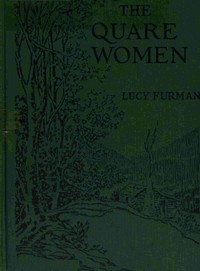
The quare women — Inside the Classic
(0 User reviews)
1502
Project Gutenberg
2023
Not confirmed
Schools -- Fiction; Kentucky -- Fiction; Mountain life -- Fiction; Appalachian Mountains -- Fiction
Readers of public-domain and historical texts
Project Gutenberg digital edition
en
Edition facts
Words
54,708
Reading time
238 min
Text sections
13
This digital edition of The quare women — Inside the Classic is described by source-level measurements including 54,708 words, 3 hr 58 min estimated reading time, and 13 detected text sections.
The text analysis averages about 20.9 words per sentence, while the detected sections provide another way to judge how the source is divided.
Project Gutenberg metadata also associates the work with “Schools -- Fiction,” connecting these edition facts with the source record’s subject description.
Source:
Project Gutenberg record #72307
Lucy Furman's 1923 novel follows the arrival of educated women from 'furrin parts' who set up a settlement school in the Kentucky mountains, told through the alternating perspectives of local residents like Aunt Ailsie and the newcomers, with a focus on cultural collision, domestic routines, and the subtle shifts in community life.
Editorial Edition Score
4.7/5
★★★★★
★★★★★
Calculated from edition completeness, EPUB availability, text structure and catalogue metadata. Not a user rating.
How this score is calculated
- Description quality20 pts
- Title & short description10 pts
- Source metadata20 pts
- Text length15 pts
- Chapters / structure15 pts
- EPUB file integrity20 pts
Total of 100 points, scaled to a 2.5-5.0 range. Editions with an empty description or a missing EPUB file are not scored.
Edition quality
Read the Text
There was a stir among the young folks, who rose, put away their work, and gathered at one end of the tent, under the big flag. Then the strange woman who had taught them sewing sat down before a small box and began to play a tune.
"Is there music in that-air cupboard?" asked Aunt Ailsie, astonished.
"It is a baby-organ we brought with us," explained Virginia.
"And who's that a-picking on hit?"
"Amy Scott, my best friend."
"She's got a man, sure, hain't she?"
"What--as fair a woman as her--and with that friendly smile?"
The anxious, puzzled look again fell upon Aunt Ailsie's face.
Then a song was started up, in which all the young folks joined with a will. It was a new kind of singing to Aunt Ailsie,--rousing and tuneful,--very different from the long-drawn hymns, or the droning ancient ballads, she had loved in her young days.
"They are getting ready for our Fourth of July picnic next Wednesday," said Virginia.
"I follered singing when I were young," Aunt Ailsie said after a period of delighted listening. "I could very nigh sing the night through on song-ballats."
"That's where Fult must have learned the ones he sings so well," cried Virginia. "You must sing some for us, this very day."
Aunt Ailsie raised her hands. "Me sing!" she said; "woman, hit would be as much as my life is worth to sing a song-ballat now; I hain't dared to raise nothing but hime-tunes sence Lot j'ined."
"Sence my man, Lot, got religion and j'ined. He allows now that song-ballats is jest devil's ditties, and won't have one raised under his roof. When Fulty he wants me to larn him a new one, we have to go clean up to the top of the ridge and a little grain on yan side, before I dairst lift my voice."
A little later Aunt Ailsie was taken by her new friend to see the two bedroom tents, with their white cots and goods-box washstands; and then to the top of the spur, where, in an almost level space under the trees, a large ring of tiny children circled and sang around another strange young woman.
"The least ones!" exclaimed Aunt Ailsie. "What a love-lie sight! I never heard of larning sech as them nothing before. And if there hain't Cynthy's leetle John Wes, God bless hit!" as a dark-eyed, impish-looking four-year-old went capering by. "Hit were borned the very day hit's paw got kilt--jest atter Cynthy got the news. I tell you, Virginny, hit were a sorry time for her--left a widow-woman with seven young-uns, mostly gals."
"Little John Wes is very bright and attractive."
"Hit is that--and friendly, too; hit never sees a stranger!"
"He gives us a good deal of trouble, though, with his smoking and chewing."
"Yes, hit's pyeert every way; I hain't seed hit for a year or two without a chaw in hit's jaw. And liquor! Hit's a sight the way that young-un can drink. Fulty and t'other boys they jest load him up, to see the quare things he'll do."
At this moment the little kindergartners were dismissed, and marched, as decorously as they were able, down the hill after their teacher, followed by all the onlookers. The tents were discharging their crowds, too, and Aunt Ailsie recognized several more of her grandchildren on the way down.
Arrived at the lowest tent. Aunt Ailsie presented her baskets of apples and eggs to the women. A dozen or more elderly folk, and as many young girls who were deeply interested in learning "furrin" cooking, remained to dinner. The rest of the strange women, Amy, the kindergartner, the cooking teacher and the nurse, Aunt Ailsie now met, putting to each the inevitable questions as to name, age, and condition of life. As each smilingly replied that she had no man, a cloud of real distress gathered on Aunt Ailsie's brow, which not all the novel accompaniments of the meal could entirely banish.
Afterward, when the dishes were washed and all sat around in groups under the trees, resting, she said confidentially to Virginia:--
"I am plumb tore up in my mind over you women, five of you, and as good-lookers as ever I beheld, and with sech nice, common ways, too, not having no man. Hit hain't noways reasonable. Maybe the men in your country does a sight of fighting, like ourn, and has been mostly kilt off?"
"No, we have no feuds or fighting down there--there are plenty of men."
The novel opens not with the outsiders themselves but with the news of their arrival traveling through the community. Aunt Ailsie hears from her daughter-in-law Ruthena about a 'passel of quare women' who have set up 'cloth houses' on the point above the courthouse. The phrase 'quare women'—a dialect rendering of 'queer'—immediately signals the cultural distance between the newcomers and the mountain people. Furman establishes this distance through the characters' own voices: Aunt Ailsie initially assumes it must be a traveling show with 'a elephant and a lion,' while Ruthena reports that the women 'dresses theirselves plumb proper.' The structure of the first chapter moves from rumor to direct encounter, as Aunt Ailsie's grandson Fult brings back apples for the women and describes them as 'the ladyest women you ever seed.' This pattern of news traveling through family networks recurs throughout the book, anchoring the narrative in the community's perspective.
The Cloth Houses and the Courthouse Point
The physical setting of the women's camp—on the point above the courthouse—is more than a backdrop. It places the newcomers literally above the town's legal and social center, a spatial arrangement that mirrors their ambiguous status. They are visible yet separate, their 'cloth houses' (tents) a temporary intrusion into a landscape of log cabins and mountain trails. Furman repeatedly returns to this geography: characters climb the hill to visit, look down from it, or ride past it. The courthouse itself appears as a place where 'no jury can't hardly be got to hold court' because everyone is watching the women. This detail, reported early by Ruthena, suggests that the women's presence disrupts the ordinary rhythms of justice and governance. The hill becomes a stage where the community's curiosity and suspicion play out, and Furman uses it to structure scenes of arrival, observation, and departure.
Dialect as a Window into Perception
Furman renders mountain speech with careful consistency: 'hit's a show,' 'I allow,' 'I wisht Lot would come on back.' The dialect is not merely decorative; it shapes how information is filtered and understood. When Aunt Ailsie hears 'quare women,' she interprets it through her own frame of reference—a traveling show with 'varmints' and bareback riders. The women's actual activities (cooking classes, Sunday School, play-parties) are gradually revealed through the characters' reports, each filtered by their own expectations. Fult calls the women 'the ladyest women you ever seed,' a phrase that carries both admiration and the lingering sense of their foreignness. The dialect also marks generational and gender differences: Aunt Ailsie's speech is more archaic than her grandson's, and the women themselves speak standard English, creating a linguistic divide that mirrors the cultural one. Furman does not translate or gloss these terms; the reader must infer meaning from context, much as the characters do.
The Play-Party as a Site of Tension
One of the most revealing scenes in the excerpts is the play-party, a traditional mountain game that the women adapt. Lethie, a local girl, watches Isabel, one of the 'quare women,' playing with Charlie as her partner. The description focuses on Lethie's acute self-consciousness: 'how much longer her own skirt was in the back than in the front, how clumsy her shoes were, how much too big and baggy her waist.' This moment of comparison is not just about clothing; it signals a shift in Lethie's sense of self. She slips out of the ring, and later attempts to sew a white dress like Isabel's from 'bleached factory' cloth—a detail that underscores the material limitations of her world. The play-party, meant to be communal and joyful, becomes a site of exclusion and longing. Furman uses these small social rituals to dramatize the quiet, often painful process of cultural change, without resorting to overt conflict.
Feud, Truce, and the Unspoken Past
Isabel's curiosity about the local feud—she asks Fult why he didn't tell her he was 'one of the leaders of the war'—introduces a thread of violence that runs beneath the surface of the narrative. The feud is referred to obliquely: a 'war' that has been paused by a 'truce,' with Fult and his 'archenemy Darcy Kent' playing in the same game. Isabel's fascination—'to know just how feudists feel on the inside'—marks her as an outsider who sees the feud as exotic. Furman does not explain the feud's origins or details; it remains a known quantity to the characters but opaque to the reader. This restraint is deliberate: the feud functions as a background tension, a reminder of the community's codes of honor and violence that the women's presence may unsettle. The truce, like the women's camp, is temporary, and the novel's structure hints at future rupture without revealing it.
Readers should attend to the way Furman builds scenes through dialogue and reported speech rather than direct narration. The story unfolds almost entirely through what characters say to one another, with the narrator rarely stepping in to explain motives or outcomes. This technique keeps the focus on the community's collective perception of the 'quare women' and leaves much unsaid. The excerpts suggest a novel more concerned with daily life—cooking, sewing, riding, playing—than with dramatic plot turns. The pleasure lies in watching small gestures accumulate into larger shifts in understanding.
I remember Aunt Ailsie’s quiet measuring, her eye on the new women as they hung their washing. That same watchful tenderness lives in The amulet: A novel — Reading Notes—the way small, domestic objects hold larger loyalties we never speak aloud. Both books remind me of evenings when work ended, and folks simply sat together, knowing without announcing what they knew.
There are no reviews for this eBook.
There are no comments for this eBook.
Reader reflection
Before you leave, reflect on the book
Use these questions to collect your thoughts before moving on.
Your progress
0
/
10
2
Did this book hold your interest?
3
How likely are you to recommend this book?
4
How demanding did the text feel?
5
Did this book create an emotional response?
6
Did it raise ideas you would like to talk about?
7
How would you rate its originality?
8
Was the book moving at the right speed?
9
Which lesson or insight stayed with you?
10