1

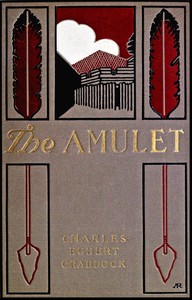
The amulet: A novel — Reading Notes
(0 User reviews)
1074
Project Gutenberg
2022
Not confirmed
South Carolina -- History -- Colonial period, ca. 1600-1775 -- Fiction; Cherokee Indians -- Fiction; Fort Prince George (S.C.) -- Fiction
Readers of public-domain and historical texts
Project Gutenberg digital edition
en
Edition facts
Words
94,656
Reading time
412 min
Text sections
24
Before opening The amulet: A novel — Reading Notes, the edition data offers a quick orientation: 94,656 words, 6 hr 52 min estimated reading time, and 24 detected text sections.
The text analysis averages about 21.9 words per sentence, while the detected sections provide another way to judge how the source is divided.
Project Gutenberg metadata also associates the work with “South Carolina -- History -- Colonial period, ca. 1600-1775 -- Fiction,” connecting these edition facts with the source record’s subject description.
Source:
Project Gutenberg record #69483
Set in 1763 at Fort Prince George, this novel follows English settlers and Cherokee interactions through the lens of a British commandant's daughter, blending frontier politics with personal intrigue.
Editorial Edition Score
4.9/5
★★★★★
★★★★★
Calculated from edition completeness, EPUB availability, text structure and catalogue metadata. Not a user rating.
How this score is calculated
- Description quality20 pts
- Title & short description10 pts
- Source metadata20 pts
- Text length15 pts
- Chapters / structure15 pts
- EPUB file integrity20 pts
Total of 100 points, scaled to a 2.5-5.0 range. Editions with an empty description or a missing EPUB file are not scored.
Edition quality
Read the Text
clear-clipped tones, and Captain Howard lifted his head with a slightly corrugated brow. He looked fixedly into his glass as if he discerned dregs of bitterness lurking therein. He was experiencing a sentiment of surprise and annoyance that had earlier harassed him, to be dismissed as absurd; but now, recurring, it seemed to have gathered force. These two young men were friends of the Damon-and-Pythias type. Their one-ness of heart and unanimity of thought had been of infinite service to him in the many difficult details of his command at Fort Prince George,--a flimsy earth-work with a block-house or two, garrisoned by a mere handful of troops, in a remote wilderness surrounded by a strong and savage foe. These officers had been zealous to smooth each other’s way; they had vied to undertake onerous duties, to encounter danger, to palliate short-comings. They were always companions when off duty; they hunted and fished together; they were on terms of intimate confidence, even privileged to read each other’s letters. They were sworn comrades, and yet to-day (Captain Howard did not know how to account for it--he was growing old, surely) neither had addressed a kindly word to the other; nay, Ensign Raymond was sharply and apparently intentionally sarcastic.
Captain Howard wondered that Arabella did not notice it, but there she stood by the window, the curtain in her hand, the light of the great flaring fire on the hair, a little paler than gold, which she had inherited from her Scotch mother, and the large, sincere, hazel English eyes which were like Captain Howard’s own. The delicate rose tint of her cheek did not even fluctuate; she looked calmly at the young men as they glared furiously at each other. But for her presence Captain Howard would have ordered them to their respective quarters to avoid a collision. Fort Prince George was not usually the scene of internecine strife. He resented the suggestion as an indignity to himself. It impaired the flavor of the dinner he had enjoyed, and jeopardized digestion. It was a disrespect to the formality with which he had complimented the occasion of his daughter’s arrival, inviting his old neighbor’s grandson, with his especial friend, and wearing his powdered wig, his punctilious dress uniform, pumps, and silk hose. It had been long since his table was graced by a woman arrayed ceremoniously for dinner, and the sight of his daughter in her rose-hued tabby gown, with shining arms and shoulders and a string of pearls around her throat, was a pleasant reminder to him, in this bleak exile, of the customs of old times, soon to be renewed, the more appreciated for compulsory disuse. Captain Howard, watching the group as the young men glowered at each other, was amazed to think that she looked as if she enjoyed it, the image of demure placidity.
“The Cherokees call the moon _Neusse anantoge_, ‘the sleeping sun,’” said the captain-lieutenant, making no rejoinder to Raymond.
“La! How well you speak their language, Mr. Mervyn, to be sure. Oh-h, how musical! As lovely as Italian! Oh-h-h--how I wish I could learn it before I go back to England! Sure, ’twould be monstrous genteel to know Cherokee in London. _Neusse anantoge._ I’ll remember that. ‘The sleeping sun.’ I’ll say that again. _Neusse anantoge. Neusse anantoge._”
“_Neusse anantoge!_” cried Raymond, with a fleering laugh. “Gad, Mervyn, you _are_ moon-struck.”
The novel opens with an English girl at Fort Prince George, drawn to the moonlit wilderness and the Cherokee belief that the moon is the sun asleep. Her father, Captain Howard, enjoys the comforts of venison and chocolate custard, oblivious to the tensions simmering around him. The narrative quickly shifts to a burned granary, exposing rivalries among officers—Mervyn, Raymond, and Jerrold—as they jostle for favor and blame. The catalog subjects list South Carolina colonial history, Cherokee Indians, and Fort Prince George, but the excerpts reveal a story more concerned with internal military politics and personal dynamics than with direct conflict between settlers and Native peoples.
Moonlight and Military Routine
The opening chapter establishes a dual focus: the natural world and the social order of the fort. The English girl’s fascination with the moon—described as having a “suspended consciousness”—contrasts with her father’s practical dismissal of Cherokee language. This tension between observation and action recurs throughout the excerpts. Captain Howard is “very joyous” after the Seven Years’ War, yet his command is tested by a fire that destroys the granary. The narrative lingers on details of daily life: the “improvised red curtain,” the “chocolate-and-cocoanut custard,” and the “venison and wild-fowl” of dinner. These specifics ground the story in a tangible setting, even as the plot hinges on miscommunication and blame among officers.
Blame and Bureaucracy at the Frontier
The burned granary becomes a flashpoint for rank and reputation. Captain Howard’s return triggers a cascade of accusations: Mervyn feels “greatly offended” by his superior’s tone, while Raymond’s omission of key information is noted. The narrative exposes the fragility of command—Howard’s “quick, keen glance” falls on the missing gable, and his cry “My God! Where’s the granary?” reveals his dependence on subordinates. The officers’ internal politics are laid bare: Jerrold, who saved the fort, remains “bland and inscrutable,” while Mervyn worries about the “gossip of his groom” undermining his report. This focus on military hierarchy and personal pride overshadows the Cherokee presence, which appears only as a source of expensive corn.
The Unseen Cherokee Context
Despite the catalog subjects emphasizing Cherokee Indians and colonial conflict, the excerpts show Native characters only indirectly. The Cherokee appear as traders selling corn at “six prices,” and their belief about the moon is mentioned but not explored. The fort’s isolation is palpable—the moon’s “infinite loneliness” mirrors the English girl’s sense of displacement. Yet the narrative’s energy is directed inward, toward the officers’ rivalries and Howard’s plans to distribute corn as a “parting gift” to Keowee. The historical backdrop of the Seven Years’ War and French surrender is noted but not dramatized. Readers expecting a direct portrayal of Cherokee life or frontier warfare will find instead a novel focused on British military society, with Native peoples as a distant concern.
Readers should approach The Amulet as a character-driven study of colonial administration rather than an action-packed adventure. The excerpts suggest that the novel’s interest lies in the interplay of duty, pride, and miscommunication among British officers stationed at a remote fort. The Cherokee and the broader colonial conflict serve as a backdrop, not the main stage. Pay attention to the small details—the custard, the red curtain, the moon—that reveal the narrator’s eye for the mundane within the historic.
I remember how The Amulet lingered with me, its frontier walls holding secrets close. Years later, when I found Gloria — A Closer Reading, it felt like meeting an old friend who understood that quiet ache of wanting to be truly seen. Two different worlds, yet both whisper of the same loneliness.
There are no reviews for this eBook.
There are no comments for this eBook.
Reader reflection
Before you leave, reflect on the book
Use these questions to collect your thoughts before moving on.
Your progress
0
/
10
2
How did the book work for you overall?
3
Would you pass this book on to a friend?
4
What was the reading difficulty like?
5
How did the reading compare with what you expected?
6
How understandable was the text?
7
Which element worked best for you?
8
Did the story or argument move comfortably?
9
Which lesson or insight stayed with you?
10