1


The cobbler of Nîmes — Story, Setting & Ideas
(0 User reviews)
101
Project Gutenberg
2022
Not confirmed
France -- History -- Louis XIV, 1643-1715 -- Fiction; Shoemakers -- Fiction; Huguenots -- Persecutions -- France -- Fiction
Readers of public-domain and historical texts
Project Gutenberg digital edition
en
Edition facts
Words
53,212
Reading time
232 min
Text sections
32
The source record for The cobbler of Nîmes — Story, Setting & Ideas measures this digital text at 53,212 words, 3 hr 52 min estimated reading time, and 32 detected text sections.
The text analysis averages about 15.9 words per sentence, while the detected sections provide another way to judge how the source is divided.
Project Gutenberg metadata also associates the work with “France -- History -- Louis XIV, 1643-1715 -- Fiction,” connecting these edition facts with the source record’s subject description.
Source:
Project Gutenberg record #69180
An editorial note on Mary Imlay Taylor's 1900 novel set in 1703 Nîmes, focusing on language, narrative voice, and shifts in pace. The opening market scene uses vivid sensory detail and a satirical tone, while later chapters adopt a more introspective, anxious rhythm. The excerpts show a contrast between public spectacle and private dread.
Editorial Edition Score
4.8/5
★★★★★
★★★★★
Calculated from edition completeness, EPUB availability, text structure and catalogue metadata. Not a user rating.
How this score is calculated
- Description quality20 pts
- Title & short description10 pts
- Source metadata20 pts
- Text length15 pts
- Chapters / structure15 pts
- EPUB file integrity20 pts
Total of 100 points, scaled to a 2.5-5.0 range. Editions with an empty description or a missing EPUB file are not scored.
Edition quality
Read the Text
the peasant youth stared open-mouthed, fright showing plainly in his eyes; the soldier looked down with brutal indifference; the old fishwife showed satisfaction, her wolf mouth was slightly opened by a grin that displayed three long yellow teeth--all she possessed; a red handkerchief was tied around her head and from below it hung her long gray locks. Her short petticoat and bodice revealed a withered, lean form, and her fingers were like talons. She feasted her eyes on the dead face, and then she squinted across the body at the man who stood like a statue opposite. He was young, with a sad, dark countenance and was poorly, even shabbily dressed. But it was none of these things that the old crone noted, it was the expression of grief and horror that seemed frozen on his features. He did not see her, he did not see the others passing by him--with more than one curious glance; he seemed like a man in a trance, deaf, blind, dumb, but yet gazing fixedly at the inanimate figure on the bier. It was the corpse of a young woman, who had been handsome; the features were still so, and her long black hair fell about her shoulders like a mourning pall.
“_Dieu!_” said the fishwife, licking her lips, “what a white throat she had; ’twould have been a pity to hang her. See, there is a mark there on her arm where ’twas bound! Is she not pretty, Bossu?”
The hunchback had approached the corpse, and at this appeal he nodded his head.
“_Diable!_” ejaculated the soldier turning on the old crone, “’tis heresy to call a damned person pretty, Mère Tigrane.”
Mère Tigrane leered at him with horrible intelligence.
“No one is to think a heretic pretty but the dragoons, eh?” she said grinning. “_Dame!_ we know what you think, monsieur.”
The man laughed brutally, and she edged up to him, whispering in his ear, her narrow eyes on the silent visitor opposite. The dragoon looked over too at her words, and broke out with an oath.
“You are a witch, Mère Tigrane,” he said uneasily; “let me alone!”
Again she whispered, but laughed this time, showing her yellow teeth.
Meanwhile the showman had been fortunate and a dozen new-comers crowded into the tent, pressing the others aside. This afforded an opportunity for the hunchback to approach the young man, who had remained by the bier as if chained to the ground. Le Bossu touched his arm, at first lightly, but finding himself unheeded, he jerked the other’s sleeve. The stranger started and stared at him as if he had just awakened from sleep.
“A word with you, friend,” said the hunchback, softly.
The man hesitated, started, paused and cast another long look at the dead face, and then followed the cripple through the group at the door, out into the sunshine and uproar of the market-place. They were not unobserved by Mère Tigrane, but she made no effort to follow them; she was watching the new arrivals as they approached the corpse. As she saw their faces of curiosity and horror, she laughed.
“_Mère de Dieu!_” she said, “’tis worth a half-crown after all--and I paid Adolphe in false coin too, _pauvre garçon_!”
In the market-place, the stranger had halted with the hunchbacked cobbler.
“What do you want?” he demanded of le Bossu; “I do not know you.”
“You were in danger,” replied the hunchback, quietly, “and you are in trouble; the _bon Dieu_ knows that I also am in trouble.”
The little man’s tone, his deformity, his kind eyes appealed to the other.
“We should be friends,” he said grimly. “_Dieu!_ I am indeed in trouble.”
The hunchback made a sign to him to be cautious, the crowd hemmed them in, the monkey chattered, the bear danced, Mademoiselle Héloïse was singing a savory song from Paris. The whole square was white with the sunshine; above, the sky was deeply blue.
“Follow me, friend,” said le Bossu again, and commenced to thread his way through the crowd.
The novel opens in the market-place of Nîmes at noontide in June 1703, with a juggler swallowing a sword, a tight-rope walker, a dancing bear, and a monkey in scarlet breeches whose blouse caricatures the Camisard rebels. The crowd's cries of 'Camisard!' and 'Huguenot!' are met with loud laughter, though many hearts secretly sympathize. Taylor's narrative voice here is brisk and satirical, cataloguing the motley throng—market-women, old crones, gamins, peasant girls—with an eye for the grotesque and the political undercurrent beneath the fair's surface.
Public Spectacle and Private Dread
The opening chapter establishes a rhythm of public festivity shadowed by menace. The monkey's costume is 'an unmistakable caricature of the dress of the Camisards,' and the narrator notes that 'it therefore behooved the wise to laugh, and they did, and that loudly.' The prose moves quickly, piling up details of pickpockets, fortune-tellers, and the Intendant Bâville's presence. Later, in Chapter XIV, the pace slows dramatically. After a night of battle, Rosaline watches dawn break over a 'tranquil scene' with 'an anxious heart.' The sentences grow longer, more introspective: 'All that she cared for was threatened with terrible dangers; her own every-day life might pass like a dream.' This shift from rapid, ironic observation to lingering interiority marks a key change in narrative voice.
The Weight of Unspoken Words
Taylor uses dialogue and silence to convey tension. In Chapter XIV, Madame de St. Cyr lets her knitting fall and speaks of d'Aguesseau: 'Alas! I fear I shall never see him again—and he was a brave man. But for me he would have gone long ago.' Rosaline's response—'Did you urge him to stay here?'—is followed by a revelation that her grandmother 'prayed him to be near us.' The scene ends with Rosaline kneeling in her window recess, her head on her arms, refusing to go down when M. de Baudri arrives. The narrative voice here is restrained, letting the emotional weight accumulate through gesture and omission rather than explicit commentary.
Rhythms of Waiting and Watching
The novel's pacing often depends on characters waiting for news. After the battle, Rosaline and her grandmother sit through a 'night of suspense,' watching flames that 'made the night as red as blood.' The clock strikes four, and Rosaline closes the shutter: ''Tis over,' she said; 'the flames have died away, darkness is there again, and silence—and death!'' The prose becomes staccato, mirroring the held breath. Later, during the day, Rosaline sees soldiers on the distant highroad and 'a train of wagons moving slowly,' but can learn nothing more. Taylor repeats words like 'stillness' and 'silence' to create a sense of suspended time, contrasting with the earlier market's chaotic noise.
Readers attentive to shifts in tempo will notice how Taylor alternates between crowded, kinetic scenes and quiet, claustrophobic ones. The narrative voice moves from a detached, almost journalistic tone to a more intimate, psychological register, particularly in Rosaline's sections. The excerpts suggest a novel that uses historical setting not for spectacle alone, but as a pressure system that shapes how characters speak, wait, and interpret the world around them.
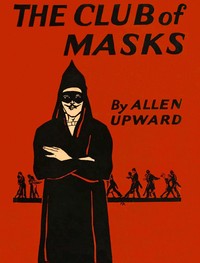
That market scene in The Cobbler of Nîmes brought back a Sunday afternoon spent half-asleep beside a window, watching crowds below while my own worries sat heavy and quiet. It reminded me of how The club of masks — Context and Discussion once made similar room for that hush between public noise and private fear. Strange how old stories hold such familiar silences.
There are no reviews for this eBook.
There are no comments for this eBook.
Reader reflection
How did this book work for you?
Your answers remain private and are stored only in this browser.
Your progress
0
/
10
2
Was reading this book enjoyable?
3
Would you encourage someone else to read it?
4
How easy was the book to follow?
5
What was the strongest part of the book?
6
Did the book deliver what you hoped for?
7
How would you rate its originality?
8
How understandable was the text?
9
What changed or sharpened your thinking?
10