1

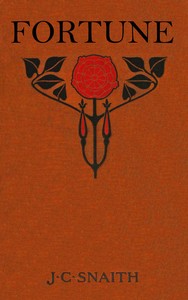
Fortune — Edition Insights
(0 User reviews)
1161
Project Gutenberg
2024
Not confirmed
Adventure stories; British -- Spain -- Fiction; Swordsmen -- Fiction
Readers of public-domain and historical texts
Project Gutenberg digital edition
en
Edition facts
Words
100,038
Reading time
435 min
Text sections
41
This digital edition of Fortune — Edition Insights is described by source-level measurements including 100,038 words, 7 hr 15 min estimated reading time, and 41 detected text sections.
The text analysis averages about 22.4 words per sentence, while the detected sections provide another way to judge how the source is divided.
Project Gutenberg metadata also associates the work with “Adventure stories,” connecting these edition facts with the source record’s subject description.
Source:
Project Gutenberg record #73402
An editorial note on J.C. Snaith's 'Fortune', examining the narrator's archaic, self-deprecating voice, the use of chapter titles as mini-summaries, and the interplay between formal address and bawdy humor in dialogue.
Editorial Edition Score
4.9/5
★★★★★
★★★★★
Calculated from edition completeness, EPUB availability, text structure and catalogue metadata. Not a user rating.
How this score is calculated
- Description quality20 pts
- Title & short description10 pts
- Source metadata20 pts
- Text length15 pts
- Chapters / structure15 pts
- EPUB file integrity20 pts
Total of 100 points, scaled to a 2.5-5.0 range. Editions with an empty description or a missing EPUB file are not scored.
Edition quality
Read the Text
yet it was not its quality that first awoke my attention. Neither was it the extremely singular personage that was seated at the side of the fire.
It was the delicious smell of cookery that filled the whole place. This proceeded out of a great seething pot that hung in the chimney. To one who had travelled all day nothing could have been more delectable. At its sight and odour my hunger began to protest fiercely, for my last piece of victual had been eaten at noon.
Seated on a low stool, as near to the pot as he might venture without being scorched in the legs, I found the author of these grievances. His gaze was riveted upon this delicious kettle. His enormous limbs were outstretched across the hearth, a rare cup of liquor was beside his stool, and so earnestly was he gazing at the meat as it tossed and hissed in the cauldron that upon my entrance he did not stir, but, without so much as removing his chin from his hands, continued in his occupation with an air of approval and expectancy.
For myself, I honoured him with a long and grave look. Since that distant evening in my youth I have met with many chances and adventures in my travels. I have fallen in with persons of all kinds--the virtuous, the wicked, and those who are neither one nor the other. I have broken bread with princes, philosophers, rogues, slaves, and men of the sword--men of all nations and of every variety of fortune-yet I believe never one so remarkable as he who now kept the chimney of this wretched venta upon a three-legged stool. The length of his limbs was extraordinary; his shoulders were those of a giant; and even in his present careless and recumbent attitude he wore an uncommonly sinister and formidable look.
His dress at one time would scarcely have come amiss to a prince, yet now it was barely redeemed from that of a beggar. The original colour of his doublet, which hung in tatters, was an orange tawny, but it was now so soiled and rent that it could have stood for any hue one cared to name. His cloak, which hung upon the wall, was of a bright blue camlet, and was but little superior to the condition of his doublet. Purple silk had once formed the substance of his hose, but now the better part of it was cloth, having suffered many patchings with that material. Added to such conspicuous marks of indigence, his long yellow riding boots were split in pieces, one even revealed the toe of a worsted stocking; whilst his scabbard was in such case as it sprawled on the ground beside his leg that the naked point was visible.
When I came near and fell to regard him the better, he did me the honour to lift his left eye off the cooking-pot. He proceeded to stare at me in a manner of the most lazy indifference, and yet of the greatest insolence imaginable. Then, without saying a word, he yawned in my face and turned the whole of his attention again to the kettle.
Such a piece of sauciness made me feel angry. Had I been a dog I could not have been met with less civility. My hand went again to the hilt of my sword as I took a closer view of his visage. It was as red as borracho, shining with cunning and the love of the cup. But it was the eye he had fixed upon me that gave me the most concern. The poor innkeeper was right when he spoke of his eye. It was as rude as a tiger’s, and animated with such a hungry look that it might have belonged to a dragon who desired to know what sort of meal stood before him.
J.C. Snaith’s Fortune opens with a first-person narrator who announces his journey to a “far country” where his fortune lies, yet immediately undercuts any heroic pretension by noting the sun “already had a countenance” and describing a bailiff whose salary “fluctuated with the thieves he captured.” This blend of lofty phrasing and wry observation sets the tone for a picaresque adventure that never takes itself too seriously. The narrator’s voice—self-deprecating, digressive, and fond of philosophical asides—recalls the tradition of Cervantes, while the chapter titles themselves (e.g., “Of the Eating of Meat,” “Of a Private Brawl. I Take Profit at the Cost of Reputation”) function as miniature summaries that promise both incident and irony.
The Narrator’s Self-Conscious Voice
The narrator frequently steps back to comment on his own storytelling. He attributes his habit of reflection to his mother’s family—“her brother Nicolas was a clerk of Salamanca and wore a purple gown”—and uses such asides to frame his observations. When describing the bailiff’s poor trade, he notes that “even at this time some portion of philosophy had gone to the increase of my mind,” a claim that is both earnest and gently mocked by the triviality of the example. This self-awareness extends to his relationship with the reader: he directly addresses “you must believe me, reader” at moments of high drama, as when the men-at-arms swear fealty. The effect is to create a confiding, slightly unreliable narrator who is as interested in the telling as in the tale.
Chapter Titles as Narrative Signposts
Each chapter heading in Fortune is a miniature précis, often with a wry twist. “Of a Private Brawl. I Take Profit at the Cost of Reputation” promises both action and moral ambiguity, while “Of the Disabilities That Attend on Gentle Birth” signals a thematic concern with class and honor. These titles do not merely label events but frame them with a knowing nod to the reader, suggesting that the narrator is in control of his material and aware of its conventions. The structure recalls eighteenth-century picaresque novels, where chapter headings served as both summary and commentary. In Fortune, they also hint at the episodic nature of the plot, with each chapter a self-contained “passage” (a word that recurs in titles like “Of Further Passages at the Inn” and “Of Our First Passages with the Castilian”).
Dialogue as Performance and Power Play
Dialogue in the excerpts is highly stylized, with characters adopting formal modes of address even in moments of crisis. The Countess Sylvia speaks in ringing, declarative sentences—“I am your duke and captain, your liege lord and liege lady”—while Sir Richard Pendragon, the “English giant,” interrupts and amplifies her speech with theatrical interjections: “These be words, these be words! ’Tis queenly speaking!” This interplay reveals a power dynamic: the Countess asserts authority, but Sir Richard shapes the crowd’s response, leading cheers and demanding that his own merits be announced. The dialogue is less naturalistic conversation than a series of performances, with each character aware of their audience. The narrator’s own voice, by contrast, remains colloquial and self-mocking, creating a tension between the high-flown rhetoric of the characters and the down-to-earth commentary of the storyteller.
Descriptive Detail and the Texture of Place
Snaith’s descriptive passages are precise and sensory, grounding the fantastical adventure in concrete details. The opening paragraph notes the sun shining on “chestnut trees,” “tall white walls,” and a priest “sprinkling holy water on the steps of the monastery of the Bleeding Heart to suppress the dust.” This last detail—holy water used to keep down dust and flies—is both practical and slightly absurd, typical of the narrator’s eye for the mundane within the grand. Later, the Countess’s speech is accompanied by the “English giant” waving his “bonnet, adorned with a great plume, on the point of his sword,” a visual that combines chivalric pageantry with a hint of farce. These details create a world that feels lived-in, where even heroic moments are anchored by small, telling observations.
Readers approaching Fortune should attend to the narrator’s tone as much as the plot. His digressions, self-deprecation, and direct addresses to the reader are not mere ornament but the key to the novel’s ironic stance. The dialogue, with its formal cadences and interruptions, rewards attention to who speaks, who interrupts, and who controls the scene. And the chapter titles, far from being mere labels, offer a running commentary on the action. By reading with an ear for these authorial choices, one can appreciate how Snaith balances adventure with a knowing, often humorous, narrative voice.
Reading about Snaith’s self-deprecating narrator, I recalled my grandfather’s voice—formal, teasing, always half-laughing at himself. That same tender awkwardness surfaces in And it was good — Key Ideas to Explore, where quiet admissions feel like old furniture: sturdy, worn, oddly comforting. Both books remind me that honesty often wears a modest coat, and that’s enough.
There are no reviews for this eBook.
There are no comments for this eBook.
Reader reflection
What was your reading experience?
Capture what you thought, learned, and would like to remember.
Your progress
0
/
10
2
Did this book hold your interest?
3
Would you recommend this book to another reader?
4
What was the reading difficulty like?
5
Would you start a conversation about this book?
6
Which aspect of the book did you value most?
7
Did the story or argument move comfortably?
8
Is this a title worth rereading?
9
In one sentence, what did you learn?
10