1

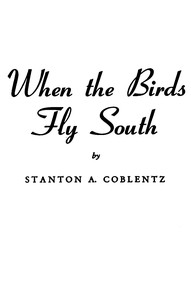
When the birds fly south — Edition Insights
(0 User reviews)
2835
Project Gutenberg
2023
Not confirmed
Fantasy fiction; Man-woman relationships -- Fiction; Afghanistan -- Fiction
Readers of public-domain and historical texts
Project Gutenberg digital edition
en
Edition facts
Words
66,397
Reading time
289 min
Text sections
25
When the birds fly south — Edition Insights can be approached with a clearer sense of reading commitment from its source measurements: 66,397 words, 4 hr 49 min estimated reading time, and 25 detected text sections.
The text analysis averages about 21.4 words per sentence, while the detected sections provide another way to judge how the source is divided.
Project Gutenberg metadata also associates the work with “Fantasy fiction,” connecting these edition facts with the source record’s subject description.
Source:
Project Gutenberg record #71570
A geological expedition in Afghanistan discovers a mysterious peak with a woman-shaped stone colossus, leading to encounters with the Ibandru tribe and a love story entwined with seasonal bird migrations.
Editorial Edition Score
4.8/5
★★★★★
★★★★★
Calculated from edition completeness, EPUB availability, text structure and catalogue metadata. Not a user rating.
How this score is calculated
- Description quality20 pts
- Title & short description10 pts
- Source metadata20 pts
- Text length15 pts
- Chapters / structure15 pts
- EPUB file integrity20 pts
Total of 100 points, scaled to a 2.5-5.0 range. Editions with an empty description or a missing EPUB file are not scored.
Edition quality
Read the Text
There was no arguing the point--they were beyond reason. Nevertheless, in the face of common sense, I could not be contented. From the beginning, that womanlike image had taken hold of my imagination; and, far from discouraging me, the fears and protestations of the natives had only whetted my curiosity. Should opportunity offer, I would scale the mountain and discover for myself if there was any excuse for that terror which the stone figure aroused in the Afghans.
The opportunity, unfortunately, was not long in coming. That evening we pitched camp among the pines at the base of "The Mountain of Vanished Men." Since the site was ideally located at the brink of a clear-bubbling rivulet, and since several of us were exhausted from our strenuous traveling, we decided to remain for a day or two before continuing toward the northern gorges.
Next morning I urged that, whether with guides or without, several of the men join me in a climb to the stone image. The ascent, I pointed out, promised to be easy enough, for the mountain showed a long even grade that rarely approached the perpendicular; and, in the absence of undetected glaciers or ravines, there would be nothing to keep us from the peak. I was even so confident as to assert that, starting shortly after dawn, we would set foot on the summit and be back in camp by evening.
Most of my comrades were not convinced. They swore that it would be foolhardy to entrust ourselves to this unknown wilderness; they painted in gruesome terms the danger of being lost, and the still greater danger from wild beasts, rock slides, and crevasses in the snow and ice; and they scoffed when I vowed that I would go alone if no one would accompany me.
Yet among our party there was one who, either through lack of foresight or an insensitiveness to fear, was ready to risk any hazards. That man, Jasper Damon, was one of those persons with a passion for getting into trouble,--a sure instinct for upsetting canoes in deep water, or invading hollow tree trunks infested with rattlesnakes. All through this expedition he had been my especial companion; and now, while the others sat by with loud guffaws and mocking grimaces, he rushed to my rescue. Springing from his seat just when I most needed an ally, he shook my hand and assured me that a little jaunt to the top of the mountain was the very thing he desired.
Even today I do not know why he joined me. Perhaps the figure on the peak exercised a mysterious compulsion upon him, as upon me; or perhaps he was merely moved by good fellowship. But, whatever his motives, he displayed real zest in his preparations. His black eyes fairly crackled in his long, stubbled face; his lean, lanky figure, with the spidery legs, bustled about in noisy animation. In less time than it took me to make the proposal, he had secured food and firearms and a knapsack containing ropes and climbing equipment; and, scornful of the warnings of our companions and the oaths and mutterings of the natives, he started with me on the long ascent before the sun had lifted its head halfway above the east-ridges.
For more than an hour we plodded along a vague little trail beneath the dark foliage. Many a day must have passed since the last man had followed this track; the occasional small five-clawed footprints showed who the recent passers-by had been. But we were not depressed by thought of the frightful solitudes, nor by fear of the unseen creatures occasionally rustling in the brush; and even when we had literally to dig our way through the thickets, we did not let discouragement mar our spirits. Although the slopes were moderately steep, they were not hard to scale; and we felt sure that early afternoon would see us on the summit.
This hope found support when, before the morning was half over, we reached a more sparsely timbered area, and shortly afterwards came out into a region of straggling shrubs. The rocky ribs of the mountain now stretched bare and gigantic before us, the dismal gray slopes inclining at an angle of from twenty to fifty degrees. Far above, perched on a little cone not unlike the tip of a volcano, that curious statue-like formation loomed encouragingly larger; and a wisp of cloud dangled playfully about the summit and beckoned us to be of good cheer and make haste.
The novel opens with a first-person narrator describing a stone colossus on an Afghan peak, a figure of a woman with uplifted hands, poised as if to step into the abyss. The narrator, a member of an American geological expedition, recounts his first sight of this Titan, which appears too large to be man-made. This specific, awe-struck observation sets the tone for a story that blends natural wonder with the supernatural, grounded in a precise geographical setting.
Geological Expedition Meets Mythic Landscape
The catalog lists Afghanistan as a subject, and the excerpts confirm a detailed, realistic setting: the narrator tramps through a winding rock-defile with nine colleagues and native guides, observing deodar and pine forests, jagged peaks, and a valley basin. The mountain with the statue-like image is described with geological precision—its rocky crown, steel-gray color, and position among snow-tipped ranges. Yet this scientific framing quickly gives way to the inexplicable: the colossus is said to bear the impress of human hands, though it is far too large for human creation. The narrator’s language shifts from observational to awestruck, hinting that the expedition’s rational purpose will be challenged by the landscape’s mythic qualities.
Waiting and the Return of the Ibandru
After winter, the narrator waits for the Ibandru, a tribe that vanished. The excerpts show his daily routine: inspecting deserted huts, scanning the woods, and returning dejectedly at evening. The seasonal change is marked by specific details—fields dotted with rose-red, violet, and pale lemon tints, deciduous trees growing sturdier green, insects chirping. The first birds flying north in April trigger an unreasonable hope. When Karem and Julab finally emerge from the bushes, the narrator’s joy is undercut by their evasiveness about Yasma. Karem’s reply, “Yasma is safe,” and his refusal to say where the tribe had been, create a mystery that the catalog’s subject Fantasy fiction supports, though the excerpts do not reveal the explanation.
Voice and Emotional Register
The narrator’s voice is consistently personal and emotionally exposed. He admits to tears of joy, a thumping heart, and a torrent of anxious questions about Yasma. His language is often hyperbolic: “Happy tears rolled down my cheeks,” “I was near to shouting in my exultation.” This contrasts with the measured, scientific tone of the opening geological description. The catalog lists Man-woman relationships as a subject, and the excerpts confirm a romantic core, but the narrator’s emotional intensity also extends to his bond with the landscape and the Ibandru. His waiting is described with a sense of insidious fear, comparing Yasma to an enchanted princess—a fairy-tale reference that aligns with the fantasy subject, though the excerpts do not confirm whether the story fulfills that genre expectation.
Readers should attend to how the narrator’s geological training interacts with the inexplicable events. The excerpts offer no resolution to the mystery of the Ibandru’s disappearance or the colossus’s origin, so the novel likely sustains ambiguity. The seasonal bird flights, mentioned in the title and the text, may serve as a structural motif, but the excerpts do not clarify their symbolic role.
In When the Birds Fly South, I kept thinking how the stone woman’s stillness spoke louder than any shout. Years of shelving brought me to The horror expert — Reading Notes, where fear, too, whispers in quiet corners. Both books understand that true unease—or longing—needs no noise, just patient attention, like a bird waiting for the season to turn.
There are no reviews for this eBook.
There are no comments for this eBook.
Reader reflection
Before you leave, reflect on the book
Use these questions to collect your thoughts before moving on.
Your progress
0
/
10
2
What was your overall reaction to the book?
3
Would you encourage someone else to read it?
4
How much effort did this book require?
5
Would this book work well in a reading group?
6
Did this book create an emotional response?
7
Was the book what you thought it would be?
8
How clear did the writing feel?
9
What changed or sharpened your thinking?
10