1

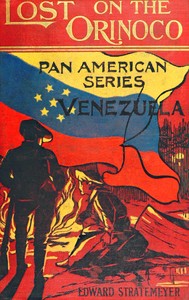
Lost on the Orinoco; or, American boys in Venezuela — Inside the Classic
(0 User reviews)
92
Project Gutenberg
2022
Not confirmed
Orinoco River Delta (Venezuela) -- Description and travel -- Juvenile fiction; Venezuela -- Description and travel -- Juvenile fiction; Americans -- Venezuela -- Juvenile fiction
Readers of public-domain and historical texts
Project Gutenberg digital edition
en
Edition facts
Words
65,002
Reading time
283 min
Text sections
42
This digital edition of Lost on the Orinoco; or, American boys in Venezuela — Inside the Classic is described by source-level measurements including 65,002 words, 4 hr 43 min estimated reading time, and 42 detected text sections.
The text analysis averages about 14.7 words per sentence, while the detected sections provide another way to judge how the source is divided.
Project Gutenberg metadata also associates the work with “Orinoco River Delta (Venezuela) -- Description and travel -- Juvenile fiction,” connecting these edition facts with the source record’s subject description.
Source:
Project Gutenberg record #68944
This editorial note examines how the opening, middle, and later excerpts of Stratemeyer's adventure novel guide a first reading, focusing on the preface's stated aims, the boys' anticipation of the Orinoco, and the shifting dynamics of trust and danger.
Editorial Edition Score
4.9/5
★★★★★
★★★★★
Calculated from edition completeness, EPUB availability, text structure and catalogue metadata. Not a user rating.
How this score is calculated
- Description quality20 pts
- Title & short description10 pts
- Source metadata20 pts
- Text length15 pts
- Chapters / structure15 pts
- EPUB file integrity20 pts
Total of 100 points, scaled to a 2.5-5.0 range. Editions with an empty description or a missing EPUB file are not scored.
Edition quality
Read the Text
adly mistaken. That summer the team played nine games with the teams from rival schools, and won seven of the contests. The winning made Jake Hockley more down on Mark and Frank than ever, but as the others were popular he had often to conceal his real feelings.
On a windy night in June the cry of “fire!” had aroused every inmate of Lakeview Academy from his bed, and had caused all to leave the rambling building in a hurry. The conflagration had started in the laundry, and from this room quickly communicated to the kitchen, dining hall, and then the remainder of the stone and wood structure. In such a high wind, the fire department from the village, two miles away, could do little or nothing, and the efforts of the students, headed by the several teachers, were likewise of no avail. Inside of three hours everything was swept away and only a cellar full of blackened debris marked the spot where the picturesque academy had once stood.
Under such circumstances many a man would have been too stunned to act immediately, but ere the stones of the building were cold, Professor Strong was laying his plans with the insurance companies for the erection of a new and better structure. The students were cared for at some neighboring houses and then refitted with clothing and sent home.
During the fall there had been much talk of a personally conducted tour to South America during the coming year, the tour to be under the guidance of Professor Strong, who had been South a number of times before. Letters had been sent to the parents of various students, but nothing definite had been done up to the time the fire occurred.
Mark and Frank had planned for the trip South, and could not bear to think of giving it up, and as soon as Professor Strong was in a position to give them his attention, Frank had gotten his father to write concerning it. Several letters passed, and at last Professor Strong decided to leave the building and the management of the new academy to his brother, who had just left the faculty of Harvard, and go with the boys.
While the trip was being talked of at the academy, previous to the fire, Jake Hockley had announced his determination to go, but since the boys had separated, nothing more had been heard from the lank youth, and Mark and Frank were hoping he had given the plan up. The announcement therefore, that he would make one of the party, put a damper on their enthusiasm.
“He’ll get us into some kind of trouble before we get back, you see if he doesn’t,” was Frank’s comment.
“I’ll make him keep his distance,” was Mark’s reply. “If he attempts to go too far I’ll show him that I won’t stand any nonsense.”
The party of six were to leave for Venezuela by way of New York city, and a few days after the conversation just recorded Sam Winthrop came down on the train from Boston, to remain with Mark until the arrival of the professor.
“Beans, by all that’s delightful!” cried Mark, as he wrung his friend’s hand. “So glad you came a few days ahead.”
“I wanted a chance to look around New York,” answered Sam Winthrop. “I’ve never had a chance before, you know.”
“You shall look around, all you please, and Frank and I will go with you.”
“No, but Frank expects him to-morrow. Then we can all go around until Professor Strong arrives. But say, what do you think about Glummy going?” and Mark looked anxious.
“Can’t say that I am overjoyed, Mark.”
“I wish it was anybody but Hockley--and Frank wishes the same.”
“Well, all arrangements have been made, so we’ll have to make the best of it. But I heard one thing that doesn’t please me,” went on Sam. “I got a letter from Dick Mason, and in it he said Glummy was talking of the trip to some of his chums, and said he was going just to show Frank and you a thing or two.”
“Did he? I wonder what he meant?”
“He didn’t mean anything very good, you can be sure of that, Mark.”
“You are right. We’ll certainly have to keep our eyes open and watch him,” concluded Mark, seriously.
PREPARING FOR THE START
On the following morning Darry Crane came in, on the Limited Express direct from Chicago. He sent a telegram ahead, to Frank, who went up to the Grand Central depot to meet his chum.
The preface to Lost on the Orinoco announces the book as the first volume of the “Pan-American Series,” intended to combine sightseeing and adventure in parts of the Americas outside the United States. The author notes that the Pan-American Exhibition at Buffalo “did not tell a hundredth part of the story” about Central and South America, positioning the novel as a kind of literary supplement to that exposition. This framing invites the reader to expect both geographical education and thrilling episodes, a dual purpose that shapes the narrative from the start.
A Preface That Sets the Compass
The preface, written by Edward Stratemeyer himself, does more than introduce the story. It explicitly states that the series aims at “young men who in business matters may have to look beyond our own States for their opportunities.” This vocational slant is unusual for a juvenile adventure tale and suggests that the novel’s depictions of Venezuela are meant to be informative as well as exciting. The preface also claims the book is “a complete tale in itself,” reassuring readers that they need not wait for sequels. For a first-time reader, this opening signals that the journey ahead will balance practical knowledge with narrative closure.
Anticipation of the River
In a middle excerpt, the boys examine portfolios of Venezuelan views, including “the waterways leading to the mighty Orinoco” and “the fierce rapids.” Frank exclaims, “I’m just aching to get on that river,” and Mark hopes for “a shot at some big game.” Their conversation reveals a tension between the professor’s claim that “there is no large game left” and the boys’ desire for wild adventure. This exchange primes the reader for the central setting—the Orinoco—while subtly introducing the theme of expectation versus reality. The boys’ eagerness contrasts with the professor’s cautious realism, a dynamic that may foreshadow later conflicts.
Trust Under Scrutiny
Later in the same excerpt, the character Hockley is absent, having left a note claiming his friends were departing by steamer. Professor Strong checks the newspaper and finds “no sailing of any steamer,” only vessels bound for Cape Town and Rio de Janeiro. The professor’s eyes take on “a speculative look as though he feared Hockley had not told the exact truth.” This moment of suspicion, based on a simple factual check, introduces a note of distrust that complicates the group’s dynamics. For the reader, it signals that not all characters are reliable and that the journey may involve deception as well as physical peril.
The Boys’ Voice and the Narrative Tone
The excerpts show a consistent narrative voice that blends the boys’ colloquial speech with the professor’s more formal register. Darry’s remark about doctors—“just to let you think they are earning their fee”—prompts Frank to smile, and the narrator notes it was “so much like his chum’s way of looking at things.” Such small character touches give the boys distinct personalities. The dialogue is natural and unpretentious, with Mark, Frank, and Sam trading opinions about hunting and cities. This conversational tone makes the educational content feel less like a lecture and more like shared discovery, a technique that sustains reader engagement through the novel’s 65,000 words.
Readers approaching Lost on the Orinoco for the first time will find that the excerpts reward attention to small details: a newspaper list, a portfolio of pictures, a character’s speculative look. These elements, rather than grand set pieces, establish the story’s tensions and its blend of instruction and adventure. The preface’s promise of a “complete tale” is worth remembering as the narrative unfolds.
Reading how those boys trusted their guide on the Orinoco brought back the summer I reread Treasure Island by flashlight, that same flicker of unease when admiration curdles into suspicion. Money for nothing — Inside the Classic gave me that identical chill, the quiet dread of realizing the person steering feels less like a protector and more like a puzzle I couldn't solve in time.
There are no reviews for this eBook.
There are no comments for this eBook.
Reader reflection
How will you remember this book?
Save your reaction, strongest insight, and memorable passage.
Your progress
0
/
10
2
What was your overall reaction to the book?
3
How likely are you to recommend this book?
4
What was the reading difficulty like?
5
Did this book create an emotional response?
6
What did you think about the pace?
7
Did the book meet your expectations?
8
Was the book easy to understand?
9
What did this book teach you most?
10