1

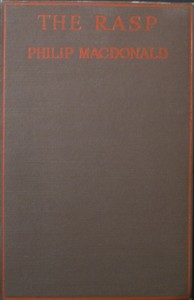
The rasp — Story, Setting & Ideas
(0 User reviews)
1000
Project Gutenberg
2023
Not confirmed
Detective and mystery stories; Murder -- Investigation -- Fiction; Gethryn, Anthony (Fictitious character) -- Fiction
Readers of public-domain and historical texts
Project Gutenberg digital edition
en
Edition facts
Words
79,266
Reading time
345 min
Text sections
21
The source record for The rasp — Story, Setting & Ideas measures this digital text at 79,266 words, 5 hr 45 min estimated reading time, and 21 detected text sections.
The text analysis averages about 12.1 words per sentence, while the detected sections provide another way to judge how the source is divided.
Project Gutenberg metadata also associates the work with “Detective and mystery stories,” connecting these edition facts with the source record’s subject description.
Source:
Project Gutenberg record #72462
Philip MacDonald's 1925 mystery introduces Anthony Gethryn, an amateur sleuth who questions a seemingly airtight case. The narrative moves between London's Fleet Street and the village of Marling, using the titular wood-rasp as a central clue. The novel's structure alternates between tense office scenes and rural investigation, with recurring motifs of heat, noise, and the owl imagery from the nursery rhyme.
Editorial Edition Score
4.8/5
★★★★★
★★★★★
Calculated from edition completeness, EPUB availability, text structure and catalogue metadata. Not a user rating.
How this score is calculated
- Description quality20 pts
- Title & short description10 pts
- Source metadata20 pts
- Text length15 pts
- Chapters / structure15 pts
- EPUB file integrity20 pts
Total of 100 points, scaled to a 2.5-5.0 range. Editions with an empty description or a missing EPUB file are not scored.
Edition quality
Read the Text
The Owl_ shows its blue and gilt cover on the bookstalls every Saturday morning. Thursday nights are therefore nights of turmoil in the offices in Fleet Street. They are always wearing nights; more so, of course, in hot weather than in cold. They are nights of discomfort for the office-boy and of something worse for the editor.
Spencer Hastings edited _The Owl_, and owned a third of it; and the little paper’s success showed him to possess both brains and capacity for hard work. For a man of thirty-three he had achieved much; but that capacity for work was hard tested—especially on Thursday nights. As to the brains, there was really no doubt of their quality. Take, for instance, _The Owl_ “specials.” After he had thought of them and given birth to the first, _The Owl_, really a weekly review, was enabled to reap harvests in the way of “scoops” without in any way degenerating into a mere purveyor of news.
The thing was worked like this: If, by the grace of God or through a member of the “special” staff or by any other channel, there came to Hastings’s ears a piece of Real News which might as yet be unknown to any of the big daily or evening papers, then within a few hours, whatever the day or night of the week, there appeared a special edition of _The Owl_. It bore, in place of the blue and gold, a cover of red and black. The letterpress was sparse. The price was two pence. The public bought the first two out of curiosity, and the subsequent issues because they had discovered that when the red and black jacket was seen Something had really Happened.
The public bought the real _Owl_ as well. It was always original, written by men and women as yet little known and therefore unspoilt. It was witty, exciting, soothing, biting, laudatory, ironic, and sincere—all in one breath and irreproachable taste.
And Hastings loved it. But Thursday nights, press nights, were undoubtedly Hell. And this Thursday night, hotter almost than its stifling day, was the very hell of Hells.
He ruffled his straw-coloured hair, looking, as a woman once said of him, rather like a stalwart and handsome chicken. Midnight struck. He worked on, cursing at the heat, the paper, his material, and the fact that his confidential secretary, his right-hand woman, was making holiday.
He finished correcting the proofs of his leader, then reached for two over-long articles by new contributors. As he picked up a blue pencil, his door burst open.
“What in hell——” he began; then looked up. “Good God! Marga—Miss Warren!”
It was sufficiently surprising that his right-hand woman should erupt into his room at this hour in the night when he had supposed her many miles away in a holiday bed; but that she should be thus, gasping, white-faced, dust-covered, hair escaping in a shining cascade from beneath a wrecked hat, was incredible. Never before had he seen her other than calm, scrupulously dressed, exquisitely tidy and faintly severe in her beauty.
He rose to his feet slowly. The girl, her breath coming in great sobs, sank limply into a chair. Hastings rushed for the editorial bottle, glass, and siphon. He tugged at the door of the cupboard, remembered that he had locked it, and began to fumble for his keys. They eluded him. He swore beneath his breath, and then started as a hand was laid on his shoulder. He had not heard her approach.
“Please don’t worry about that.” Her words came short, jerkily, as she strove for breath. “Please, please, listen to me! I’ve got a Story—the biggest yet! Must have a special done now, to-night, this morning!”
Hastings forgot the whisky. The editor came to the top.
“What’s happened?” snapped the editor.
“Cabinet Minister dead. John Hoode’s been killed—murdered! To-night. At his country house.”
The efficient Miss Margaret Warren was becoming herself again. “Of course. I heard all the fuss just after eleven. I was staying in Marling, you know. My landlady’s husband is the police-sergeant. So I hired a car and came straight here. I thought you’d like to know.” Miss Warren was unemotional.
“Hoode killed! Phew!” said Hastings, the man, wondering what would happen to the Party.
“_What_ a story!” said Hastings, the editor. “Any other papers on to it yet?”
“I don’t think they can be—yet.”
The novel opens not with a murder but with the weekly production of The Owl, a London review edited by Spencer Hastings. The press-night chaos—heat, late hours, a missing secretary—establishes a world of deadlines and frayed nerves before the crime intrudes. This workplace setting, with its specific details (blue and gilt covers, red-and-black special editions), grounds the mystery in a recognizable professional milieu. When Hastings's secretary, Miss Warren, bursts in gasping and dust-covered, the shift from editorial tension to violent disruption is abrupt and effective.
The Owl and the Nursery Rhyme
The epigraph quotes the full “Cock Robin” rhyme, assigning each stanza to a character: the Owl digs the grave, the Sparrow kills. The novel’s title, The Rasp, echoes the rhyme’s “trowel”—both are tools. The murder weapon, a wood-rasp, becomes a physical counterpart to the rhyme’s bow and arrow. The detective, Anthony Gethryn, even jokes about “the Bow—I mean the wood-rasp,” linking the nursery tale to the investigation. This structural device frames the mystery as a riddle where roles (killer, gravedigger) must be assigned, but the novel complicates the rhyme’s simplicity by introducing multiple suspects and a detective who distrusts the obvious answer.
Movement Between City and Village
The narrative shuttles between London’s Fleet Street and the village of Marling, each setting rendered with distinct sensory details. In the city, the air is stifling, the office chaotic; in Marling, the landscape is described through the detective’s eyes: “little leaning houses, the low-browed shops and thatched cottages.” The contrast is sharpened by Anthony Gethryn’s reaction to the village police station, an “offensive affair of pinkish brick” that jars with the old buildings. This movement is not merely scenic—it reflects the investigation’s progress. Clues emerge in both locations, and the shift from urban tension to rural quiet mirrors the detective’s method: stepping back from the immediate pressure to see the case anew.
The Detective’s Doubt and the Evidence
Anthony Gethryn is introduced not as a confident solver but as a man “groping—and it’s devilish dark.” He tells Inspector Boyd that the fingerprints on the rasp are “too lovely”—a sardonic comment on their perfect placement. This skepticism drives the plot: while the police have a clear case against Deacon, Gethryn insists on looking further. His dialogue is marked by playful evasion (“Why so fast, Boyd?”) and literary allusions (“Oh, Fame! Oh, Glory!”). The evidence—photographs of fingerprints, the rasp itself—is presented concretely, but Gethryn’s interpretation remains open. The reader is left to weigh the same clues, unsure whether the detective’s doubt is insight or obstinacy.
Recurring Images: Heat, Noise, and the Press
Throughout the excerpts, heat and noise are persistent. The opening describes a “hotter almost than its stifling day” Thursday night; later, the car ride to Marling is punctuated by Boyd’s “rumbling chuckle” and the engine’s sound. The press itself becomes a motif: The Owl’s production is a cycle of tension and release, and the murder investigation follows a similar rhythm. The rasp, as a tool, suggests both a carpenter’s implement and a grating sound—an aural image that ties back to the noise of the city. These recurring details create a texture of discomfort and urgency, reinforcing the sense that the mystery is not just a puzzle but a disturbance in the ordinary flow of life.
The Role of the Secretary and the Unexpected Witness
Miss Warren’s sudden appearance—gasping, white-faced, dust-covered—is the catalyst for the plot. She is not merely a messenger but a character with a specific role: she was supposed to be on holiday, yet she erupts into the office at midnight. Her presence raises questions about timing and motive that the novel may explore. The excerpts show her as a figure of disruption, breaking the routine of the press night. Later, Sir Arthur’s agitation (“Don’t you see, Gethryn?”) suggests that other witnesses may have incomplete or conflicting accounts. The narrative thus builds its mystery not only on physical clues but on the reliability of those who observe and report.
Readers approaching The Rasp should attend to the interplay between the nursery rhyme framework and the realistic details of 1920s journalism. The novel rewards attention to setting—the contrast between London and Marling, the specific descriptions of offices and police stations—and to the detective’s offhand remarks, which often carry more weight than they first appear. The excerpts leave the central question open: is the obvious suspect guilty, or is the evidence too neat? The answer lies in the gaps between what characters say and what the narrative shows.
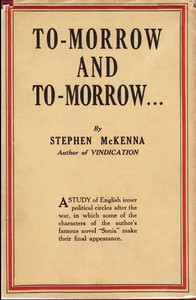
That rainy afternoon, the rasp's persistent scrape and Marling's oppressive heat stayed with me long after I closed the book—a strange, lingering weight. The owl from the nursery rhyme kept circling my thoughts, a quiet symbol of something unresolved. I found myself reaching for To-morrow and to-morrow ... a novel — A Closer Reading, and its softer, more reflective tones felt like a natural exhale after all that tension.
There are no reviews for this eBook.
There are no comments for this eBook.
Reader reflection
Take a moment to reflect on this book
Create a short personal record of your experience with this book.
Your progress
0
/
10
2
Did this book hold your interest?
3
Is this a title you would suggest to others?
4
How much effort did this book require?
5
Did any part of the book feel personally relevant?
6
Did you gain anything practical from the text?
7
How did the reading compare with what you expected?
8
How original did the book feel?
9
Which lesson or insight stayed with you?
10