1

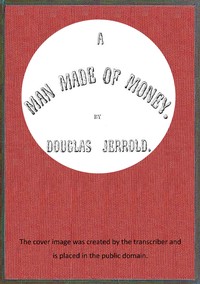
A man made of money — Inside the Classic
(0 User reviews)
123
Project Gutenberg
2023
Not confirmed
Humorous stories; Wealth -- Fiction; Cost and standard of living -- Fiction
Readers of public-domain and historical texts
Project Gutenberg digital edition
en
Edition facts
Words
104,056
Reading time
453 min
Text sections
27
For A man made of money — Inside the Classic, the stored edition analysis reports 104,056 words, 7 hr 33 min estimated reading time, and 27 detected text sections.
The text analysis averages about 15.2 words per sentence, while the detected sections provide another way to judge how the source is divided.
Project Gutenberg metadata also associates the work with “Humorous stories,” connecting these edition facts with the source record’s subject description.
Source:
Project Gutenberg record #70481
A satirical novel about Mr. Jericho, a man whose heart is replaced by a hole after a bullet passes through it, leading to absurd financial and social consequences. The story uses recurring images of holes and money to critique Victorian wealth and domestic life.
Editorial Edition Score
4.9/5
★★★★★
★★★★★
Calculated from edition completeness, EPUB availability, text structure and catalogue metadata. Not a user rating.
How this score is calculated
- Description quality20 pts
- Title & short description10 pts
- Source metadata20 pts
- Text length15 pts
- Chapters / structure15 pts
- EPUB file integrity20 pts
Total of 100 points, scaled to a 2.5-5.0 range. Editions with an empty description or a missing EPUB file are not scored.
Edition quality
Read the Text
richo, with accessory boon-fellows, had partaken of a luxurious repast; little caring that his own stinted lares were served with, at best, metaphoric cold mutton. Mr. Jericho had tested the best resources of the larder and cellar of the Apollo Tavern; and full of meat and wine, and his brain singing with fantastic humours, he had surveyed the river Thames with simpering complacency; had seen big-bellied ships, stowed with India and Africa, drop silently with the tide towards their haven. It was impossible to enjoy a serener evening or a nobler sight. The setting sun, with a magnificence quite worthy of the west-end, coloured all things gold and ruby; the black hulls of ships glowed darkly and richly; and their sails were, for the time, from Tyrian looms. The gorgeousness of the hour enriched every common object with glorious beauty. Every cold, mean common-place of the common day seemed suffused in one wide harmonious splendour. And the brain of Jericho, meditating the scene, was expanded and melted into it; and in that prodigal wealth of colour, the illusion a little assisted by the swallowed colours within him, Jericho felt himself a part and parcel of the absorbing richness. The wine in his heart, a Bacchus’ jack-o’-lantern, reflected the rosy, golden light that came upon him.
This sweet illusion lasted its pleasant time, fading a little when the bill was rung for. Nevertheless, Jericho, by the force of the scene and the wine, felt himself in much easier circumstances than the hard tyranny of truth, when he was in a calm condition to respect its dictum, was likely to allow. And so, at that hour when sparrows look down reproachfully from their eaves at the flushed man trying the street-door—at that penitential hour, with the hues of the past romantic evening becoming very cold within him—Mr. Jericho stood beneath his own oppressive roof.
Mrs. Jericho was gone to bed.
Mr. Jericho breathed a little lighter. Such a load was taken off him, that he mounted the staircase tenderly, as though he trod upon flowers; as though every woollen blossom in the carpet from the stair to the bed itself was living heart’s-ease; which it was not.
Being somewhat ashamed of Mr. Jericho who, as it has been shown, left his wife to the solitude of her dinner-table, whilst he, luxurious spendthrift, could dine with company abroad,—we should be very happy if we could, without any more ado, put him to bed at once, and indignantly tucking him up, and with perhaps an allowed allusion to the sort of head that awaited him in the morning, let the good-for-nothing fellow snore till the curtain-rings danced again, allowing him only to wake up in time for the next chapter. But this we cannot do. The stern, iron moral it is our wish to impress upon the world—yielding as it always is to such impressions—compels us to steady Mr. Jericho to his bed-side; and even when there, not for awhile to leave him.
In the reproachful quietude of his dressing-room, Jericho prepared himself for his couch. Tenderly did his fingers dwell upon and wander about buttons. He caught a sight of himself in the looking-glass, and—to dodge his conscience—set himself to feign to whistle: and then it struck him it must be very, very late, his beard had grown so much. And the day in a moment seemed to have opened its broad, staring eye; and the sparrows cried more saucily; and the reproachful voice of the pigeons perched upon the chimney-top, came down in muffled murmur upon Solomon’s ear; and with a very little more he would have felt himself a villain.
The culprit placed his hand upon the handle of the bed-room door. Had he been a burglar with a felonious intention upon Mrs. Jericho’s repeater, instead of the man responsible for the rent and taxes of the house in which he at that moment stood in his shirt and shuddered,—had he, we say, at that point of time been an unlawful thief _in posse_, in lieu of a lawful husband _in esse_, his knees—unless he had been a very young and sensitive rogue indeed—could not have so knocked together. With his face crumpled into a thousand lines, he opened the door. What a blessing; the hinges did not that time creak, and before they always did! Assured by the omen, Jericho took a little bit of heart. The night-light was winking its last. There was not a sound. The bed-curtains hung like curtained marble. Jericho paused, turning up his ear. Still not a sound. Sabilla did not ordinarily sleep so light. The stillness was peculiar—curious—very odd.
“And if my Lucy should be dead!”
The novel opens with a domestic interrogation: Mrs. Jericho repeatedly asks her husband, “When can you let me have some money?” This question, delivered with cold precision, establishes the central tension of the work. The narrator compares her speech to a torture method—cold water falling drop by drop—and notes that Mr. Jericho, in gown and slippers, can only stare at a fly on the ceiling. The scene immediately introduces a recurring structural pattern: money as a source of pressure, and the home as a site of comic conflict.
Jerrold’s prose is dense with simile and authorial commentary. The reader is addressed directly, invited to see the marriage certificate “legible in every line of Mrs. Jericho’s face.” This narrative voice, at once playful and sardonic, shapes the entire work.
The Hole in the Heart
A bullet passes through Jericho’s heart, leaving a clean hole. Doctor Dodo, who witnesses the wound, insists he saw “the setting sun through his fourth and fifth ribs.” The man walks away unharmed. This absurd medical event becomes the novel’s central image: a literal hole where the heart should be. The narrator later remarks that the Man of Money has “a hole in its heart,” linking physical damage to moral emptiness.
The hole recurs as a metaphor for financial and emotional lack. Jericho’s wife asks for money; his heart is missing; the money itself seems hollow. Jerrold uses this image to question what it means to be “made of money.” The bullet does not kill Jericho, but it transforms him into a walking paradox—a man who survives without a vital organ, much as a miser might live without genuine feeling.
Domestic Warfare and the Language of Debt
The opening chapter establishes marriage as a creditor-debtor relationship. Mrs. Jericho’s repeated demand for money is described as a form of torture, yet the narrator also notes her love is “playful” and unintentionally cruel. The home becomes a battlefield where words are weapons. Jericho’s silence and upward gaze are his only defenses.
Later, Doctor Dodo’s insistence on the truth of the hole leads to professional ruin. He is mocked for believing his own senses. The novel suggests that in a world governed by appearances and social convenience, honesty is a liability. The domestic and medical spheres both operate on a logic of debt: one owes money, the other owes belief. Jerrold’s satire targets the way institutions—marriage, medicine, finance—demand compliance rather than truth.
Movement Between Scenes: From Parlor to Dueling Ground
The narrative shifts rapidly from the Jerichos’ parlor to the Battersea Waterloo, where the duel occurs. This movement between intimate and public spaces is characteristic of the novel’s structure. The domestic interior, with its flies and ceiling-gazing, contrasts with the open field where a bullet pierces a heart. Jerrold uses these shifts to expose the absurdity of social rituals.
The duel itself is treated with dark comedy. Doctor Dodo, called to attend the wounded man, finds Jericho striding away “like an ostrich.” The medical profession is shown as baffled and stubborn. The scene’s pacing—from tense standoff to miraculous survival—mirrors the novel’s tonal swings between farce and critique. Each new location (parlor, field, doctor’s consultation) reframes the central joke: a man who cannot be killed by a bullet, only by his wife’s questions.
Recurring Images: Flies, Holes, and Empty Purses
Jerrold fills the text with small, telling details that accumulate meaning. In the first chapter, Mr. Jericho contemplates a fly “holding on with the rest of his legs” while cleaning its head. The fly, like Jericho, is trapped in a domestic space, subject to forces beyond its control. Later, the narrator compares the bullet’s passage through Jericho’s heart to a hole through a “crumpet” or “pancake”—food items that are hollow or easily pierced.
These images reinforce the theme of emptiness. The money Jericho cannot provide, the hole in his chest, the fly’s pointless grooming—all suggest a world where surfaces are maintained while substance is absent. The illustrations by John Leech, mentioned in the title page, likely amplify these visual motifs. Readers should watch for how objects and bodies are described in terms of lack: missing money, missing heart, missing credibility.
This edition reproduces the 1849 Punch publication, with twelve steel engravings by John Leech. The text is divided into 27 sections, each advancing the absurd premise with a mix of dialogue and narrator commentary. Readers will benefit from attending to Jerrold’s similes and asides, which often carry the satirical weight. The novel rewards those who enjoy verbal play and social critique in the tradition of Thackeray or Dickens, though its tone is distinctly its own.
After all these years, I still think of Jericho's hollow heart when I see that small bear on the shelf, waiting. One is a hole made of wanting, the other a pocket made of hope. Yet both know the quiet ache of being empty—and the gentle surprise of being found. Corduroy — Story, Setting & Ideas holds that same soft, patient truth. Some stories simply understand the weight of a missing button.
There are no reviews for this eBook.
There are no comments for this eBook.
Reader reflection
What did you think of this book?
Answer a few questions and save a private reflection on this device.
Your progress
0
/
10
2
Was reading this book enjoyable?
3
Would you encourage someone else to read it?
4
How easy was the book to follow?
5
How would you rate its originality?
6
Did you gain anything practical from the text?
7
How personally connected did you feel to the book?
8
How did the reading compare with what you expected?
9
In one sentence, what did you learn?
10