1

The mystery of Central Park — Reading Companion
(0 User reviews)
56
Project Gutenberg
2023
Not confirmed
American fiction -- 19th century; Mystery fiction; Central Park (New York, N.Y.) -- Fiction
Readers of public-domain and historical texts
Project Gutenberg digital edition
en
Edition facts
Words
36,770
Reading time
160 min
Text sections
24
For The mystery of Central Park — Reading Companion, the stored edition analysis reports 36,770 words, 2 hr 40 min estimated reading time, and 24 detected text sections.
The text analysis averages about 17.5 words per sentence, while the detected sections provide another way to judge how the source is divided.
Project Gutenberg metadata also associates the work with “American fiction -- 19th century,” connecting these edition facts with the source record’s subject description.
Source:
Project Gutenberg record #69984
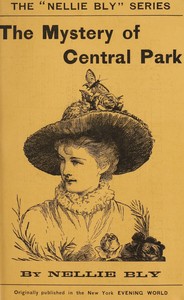
Nellie Bly's 1889 mystery follows Dick Treadwell and Penelope Howard as they investigate a young woman found in Central Park, blending romance with urban observation and class critique.
Editorial Edition Score
4.8/5
★★★★★
★★★★★
Calculated from edition completeness, EPUB availability, text structure and catalogue metadata. Not a user rating.
How this score is calculated
- Description quality20 pts
- Title & short description10 pts
- Source metadata20 pts
- Text length15 pts
- Chapters / structure15 pts
- EPUB file integrity20 pts
Total of 100 points, scaled to a 2.5-5.0 range. Editions with an empty description or a missing EPUB file are not scored.
Edition quality
Read the Text
“And that is your final decision?”
Dick Treadwell gazed sternly at Penelope Howard’s downcast face, and waited for a reply.
Instead of answering, as good-mannered young women generally do, Penelope intently watched the tips of her russet shoes, as they appeared and disappeared beneath the edge of her gown, and remained silent.
When she raised her head and met that look, so sad and yet so stern, the faintest shadow of a smile placed a pleasing wrinkle at the corners of her brown eyes.
“Yes, that is--my final decision,” she repeated, slowly.
Dick Treadwell dropped despondently on a bench and, gazing steadily over the green lawn, tried to think it all out.
He felt that he was not being used quite fairly, but he was at a loss for a way to remedy it.
Here he was, the devoted slave of the rather plain girl beside him, who refused to marry him, merely because he had never soiled his firm, white hands with toil, nor worried his brain with a greater task, since his school days, than planning some way to kill time.
He was one of those unfortunate mortals possessed of an indolent disposition, and had been left a modest legacy, that, though making him far from wealthy, was still enough to support him in idleness.
He lacked the spur of necessity which urged men on to greater deeds.
In short, Richard was one of those worthless ornaments of society that live, and die without doing much good or any great harm.
That he was an ornament, however, none dared to deny, and the expressive brown eyes of the girl, who had seated herself beside him bore ample testimony that she was not unconscious of his manly charms.
Dick took off his straw hat, and after running his firm, white fingers through his kinky, light hair, crossed one leg over the other, while he brooded moodily on his peculiar fate. The frank, boyish expression, that had won him so many admirers, was displaced by a heavy frown, and his bright blue eyes gazed unseeingly over the beautiful vista before him.
He could not understand why a girl should get such crazy ideas, any way. There were plenty of girls who made no effort to hide their admiration for him, and he knew that they could be had for the asking, if it only wasn’t for Penelope.
But, somehow, Penelope had more attraction for him than any girl he had ever met. Her very obstinacy, her independence, made her all the more charming to him, even if it was provoking.
Penelope Howard was in no wise Dick Treadwell’s mate in beauty.
She was slender to boniness and tall, but willowy and graceful, and one forgot her murky complexion when gazing into the depths of her bright, expressive eyes and catching the curve of a wonderfully winsome smile.
Penelope was an heiress, though, to a million dollars or more, and so no one ever called her plain.
She was an orphan and had been reared by a sensible old aunt, who would doubtless leave her another million.
Penelope knew her defects as well and better than did other people. She had no vanity and was blessed with an unusual amount of solid sense.
Penelope Howard was well aware that she would not have to go begging for a husband, but she had loved handsome Dick Treadwell ever since the year before she graduated at Vassar. He had gone there to pay his devotions to another fair under-graduate and came away head over heels in love with Penelope. Nevertheless Penelope was in no hurry to marry.
She loved Richard with all her heart, but there was a barrier between them which he alone could remove.
“You know, Dick,” she said, softly, as he still gazed across the green lawn, trying to find a mental foothold, as it were, “that I told you this before”----
“Yes, this makes the sixth time I have proposed,” he said, savagely, still looking away.
The novel opens with a tense exchange in Central Park: Dick Treadwell presses Penelope Howard for a final decision on his marriage proposal, but she refuses because he has never worked. This initial conflict—between idleness and purpose—sets up a narrative that intertwines romance with social commentary. Bly, known for her investigative journalism, brings a reporter's eye to the story, filling it with sharp observations of New York City life, from restaurant patrons to street vendors. The mystery itself emerges when a young girl is discovered on a bench, leading Dick and Penelope into a web of secrets.
A Reluctant Hero and a Practical Heroine
Dick Treadwell is introduced as a man of leisure, left a modest legacy that allows him to avoid work. Penelope, by contrast, is described as a “rather plain girl” who values industry. Their dynamic is established early: she challenges his indolence, and he must prove himself worthy. This tension drives the plot, as Penelope sets a task for Dick—to investigate the mysterious girl—before she will consider his proposal. The excerpts show Dick’s frustration but also his willingness to act, suggesting a character arc from idleness to engagement. Penelope’s role as the instigator of the investigation positions her as an active force, not merely a romantic interest.
Restaurant Scenes as Social Theater
In a later excerpt, Dick dines with a woman named Dido, and their conversation reveals Bly’s skill at social observation. Dido imagines stories for the other diners—a fat woman in cherry-red, a legless man with diamonds—while Dick corrects her romantic notions with cynical realism. He notes that the legless man’s companions are after his money, not his character. This exchange highlights a recurring theme: the gap between appearance and reality, especially in urban settings. The restaurant becomes a stage where class, ambition, and deception play out, mirroring the larger mystery of the girl in the park.
The Mystery Unfolds Through Dialogue
The excerpts provide only fragments of the central mystery, but they show that the plot advances through conversation and deduction rather than action. Chapter titles like “The Young Girl on the Bench” and “Penelope Sets a Hard Task for Dick” indicate that the investigation is a collaborative effort. The dialogue between Dick and Penelope is marked by wit and tension, as when Penelope teases him about his dining habits. The mystery itself—who the girl is and why she attempted suicide—is gradually revealed through interviews and observations, a method that reflects Bly’s journalistic background.
Bly’s Voice: Between Journalism and Fiction
Nellie Bly was famous for her undercover reporting, and this novel shows her applying similar techniques to fiction. The narrative voice is direct and unsentimental, with a focus on concrete details: russet shoes, a cherry-red dress, a “villain’s mustache” carrying dinner remnants. Bly avoids melodrama, instead grounding the story in realistic settings like Central Park and restaurants. The mystery is not a puzzle of clues but a human drama about identity and social position. Readers familiar with Bly’s work will recognize her interest in the lives of women and the poor, though the excerpts here focus more on middle-class characters.
As you read, pay attention to how Bly uses setting—particularly Central Park and New York restaurants—to reflect the characters’ inner states. The park is both a place of refuge and a site of mystery, while the restaurants expose social hierarchies. The dialogue carries much of the plot, so note how characters reveal themselves through what they say and how they observe others. This is a mystery that unfolds through human interaction rather than forensic detail, making it a precursor to the modern detective story.
I remember how Nellie’s book lingers on the way a city keeps secrets in plain sight. Unnatural Death has that same patient hush—evidence hidden not in shadows, but in ordinary things we walk past daily. Both whisper that the true story waits quietly, like a familiar bench, until someone sits down long enough to notice. Unnatural death — Edition Insights carries that old familiar comfort.
There are no reviews for this eBook.
There are no comments for this eBook.
Reader reflection
Before you leave, reflect on the book
Use these questions to collect your thoughts before moving on.
Your progress
0
/
10
2
What was your overall reaction to the book?
3
How likely are you to recommend this book?
4
How demanding did the text feel?
5
Could you see yourself revisiting this book?
6
Would this book work well in a reading group?
7
Which part made the strongest impression?
8
How would you rate its originality?
9
Which lesson or insight stayed with you?
10