1

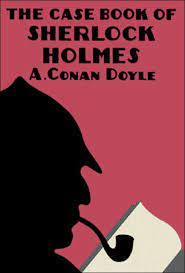
The case-book of Sherlock Holmes — Inside the Classic
(0 User reviews)
3059
Project Gutenberg
2023
Not confirmed
Holmes, Sherlock (Fictitious character) -- Fiction; Private investigators -- England -- Fiction; Detective and mystery stories, English
Readers of public-domain and historical texts
Project Gutenberg digital edition
en
Edition facts
Words
86,951
Reading time
379 min
Text sections
8
The case-book of Sherlock Holmes — Inside the Classic can be approached with a clearer sense of reading commitment from its source measurements: 86,951 words, 6 hr 19 min estimated reading time, and 8 detected text sections.
The text analysis averages about 13.0 words per sentence, while the detected sections provide another way to judge how the source is divided.
Project Gutenberg metadata also associates the work with “Holmes, Sherlock (Fictitious character) -- Fiction,” connecting these edition facts with the source record’s subject description.
Source:
Project Gutenberg record #69700
Doyle's preface and the opening of 'The Adventure of the Illustrious Client' reveal a self-aware author and a case where Holmes confronts a client's emotional plea, setting a reflective, late-career tone.
Editorial Edition Score
4.7/5
★★★★★
★★★★★
Calculated from edition completeness, EPUB availability, text structure and catalogue metadata. Not a user rating.
How this score is calculated
- Description quality20 pts
- Title & short description10 pts
- Source metadata20 pts
- Text length15 pts
- Chapters / structure15 pts
- EPUB file integrity20 pts
Total of 100 points, scaled to a 2.5-5.0 range. Editions with an empty description or a missing EPUB file are not scored.
Edition quality
Read the Text
ere was just one thing that shook me. Yes, by Gripes! if it had not been for his poisonous, lying tongue that explains and soothes, I'd have left him that very night. It's a book he has--a brown leather book with a lock, and his arms in gold on the outside. I think he was a bit drunk that night, or he would not have shown it to me."
"I tell you, Mr. Holmes, this man collects women, and takes a pride in his collection, as some men collect moths or butterflies. He had it all in that book. Snapshot photographs, names, details, everything about them. It was a beastly book--a book no man, even if he had come from the gutter, could have put together. But it was Adelbert Gruner's book all the same. 'Souls I have ruined.' He could have put that on the outside if he had been so minded. However, that's neither here nor there, for the book would not serve you, and, if it would, you can't get it."
"How can I tell you where it is now? It's more than a year since I left him. I know where he kept it then. He's a precise, tidy cat of a man in many of his ways, so maybe it is still in the pigeon-hole of the old bureau in the inner study. Do you know his house?"
"I've been in the study," said Holmes.
"Have you, though? You haven't been slow on the job if you only started this morning. Maybe dear Adelbert has met his match this time. The outer study is the one with the Chinese crockery in it--big glass cupboard between the windows. Then behind his desk is the door that leads to the inner study--a small room where he keeps papers and things."
"Is he not afraid of burglars?"
"Adelbert is no coward. His worst enemy couldn't say that of him. He can look after himself. There's a burglar alarm at night. Besides, what is there for a burglar--unless they got away with all this fancy crockery?"
"No good," said Shinwell Johnson, with the decided voice of the expert. "No fence wants stuff of that sort that you can neither melt nor sell."
"Quite so," said Holmes. "Well, now, Miss Winter, if you would call here to-morrow evening at five, I would consider in the meanwhile whether your suggestion of seeing this lady personally may not be arranged. I am exceedingly obliged to you for your co-operation. I need not say that my clients will consider liberally----"
"None of that, Mr. Holmes," cried the young woman. "I am not out for money. Let me see this man in the mud, and I've got all I worked for--in the mud with my foot on his cursed face. That's my price. I'm with you to-morrow or any other day so long as you are on his track. Porky here can tell you always where to find me."
I did not see Holmes again until the following evening, when we dined once more at our Strand restaurant. He shrugged his shoulders when I asked him what luck he had had in his interview. Then he told the story, which I would repeat in this way. His hard, dry statement needs some little editing to soften it into the terms of real life.
"There was no difficulty at all about the appointment," said Holmes, "for the girl glories in showing abject filial obedience in all secondary things in an attempt to atone for her flagrant breach of it in her engagement. The General 'phoned that all was ready, and the fiery Miss W. turned up according to schedule, so that at half-past five a cab deposited us outside 104 Berkeley Square, where the old soldier resides--one of those awful grey London castles which would make a church seem frivolous. A footman showed us into a great yellow-curtained drawing-room, and there was the lady awaiting us, demure, pale, self-contained, as inflexible and remote as a snow image on a mountain.
"I don't quite know how to make her clear to you, Watson. Perhaps you may meet her before we are through, and you can use your own gift of words. She is beautiful, but with the ethereal other-world beauty of some fanatic whose thoughts are set on high. I have seen such faces in the pictures of the old masters of the Middle Ages. How a beast-man could have laid his vile paws upon such a being of the beyond I cannot imagine. You may have noticed how extremes call to each other, the spiritual to the animal, the cave-man to the angel. You never saw a worse case than this.
Doyle's preface to The Case-Book of Sherlock Holmes is unusually personal. He likens Holmes to a popular tenor making repeated farewell bows, and speculates on a literary limbo where his characters might mingle with those of Fielding, Richardson, Scott, Dickens, and Thackeray. This self-awareness colors the twelve stories that follow, which were published in the last few years before the collection's 1927 release. The first excerpt, from 'The Adventure of the Illustrious Client,' plunges the reader into a case where Holmes receives a desperate letter from J. Neil Gibson, a gold-mining magnate. Gibson's plea—'I can't see the best woman God ever made go to her death without doing all that is possible to save her'—is raw and emotional, a departure from the more detached clients of earlier tales.
A Self-Conscious Farewell
The preface establishes that Doyle had tried to end Holmes before, after The Memoirs, but was persuaded to revive him. Here, he insists 'this must cease' and that Holmes 'must go the way of all flesh.' He notes that the stories span from the late Victorian era through Edward's reign into 'these feverish days.' This chronological spread is reflected in the collection's varied settings and concerns. The first story's mention of an American senator and a Hampshire estate hints at a broader, more modern world than the gaslit London of earlier adventures. Readers should note how Doyle balances nostalgia with a sense of closure, as Holmes himself seems older and more weary.
A Client's Desperate Plea
The letter from J. Neil Gibson is striking for its lack of legal caution: 'I can't explain things—I can't even try to explain them, but I know beyond all doubt that Miss Dunbar is innocent.' Holmes's reaction is measured—he calls the case 'exceedingly sensational' but 'thankless,' and admits he 'can discover facts, but cannot change them.' This tension between the client's emotional urgency and Holmes's analytical reserve drives the narrative. The excerpt also includes Holmes's summary of the crime: a wife found dead with a revolver bullet through her brain, no weapon nearby, and a revolver discovered in the governess's wardrobe. The detail 'No weapon near her, Watson—mark that!' is a classic Holmesian clue, inviting the reader to note its significance.
Holmes's Method Under Strain
In the excerpt, Holmes tells Watson he is 'getting into your involved habit of telling a story backwards,' a self-referential nod to Watson's narrative style. This suggests that the story's structure may be more complex than usual. The case involves a 'most violent and formidable character' (Gibson) and a governess who is 'very attractive'—elements that could cloud judgment. Holmes's initial assessment is pessimistic: 'Unless some entirely new and unexpected ones come to light I do not see what my client can hope for.' This sets up a puzzle where the obvious evidence points one way, but the client's conviction suggests another. Readers should watch for how Holmes reconciles these conflicting signals.
A Late-Career Collection's Texture
The excerpts show Doyle experimenting with narrative voice. The preface is in his own person, while the story is told by Watson. The letter from Gibson is written in a colloquial, almost breathless style—'It's the damned injustice of it all that makes me crazy'—which contrasts with Holmes's precise language. This variety in register is a feature of the collection. Additionally, the mention of 'Claridge's Hotel' and 'the Assizes at Winchester' grounds the story in specific, contemporary locations. The case's reliance on a single, damning piece of evidence (the revolver in the wardrobe) recalls earlier Holmes plots, but the emotional weight carried by the client's plea gives it a different tone.
Reading The Case-Book of Sherlock Holmes with the preface in mind enriches the experience: Doyle is consciously writing a final chapter. The stories are not merely puzzles but meditations on justice, reputation, and the limits of reason. Pay attention to moments where Holmes's deductions are challenged by human emotion, and where the author's own voice seems to peek through the narrative. This collection rewards those who read it as both a detective series and a literary farewell.
The rain against my window blurred the print of Watson’s final notes, yet Holmes’s quiet admission of weariness lingered. That reflective tone reminded me of another ageing storyteller, one who turns to memory rather than mystery. I set the case-book aside and pulled up Ashcliffe Hall: A tale of the last century — Background and Themes, finding a similar, gentle dusk settling there.
There are no reviews for this eBook.
There are no comments for this eBook.
Reader reflection
Before you leave, reflect on the book
Use these questions to collect your thoughts before moving on.
Your progress
0
/
10
2
Was reading this book enjoyable?
3
How likely are you to recommend this book?
4
Did the language feel accessible?
5
How clearly were the main ideas presented?
6
How closely did the book connect with your experience?
7
Did you gain anything practical from the text?
8
Did anything about the book feel genuinely new?
9
What did this book teach you most?
10