1

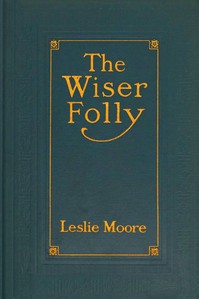
The wiser folly — Inside the Classic
(0 User reviews)
630
Project Gutenberg
2022
Not confirmed
Inheritance and succession -- Fiction; Castles -- Fiction; England -- Social life and customs -- 20th century -- Fiction; Families -- Fiction
Readers of public-domain and historical texts
Project Gutenberg digital edition
en
Edition facts
Words
66,700
Reading time
290 min
Text sections
55
The wiser folly — Inside the Classic can be approached with a clearer sense of reading commitment from its source measurements: 66,700 words, 4 hr 50 min estimated reading time, and 55 detected text sections.
The text analysis averages about 14.3 words per sentence, while the detected sections provide another way to judge how the source is divided.
Project Gutenberg metadata also associates the work with “Inheritance and succession -- Fiction,” connecting these edition facts with the source record’s subject description.
Source:
Project Gutenberg record #69310
A novel structured around a prologue and 51 chapters, using a narrator who comments on character perceptions and the gap between anticipation and reality, set in an English village and castle.
Editorial Edition Score
4.8/5
★★★★★
★★★★★
Calculated from edition completeness, EPUB availability, text structure and catalogue metadata. Not a user rating.
How this score is calculated
- Description quality20 pts
- Title & short description10 pts
- Source metadata20 pts
- Text length15 pts
- Chapters / structure15 pts
- EPUB file integrity20 pts
Total of 100 points, scaled to a 2.5-5.0 range. Editions with an empty description or a missing EPUB file are not scored.
Edition quality
Read the Text
but that Lady Mary and the priest were past masters in keeping their own counsel when they chose. He would be a bold man who put any question savouring of impertinence to Lady Mary. For my part, I had sooner face a whole battery of artillery than have Lady Mary’s tortoiseshell-rimmed lorgnettes turned slowly upon me, her grey eyes glinting through them with steely courtesy. The courtesy was never absent, you may be sure, but then neither--on occasions--was the steeliness. Nor would it be well, if you wished to retain the smallest atom of self-respect, to question Father Maloney unduly. That soft tongue and speech of his could shrivel your complacency to the likeness of a withered leaf when you deserved it. And you may be very sure that, when they did shrivel it, you were left in no manner of doubt as to your deserts in the matter.
Lady Mary herself never ventured the smallest hint of an opinion as to whom the credit was due. In fact from first to last she kept a dignified silence on the whole affair, save when sheer necessity demanded speech from her. Her silence and dignity alone prevented it from sinking to melodrama, and truth obliges me to confess that it had more than once a distinctly suspicious flavour of that obnoxious quality.
But this is beginning at the wrong end of the skein, a proceeding which will indubitably result in a most fearsome tangle. Therefore, with your permission, I will break off and start anew.
CONCERNING THE VILLAGE OF MALFORD
“YOUR idea,” said John meditatively, “as far as I can elucidate it from your somewhat wordy discourse, is that I should accompany you to this exceedingly out-of-the-way, this on your own showing entirely remote, secluded, and sequestered spot, for the sole purpose of affording you amusement in your so to speak out of work hours.”
“That,” returned Corin admiringly, “is the idea _in toto_. It is marvellous with what ease and skill you have grasped and summed up the entire situation.”
“And might one be allowed to question what are the advantages to be gained from such a sojourn? What manner of recreation can the place afford? In a word, where do I come in?”
“Advantages!” Corin raised his eyes to the cobwebby rafters. “Heavens above! Isn’t my companionship an advantage? And for recreation what more can you desire than the contemplation of country lanes and wide moorland this glorious summer weather? Think of it, man! The earth ablaze with purple heather, the sea blue and golden,--breathing, living, colour. Anon there will be blackberries, great luscious clusters of blue-black fruit hanging ready for the plucking in every hedgerow. Again, I ask, what more can you desire?”
“I am not, I would have you observe, either an artist or a boy. Your inducements fail to move me.”
“My companionship,” urged Corin.
“The blatant conceit of the man,” sighed John.
Corin changed his tone, descended to wheedling. “Consider my loneliness,” he remarked pathetically. “From six o’clock--I can’t put in more than an eight-hour day--till midnight alone and unoccupied. Six hours!”
“Go to bed at nine and reduce the six hours by a simple process of subtraction to three, or play patience,” returned John unsympathetically.
“Inhuman brute,” mourned Corin.
He was a tall young man, thirty or thereabouts, clean-shaven, bronzed, grey-eyed, and with a thin hooked nose. His mouth, below it, was slightly grim in repose. But, when he smiled, you forgot the grimness, and smiled involuntarily in response. Also, you found yourself watching for the smile to come into play a second time. It had a curious manner of leaping first to his eyes in a sudden and illuminating flash. Deserting them, it passed equally suddenly to his mouth, leaving the eyes sad. It was a disconcerting trick, a baffling magician’s trick, and left you wondering. In the matter of dress he was fastidious to a degree. At the moment his attire was the most immaculate suit of London clothes, grey trousers, frock coat, and all the rest of the paraphernalia. His silk hat, exceeding glossy, reposed on a worm-eaten oak chair near him. He had removed a pile of sketch books and a bunch of dilapidated lilies to make place for the hat. They lay now on the floor.
The Wiser Folly opens with a prologue that immediately establishes a chorus of conflicting explanations for the story's outcome, each attributed to a different character: Biddy credits her prayers, the village credits Lady Mary Delancey, Mrs. Trimwell holds private views, Corin Elmore invokes karma, and John Mortimer leans toward his sister. This device signals that the novel will be as concerned with how events are interpreted as with the events themselves. The narrator's voice is present throughout, offering wry observations and occasionally stepping back to comment on the action, as when noting that 'the actuality wasn't half, or a quarter, as bad as the anticipation.' This self-aware narration shapes the reader's engagement with the story.
A Prologue That Frames the Whole
The prologue is not a conventional summary but a preview of the interpretive struggle that follows. By listing multiple, incompatible accounts of the 'happy termination,' the narrator foregrounds the theme of subjective truth. Biddy's claim to a monopoly on divine intervention is undercut by the village's secular gratitude toward Lady Mary, while Corin's philosophical karma stands apart. This opening suggests that the novel will resist a single authoritative reading, inviting readers to weigh the evidence themselves. The prologue's structure—a series of opinions without authorial endorsement—mirrors the later chapters, where characters frequently misunderstand each other's motives.
Movement Between Village and Castle
The narrative shuttles between the village of Malford and Delancey Castle, each setting carrying distinct social and emotional weights. Chapter titles like 'Concerning the Village of Malford' and 'At Delancey Castle' signal this spatial rhythm. The castle is a site of tension and formality, where dinner parties fail despite everyone's best efforts, as John reflects after one such evening. The village, by contrast, is the realm of rumor and local wisdom, personified by Mrs. Trimwell. This back-and-forth creates a structural counterpoint, with the castle representing inherited obligation and the village offering a more grounded, if gossipy, perspective.
Recurring Images of Waiting and Silence
Throughout the excerpts, characters are frequently depicted waiting—for footsteps, for a door to open, for a silence to be broken. In one scene, John and Lady Mary wait without speaking, aware that 'any entirely futile remark' would shatter the moment. This motif of suspended time recurs in the prologue's retrospective framing and in the many chapters that build toward revelations (e.g., 'The Oak Falls,' 'Told in the Storm'). The narrator often notes the precise quality of these pauses, treating silence as an active presence. These moments accumulate, suggesting that the novel's drama lies as much in what is withheld as in what is said.
The Narrator's Intrusive Voice
The narrator frequently breaks the fourth wall to comment on characters' thoughts or to generalize about human behavior. For instance, after describing David's simple acceptance of an invitation, the narrator adds: 'There you have your child all over. He may hesitate to intrude for fear of a snub; but, once let an invitation be given, snubbing does not enter into the category at all.' Such asides create a conversational tone and guide the reader's interpretation, but they also raise questions about reliability. The narrator's confident pronouncements sometimes clash with the characters' own confusion, as when John cannot pinpoint why the dinner party failed despite everyone's courtesy. This tension between omniscience and uncertainty is a key structural feature.
Readers may find it useful to attend to the novel's chapter titles, which often promise more than they deliver—'A Black and White Goat,' 'A Rare Absurdity,' 'A Dumb Dog—Speaks—At Some Length.' These playful headings hint at the narrator's willingness to subvert expectations. The story rewards attention to small details: a butler's expression, a child's announcement, a clock's hands. The wiser folly may lie in noticing how the novel's structure mirrors its themes of interpretation and delay.
There are no reviews for this eBook.
There are no comments for this eBook.
Reader reflection
Record your reading impressions
A brief reflection can help important ideas stay with you longer.
Your progress
0
/
10
2
Did this book hold your interest?
3
How likely are you to recommend this book?
4
How much effort did this book require?
5
How well did it match your expectations?
6
How clear did the writing feel?
7
What did you appreciate most?
8
Did the book give you something worth debating?
9
What did this book teach you most?
10