1

The gray brotherhood — Reading Notes
(0 User reviews)
126
Project Gutenberg
2022
Not confirmed
Murder -- Investigation -- Fiction; Mystery fiction; Fay, Chester (Fictitious character) -- Fiction
Readers of public-domain and historical texts
Project Gutenberg digital edition
en
Edition facts
Words
11,577
Reading time
51 min
Text sections
2
For The gray brotherhood — Reading Notes, the stored edition analysis reports 11,577 words, 51 min estimated reading time, and 2 detected text sections.
The text analysis averages about 11.5 words per sentence, while the detected sections provide another way to judge how the source is divided.
Project Gutenberg metadata also associates the work with “Murder -- Investigation -- Fiction,” connecting these edition facts with the source record’s subject description.
Source:
Project Gutenberg record #68951
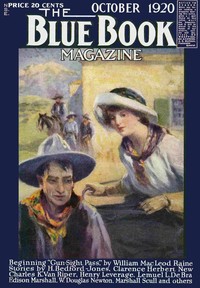
Henry Leverage's 1920 mystery follows Chester Fay, an underworld prince, as he investigates the murder of a British courier. The narrative relies on clipped dialogue, precise urban details, and a network of ex-convicts operating a taxi company.
Editorial Edition Score
4.5/5
★★★★★
★★★★★
Calculated from edition completeness, EPUB availability, text structure and catalogue metadata. Not a user rating.
How this score is calculated
- Description quality20 pts
- Title & short description10 pts
- Source metadata20 pts
- Text length15 pts
- Chapters / structure15 pts
- EPUB file integrity20 pts
Total of 100 points, scaled to a 2.5-5.0 range. Editions with an empty description or a missing EPUB file are not scored.
Edition quality
Read the Text
An exciting story of Chester Fay, underworld prince, and of one of his most daredevil exploits ... Henry Leverage at his best.
A gray taxi was threading the traffic of Fifth Avenue. Up through the wealthiest street in the world the driver flashed with all the aplomb of a professional “bucker” who knew the elastic limits of the automobile laws.
Chester Fay leaned forward now and then and studied the hands which shifted the lever at the street intersections like those of an American Ace at the “stick” of a biplane.
“Good boy,” he exclaimed when the taxi came to a grinding halt before the doorman of the Hotel Rockingham. “Good kid!” he added when he extended the fare.
“I thank you,” said the driver of the gray taxi.
Fay paused at the marble steps of the Hotel Rockingham. The taxi turned and darted southward.
Wheeling with a pucker of interest on his features, Fay strode through an alley of palms and bronze vases and leaned over an onyx-topped desk where stood a trim-looking clerk whose collar and tie indicated prosperity in subordinate positions.
“Arthur Hilton?” Fay questioned.
“Yes. He phoned me at--” Fay glanced up to the gilt clock over the clerk’s head. “Exactly twenty minutes ago!” he declared.
The page who responded to the pressure of a button led the way to a private elevator, nodded to the pilot and closed the green-grilled door when Fay stepped briskly inside the cage.
He was whisked to a silent stop on an upper floor. He stepped out and faced a gray-haired English detective of the superior type, who had been pacing an ornate hallway.
“Arthur Hilton?” said Fay.
“By Sir Arthur’s consent?”
“You may follow me,” drawled the Scotland Yard man.
Fay found himself in the foyer of a splendid suite. He waited, toying with his cap, as the detective passed through a rift in the portiéres which led in the general direction of Fifth Avenue. He was on the point of coughing to attract attention when the curtains parted in invitation.
Sir Arthur Hilton stood by a long window with the white light of a western sky reflected across his furrowed face like the reaching hand of a specter.
“You’re Fay?” he said as the Scotland Yard man backed into the shadow of an inner room.
“Yes. Chester Fay--Mr. George Mott, the reformer’s friend.”
“Good--good and bad! There’s the old Nick to pay. Putney Stephney of Downing Street--a King’s greyhound--with thirty thousand pounds in American banknotes, was found dead on top of a goods-train at Poughkeepsie this morning.”
Fay pulled out a cigarette.
“Murdered!” declared Hilton with a rising voice. “Killed in cold blood somewhere between the steamer dock at West Street and--and Poughkeepsie.”
Fay dragged on the cigarette, thrust his hands into his pockets and leaned forward. His eyes hardened slightly. They fastened within the steady stare of Sir Arthur’s own.
“Facts are these,” resumed the British representative. “Stephney had landed at the dock at ten-twenty last night. Was seen by two of the steamship company’s detectives who were watching all embarking passengers.”
“Was that the _Carpathia_?” asked Fay.
“Yes--the _Carpathia_! Stephney came down the gangplank, turned at the customroom, went inside a telephone booth, came out and was observed taking a gray taxi at the foot of the dock. That was the last seen of him until the chief of the railroad detectives at Poughkeepsie found his body on top of a goods-train. Skull was slightly crushed. Pockets rifled. Portfolio, with banknotes and memoranda, missing.”
“Beastly quick!” shot back Hilton through rigid lips. “Beastly clever, too!”
The British representative glanced toward the doorway before which the portiéres draped. He strode to Fay’s side and leaned forward as his fingers clutched the investigator’s left shoulder in the grip of a bulldog.
“Stephney didn’t die from the crushed skull,” he said tersely. “That accident came afterward. He was killed by an unknown method. He was lured to death in the heart of civilization!”
“Fact! Had the coroner of Poughkeepsie on the wire not an hour ago. A surgeon from Plattsburg happened to assist at the autopsy. It was he who detected the condition of the lungs. Also, Stephney’s face was greenish-black.”
Fay backed away and allowed Sir Arthur’s hand to drop. His eyes glazed with speculation. They hardened.
“You have other facts?” he asked.
“Little more! Stephney was last seen alive getting into a gray taxi which disappeared soon afterward. He was headed for this hotel. I sat up until three o’clock waiting for him.”
“Who else knew he was coming to New York?”
“The Washington Embassy.”
“Who knew it in London?”
“Whom do you suspect?”
“Everybody blames them--for everything.”
The Gray Brotherhood opens with a gray taxi threading Fifth Avenue, its driver handling the lever "like those of an American Ace at the 'stick' of a biplane." This simile immediately establishes the story's tone: fast, modern, and rooted in the mechanics of 1920s New York. Chester Fay, introduced as an "underworld prince," moves through a city of marble steps, onyx-topped desks, and green-grilled elevators. The prose is lean, favoring action over introspection, and dialogue drives the plot forward in quick exchanges.
Leverage's diction is notably specific: a clerk's collar and tie "indicated prosperity in subordinate positions," and a Scotland Yard man is described as "gray-haired" and "of the superior type." These small observations build a world where status and profession are read from appearances. The murder of Putney Stephney—a "King's greyhound" with thirty thousand pounds—is announced bluntly, and Fay's response is to light a cigarette. The author trusts readers to keep pace with his compressed style.
Dialogue as a Tool of Characterization
Leverage uses dialogue not merely to convey information but to reveal character through rhythm and word choice. Fay speaks in short, clipped commands: "Good boy," "Good kid!" when praising the taxi driver. His exchanges with the Scotland Yard man are terse, almost adversarial. When Sir Arthur Hilton declares Stephney was "murdered," Fay simply "pulled out a cigarette" and leans forward, his eyes hardening. The author avoids lengthy descriptions of emotion; instead, the reader infers tension from what is left unsaid.
Rake, Fay's associate, speaks in a more colloquial, Irish-inflected vernacular: "She don't look the part," and "The only time my Mary, at home, is lyin' to me is when she says nothing." This contrast between Fay's crisp urbanity and Rake's folksy logic creates a dynamic partnership. Leverage also uses dialect for Joe Yeader, who drawls "Beastly sultry night" with a British accent. These vocal distinctions help readers track the cast without explicit labeling.
The City as a Mechanical Stage
New York in The Gray Brotherhood is a network of precise locations and transit systems. Fay moves from the Hotel Rockingham to the Subway, then to the Customhouse, and finally to a ferry and train. Leverage names streets, stations, and landmarks with documentary exactness: Fifth Avenue, West Street, Poughkeepsie, the Battery, St. George, Quarantine Station. The city is not a backdrop but an active element in the plot, with its "elastic limits of the automobile laws" and "thronged" ferry-houses.
The author's descriptions are functional rather than decorative. A taxi "threads" traffic; the subway car "hurtled" southward. Fay "mounted to the surface of the street" after emerging from the subway, as if the city is a series of levels to be navigated. This mechanical precision extends to objects: a "gilt clock," "green-grilled door," "onyx-topped desk." Each detail reinforces the story's modernity and the protagonist's mastery of his environment.
Underworld Networks and Institutional Authority
Fay operates at the intersection of criminal and official worlds. He is introduced as "Mr. George Mott, the reformer's friend," suggesting a connection to legitimate power. Yet he is also an "underworld prince" who commands ex-convicts like Rake and Yeader. The Gray Brotherhood itself appears to be an organization of former inmates working for the Gray Taxi Company, a front for their activities. Leverage presents this network matter-of-factly: Fay gives "rapid-fire directions" to Harrigan at Mott's office, and later secures passes from the harbor master's assistant with a cigar.
The author does not moralize about Fay's dual role. Instead, he shows him navigating bureaucracy with ease—showing his card, authority from Mott, and other identifications. The assistant "made out passes in duplicate" and "found the sealing wax and a well-chewed pen." These mundane details ground the story in a recognizable world of permits and signatures, even as Fay plots to "bait the trap with more banknotes." The tension between his criminal past and his current mission remains implicit.
Suspicion and the Limits of Evidence
Leverage constructs the mystery around a single suspect: a woman who works for a man suspected by police. Fay lists the evidence against her: she was the first to meet Stephney, the last to see him alive, and has "sole charge of Ponsardin's taxicab interests." Yet Rake counters with an observation about human nature: "She'd never admitted takin' that Stephney from the dock if she was guilty." Fay dismisses this as "Illogical logic!" but the exchange highlights a central question: how reliable is circumstantial evidence?
The author does not resolve this tension in the excerpts. Fay believes she is guilty, but Rake's skepticism lingers. Leverage uses this disagreement to create ambiguity, and the reader is left to weigh the clues alongside the characters. The story's brevity—under 12,000 words—suggests a tight plot where every detail may prove significant. The excerpts end with Fay planning to "clear the name of the Gray Brotherhood," but the woman's role remains uncertain.
Readers should attend to Leverage's economy of language: every gesture, object, and line of dialogue carries weight. The author trusts his audience to infer backstory from hints—Fay's past, the Brotherhood's origins, the woman's motives—rather than explaining them outright. This makes the novella a puzzle not only of plot but of character. The gray taxi that opens the story is more than a vehicle; it is a symbol of the ambiguous world Fay inhabits, where loyalty and suspicion ride side by side.
That taxi fleet of ex-convicts in The Gray Brotherhood always felt like a hidden family, bound by loyalty rather than law. It reminds me of another quiet kinship, where England herself becomes a character watching over wanderers. Both books whisper that home is less a place than a trust between unlikely souls. Where England sets her feet: a romance — Inside the Classic holds that same patient, affectionate gaze.
There are no reviews for this eBook.
There are no comments for this eBook.
Reader reflection
What did you think of this book?
Answer a few questions and save a private reflection on this device.
Your progress
0
/
10
2
How did the book work for you overall?
3
Is this a title you would suggest to others?
4
What was the reading difficulty like?
5
Did the story or argument move comfortably?
6
How valuable was this book for your own interests?
7
Could you follow the author’s main argument?
8
Which part made the strongest impression?
9
What is the main idea you are taking away?
10