1

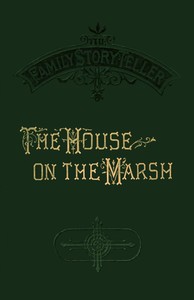
The house on the marsh — Themes and Context
(0 User reviews)
32
Project Gutenberg
2023
Not confirmed
Governesses -- Fiction; Mystery fiction; Norfolk (England) -- Fiction
Readers of public-domain and historical texts
Project Gutenberg digital edition
en
Edition facts
Words
112,171
Reading time
488 min
Text sections
9
The house on the marsh — Themes and Context can be approached with a clearer sense of reading commitment from its source measurements: 112,171 words, 8 hr 8 min estimated reading time, and 9 detected text sections.
The text analysis averages about 18.6 words per sentence, while the detected sections provide another way to judge how the source is divided.
Project Gutenberg metadata also associates the work with “Governesses -- Fiction,” connecting these edition facts with the source record’s subject description.
Source:
Project Gutenberg record #71788
Florence Warden's 1884 novel follows young governess Miss Christie to the Norfolk marshlands, where her employer's youth, a mysterious pendant, and village gossip hint at secrets beneath the surface. The narrative shifts from domestic routine to suspense, driven by voice and pacing.
Editorial Edition Score
4.8/5
★★★★★
★★★★★
Calculated from edition completeness, EPUB availability, text structure and catalogue metadata. Not a user rating.
How this score is calculated
- Description quality20 pts
- Title & short description10 pts
- Source metadata20 pts
- Text length15 pts
- Chapters / structure15 pts
- EPUB file integrity20 pts
Total of 100 points, scaled to a 2.5-5.0 range. Editions with an empty description or a missing EPUB file are not scored.
Edition quality
Read the Text
her preoccupied; and I was listening to his bright small-talk with the polite stranger’s smile, when I discovered, without having heard any sound, that Mrs. Rayner was in the room. She had glided in like a ghost, and, without more interest in the life around her than a ghost might show, she was standing at the table, waiting. I was thankful to see that there was no trace in her eyes now of the steadfast eager gaze which had disconcerted me on the night before, nothing but the limpest indifference to me in the way in which she held out her hand when her husband introduced me.
“She must have been pretty ten years ago,” I thought, as I looked at her thin face, with the fair faded complexion and dull gray eyes. There was a gentleness about her which would have been grace still, if she had taken any pains to set off by a little womanly coquetry her slim girl-like figure, small thin hands, and the masses of long brown hair which were carelessly and unbecomingly dragged away from her forehead and twisted up on her head.
Then the door opened, and the servants came in to prayers, with the elfish baby and a pretty delicate-looking child, blue-eyed and fair-haired, who was presented to me before breakfast as Haidee, my pupil.
Nobody talked during the meal but Mr. Rayner, and the only other noticeable thing was the improper behavior of the baby, who kept throwing bits of bread at her father when he was not looking, and aimed a blow with a spoon at him when he passed her chair to cut himself some cold meat. He saw it and laughed at her.
“It is a most extraordinary thing, Miss Christie,” said he; “but that child hates me.”
I thought he spoke in fun; but, before I had been long at the Alders, I found that it was true that this most unpleasant baby’s strongest feeling was dislike of her father, though there seemed to be no reason for it, since he never did anything harsher than laugh at her. She would not even take sweets from his hand.
“You do not yet know what primitive people you have come among, Miss Christie,” said Mr. Rayner during breakfast. “We dine here at half-past one. If we were to suggest late dinner, we should have to prepare our own food, like excommunicated persons. It is hard as it is to keep our modest staff of three servants. They say the place is damp, which, being interpreted, means that it is too far for their ‘young men’ in the town to come and see them. Were you not surprised at the wording of my advertisement?”
“My wife was afraid that it would frighten off many desirable young ladies by its ogreish abruptness. The fact is, the lady who has just left us, quite a typical instructress of forty, with prominent teeth and glasses, nearly frightened our lives out. She wouldn’t talk, and my wife wants a cheerful companion; and she said she was dying of rheumatism, and threatened to prosecute me for decoying her to such a damp place. So we registered a solemn vow that we would have nothing to do with hoar antiquity again.”
“How could she say anything against such a lovely place?” said I.
“Well, now, Miss Christie, I grant she had a show of reason on her side. I have sometimes thought the place damp myself; but my wife has got attached to it; haven’t you, Lola?”
“Yes,” said she, without a sign of feeling or interest.
“And so we remain,” he went on. “A lady’s wishes must be considered; and there are special reasons why they should be in this case. You must know, Miss Christie, that I am a penniless wretch, dependent on my wife; am I not, Lola?” He turned playfully to her.
“Not quite that,” said she gently, but with no more warmth than before.
“Practically I am,” he persisted. “She was an heiress, I a ruined spendthrift, when she married me. Yet she trusted me; and the only condition she would allow her friends to make was that I should settle in the country--out of the reach of temptation, you see, Miss Christie.”
He spoke with some feeling, and looked affectionately at his wife at the end of this unexpectedly frank confession; but she remained as impassive as ever.
Florence Warden's The House on the Marsh (1884) opens with a governess advertisement that demands youth—a detail that immediately sets the protagonist apart. The first-person narrator, Miss Christie, is eighteen, eager, and observant, her voice blending excitement with self-deprecating humor. From the railway carriage she scans the platform at Beaconsburgh, noting farmers and a bounding mastiff, before her employer, Mr. Rayner, appears—younger and less self-possessed than she expected. His rich voice and careful manner hint at a musical nature, but the narrative quickly layers in unease: the dogs, the dog-cart, and the journey into the marshland establish a setting that feels both isolated and charged.
A Voice That Wavers Between Innocence and Irony
Miss Christie's narration is the novel's engine. She reports events with a directness that sometimes undercuts her own naivety. When village women ask if Mr. Rayner is wicked, she blushes—but insists she is not blushing. She defends him: he plays the violin and goes to races, yet is kind. The reader catches the gap between her words and the women's knowing smiles. Later, at a party, she plays waltzes for strangers and is praised; one gentleman, Tom Carruthers, leads her away, saying she should not be a victim for others' amusement. Her response—'Why shouldn't pretty people learn things as well as ugly people?'—shows a sharpness that complicates her innocence. The voice is consistent: colloquial, slightly breathless, and alert to social nuance.
Pacing Through Domestic Interiors and Social Gatherings
The novel's rhythm alternates between quiet domestic scenes and crowded social events. Early chapters move slowly, dwelling on the journey, the house, and the governess's duties. Then the pace quickens at a party where Miss Christie is singled out for her piano playing. The dialogue becomes rapid, with flirtatious exchanges and veiled warnings. Mrs. Cunningham's grave advice about a pendant—'I should with such paste as yours'—introduces a note of danger. The shift from leisurely description to tense conversation mirrors the protagonist's own growing awareness. Warden uses these changes in tempo to build suspense without abandoning the intimate first-person perspective.
The Marsh as a Silent Character
Though the excerpts offer only glimpses of the landscape, the marsh is a constant presence. The title itself signals its importance. The journey to Geldham, Norfolk, is described in terms of isolation: the station is nearly empty, the dog-cart waits outside, and the road leads into flat, open country. Later, the house on the marsh becomes a backdrop for secrets—the pendant, the rumors about Mr. Rayner, the villagers' gossip. The setting is not merely picturesque; it shapes the narrative's mood. The marsh's emptiness and silence contrast with the crowded drawing rooms where Miss Christie performs. This tension between open space and enclosed society drives the story forward, even when the plot remains unclear.
Readers approaching The House on the Marsh should attend to the narrator's voice as a guide to the novel's shifting tone. Miss Christie's observations are not always reliable, and her silences may speak louder than her words. The marsh itself, though rarely described in detail, functions as a psychological boundary—a place where social rules loosen and danger lurks. Pay attention to the moments when the pace slows: they often precede revelations.
I’ve often thought Florence Warden’s marsh-mist secrets might find a quiet echo in the homebound quiet of the other shelf, where whatever a mother withholds shapes the rooms. Both understand silence as a kind of inheritance. The pendant, the porch, the withheld name—each waits, patient as tide. The mother's recompense — Reading Companion holds that same hush, a familiar ache between the lines.
There are no reviews for this eBook.
There are no comments for this eBook.
Reader reflection
Record your reading impressions
A brief reflection can help important ideas stay with you longer.
Your progress
0
/
10
2
What was your overall reaction to the book?
3
Would you pass this book on to a friend?
4
How easy was the book to follow?
5
Which element worked best for you?
6
Was the book moving at the right speed?
7
Did anything about the book feel genuinely new?
8
Did you relate to its people, ideas, or situations?
9
Which lesson or insight stayed with you?
10