1

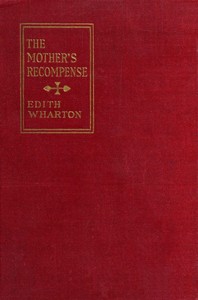
The mother's recompense — Reading Companion
(0 User reviews)
645
Project Gutenberg
2024
Not confirmed
New York (N.Y.) -- Fiction; Psychological fiction; Mothers and daughters -- Fiction; Riviera (France) -- Fiction
Readers of public-domain and historical texts
Project Gutenberg digital edition
en
Edition facts
Words
81,920
Reading time
357 min
Text sections
38
For The mother's recompense — Reading Companion, the stored edition analysis reports 81,920 words, 5 hr 57 min estimated reading time, and 38 detected text sections.
The text analysis averages about 16.2 words per sentence, while the detected sections provide another way to judge how the source is divided.
Project Gutenberg metadata also associates the work with “New York (N.Y.) -- Fiction,” connecting these edition facts with the source record’s subject description.
Source:
Project Gutenberg record #72573
Wharton's 1925 novel opens with Kate Clephane in a Riviera hotel, recalling a past of gambling and romance. When summoned back to New York by her estranged daughter, she confronts a secret that threatens their reunion. The excerpts reveal a mother's internal conflict, not a simple reconciliation.
Editorial Edition Score
4.9/5
★★★★★
★★★★★
Calculated from edition completeness, EPUB availability, text structure and catalogue metadata. Not a user rating.
How this score is calculated
- Description quality20 pts
- Title & short description10 pts
- Source metadata20 pts
- Text length15 pts
- Chapters / structure15 pts
- EPUB file integrity20 pts
Total of 100 points, scaled to a 2.5-5.0 range. Editions with an empty description or a missing EPUB file are not scored.
Edition quality
Read the Text
d Kate Clephane of--as she supposed it did most women of forty-two or so (or was it really forty-four last week?) For nearly twenty years now she had lived chiefly with women of her own kind, and she no longer very sincerely believed there were any others, that is to say among women properly so called. Her female world was made up of three categories: frumps, hypocrites and the “good sort”--like herself. After all, the last was the one she preferred to be in.
Not that she could not picture another life--if only one had met the right man at the right hour. She remembered her one week--that tiny little week of seven days, just six years ago--when she and Chris had gone together to a lost place in Normandy where there wasn’t a railway within ten miles, and you had to drive in the farmer’s cart to the farm-house smothered in apple-blossoms; and Chris and she had gone off every morning for the whole day, while he sketched by willowy river-banks, and under the flank of mossy village churches; and every day for seven days she had watched the farm-yard life waking at dawn under their windows, while she dashed herself with cold water and did her hair and touched up her face before he was awake, because the early light is so pitiless after thirty. She remembered it all, and how sure she had been then that she was meant to live on a farm and keep chickens; just as sure as he was that he was meant to be a painter, and would already have made a name if his parents hadn’t called him back to Baltimore and shoved him into a broker’s office after Harvard--to have him off their minds, as he said.
Yes, she could still picture that kind of life: every fibre in her kept its glow. But she didn’t believe in it; she knew now that “things didn’t happen like that” for long, that reality and durability were attributes of the humdrum, the prosaic and the dreary. And it was to escape from reality and durability that one plunged into cards, gossip, flirtation, and all the artificial excitements which society so lavishly provides for people who want to forget.
She and Chris had never repeated that week. He had never suggested doing so, and had let her hints fall unheeded, or turned them off with a laugh, whenever she tried, with shy tentative allusions, to coax him back to the idea; for she had found out early that one could never ask him anything point-blank--it just put his back up, as he said himself. One had to manœuvre and wait; but when didn’t a woman have to manœuvre and wait? Ever since she had left her husband, eighteen years ago, what else had she ever done? Sometimes, nowadays, waking alone and unrefreshed in her dreary hotel room, she shivered at the memory of all the scheming, planning, ignoring, enduring, accepting, which had led her in the end to--this.
After all, there was the sun in her window, there was the triangular glimpse of blue wind-bitten sea between the roofs, and a new day beginning, and hot chocolate coming, and a new hat to try on at the milliner’s, and--
She had come to this cheap hotel just in order to keep her maid. One couldn’t afford everything, especially since the war, and she preferred veal for dinner every night to having to do her own mending and dress her hair: the unmanageable abundant hair which had so uncannily survived her youth, and sometimes, in her happier moods, made her feel that perhaps, after all, in the eyes of her friends, other of its attributes survived also. And besides, it looked better for a lone woman who, after having been thirty-nine for a number of years, had suddenly become forty-four, to have a respectable-looking servant in the background; to be able, for instance, when one arrived in new places, to say to supercilious hotel-clerks: “My maid is following with the luggage.”
Aline, ugly, neat and enigmatic, appeared with the breakfast-tray. A delicious scent preceded her.
Mrs. Clephane raised herself on a pink elbow, shook her hair over her shoulders, and exclaimed: “Violets?”
Aline permitted herself her dry smile. “From a gentleman.”
Colour flooded her mistress’s face. Hadn’t she known that something good was going to happen to her that morning--hadn’t she felt it in every touch of the sunshine, as its golden finger-tips pressed her lids open and wound their way through her hair? She supposed she was superstitious. She laughed expectantly.
The novel opens with Kate Clephane waking to Riviera sunlight in a cramped hotel room, a setting that immediately establishes her as a woman living on the margins of the expatriate society she once knew. Wharton’s prose quickly moves from the physical sensation of light to a layered memory of sunrise associated with lost joys: coming home from balls, counting winnings, and a kiss from a man named Chris. The narrative voice is intimate, self-aware, and tinged with irony as Kate reflects on her age and her social world, divided into “frumps, hypocrites and the ‘good sort.’”
The catalog subjects list New York, the Riviera, and mother-daughter relationships, but the excerpts show that the mother’s perspective is central, and the Riviera is not merely a backdrop but a space of memory and moral ambiguity. The opening does not promise a conventional reunion story; instead, it immerses the reader in Kate’s consciousness, where pride and regret are tightly interwoven.
Memory and the Riviera Setting
The opening chapter uses the Riviera not as a tourist idyll but as a landscape of memory. Kate’s waking thought is immediately followed by a detailed recollection of sunrise after nights of gambling and drinking. Wharton’s description of “the scramble up hill through the whitening gray of the garden, flicked by scented shrubs, caught on perfidious prickles” evokes a sensory, slightly dangerous past. The kiss from Chris is described as “unexpected,” and Kate insists she “never let Chris come in with her at that hour,” a detail that suggests a boundary she maintained despite the disorder of her life. This memory is not nostalgic; it is presented as a habitual association, one that Kate herself recognizes as typical for women of her age. The setting thus functions as a psychological trigger, revealing a character shaped by choices she both defends and regrets.
The Mother-Daughter Dynamic in the Excerpts
The catalog subject “Mothers and daughters” is present, but the excerpts show a relationship mediated by absence and anxiety. Kate’s return to New York is framed by her dread of Anne’s awakening: “the thought of seeing Anne’s face once again in all its radiant unawareness, and then assisting helpless at the darkening of its light.” The language is fraught with anticipation of a blow. Kate’s internal monologue reveals that she holds a secret—a threat involving Chris—that she can use to control him. She recalls saying, “I’ve got the means to beat you in the end,” and reflects on his fear of being “thought less than his own romantic image of himself.” The excerpts do not show Anne’s perspective; the daughter is an object of concern and a pawn in a larger struggle. The mother’s recompense, if it exists, is not yet earned.
Voice and the Limits of the Excerpts
Wharton’s narrative voice in these excerpts is closely aligned with Kate’s consciousness, using free indirect discourse to render her thoughts, memories, and self-justifications. The prose is precise and ironic, as when Kate reflects that her female world consists of “frumps, hypocrites and the ‘good sort’—like herself.” The excerpts do not reveal the full plot—the nature of Kate’s secret, Chris’s identity, or Anne’s response—but they establish a pattern of internal conflict and moral ambiguity. The reader is given access to Kate’s reasoning but not to objective truth. The catalog subject “Psychological fiction” is apt, as the excerpts prioritize inner experience over external action. However, without the complete text, any inference about the resolution or the title’s meaning remains speculative.
The excerpts from The Mother’s Recompense offer a concentrated study of a woman’s memory and fear, but they leave the central relationship with her daughter largely in the realm of anticipation. Readers should attend to the way Wharton withholds information, letting Kate’s consciousness guide but also mislead. The title itself, borrowed from Grace Aguilar’s earlier work, may be ironic; the recompense, if any, is not evident in these pages. The novel rewards attention to its psychological texture rather than its plot mechanics.
Kate’s Riviera restlessness, that old pull toward bright, careless places, reminded me how rarely we outgrow our younger selves—we only learn to hide them better. It made me think of The star dreamer: A romance — Edition Insights, and how its quieter longing felt like the same ache, turned toward different stars.
There are no reviews for this eBook.
There are no comments for this eBook.
Reader reflection
Before you leave, reflect on the book
Use these questions to collect your thoughts before moving on.
Your progress
0
/
10
2
How much did you enjoy the reading experience?
3
Would you pass this book on to a friend?
4
What was the reading difficulty like?
5
How strongly did the book affect you emotionally?
6
Which aspect of the book did you value most?
7
Would you start a conversation about this book?
8
How clear did the writing feel?
9
What did this book teach you most?
10