1

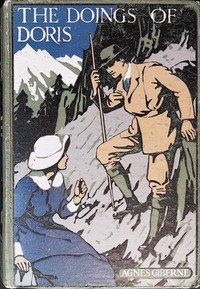
The doings of Doris — Edition Insights
(0 User reviews)
37
Project Gutenberg
2023
Not confirmed
Children of clergy -- Fiction; Man-woman relationships -- Fiction; Mystery fiction; Mountaineering -- Fiction
Readers of public-domain and historical texts
Project Gutenberg digital edition
en
Edition facts
Words
81,327
Reading time
354 min
Text sections
8
The catalog record for The doings of Doris — Edition Insights provides practical reading context through 81,327 words, 5 hr 54 min estimated reading time, and 8 detected text sections.
The text analysis averages about 11.6 words per sentence, while the detected sections provide another way to judge how the source is divided.
Project Gutenberg metadata also associates the work with “Children of clergy -- Fiction,” connecting these edition facts with the source record’s subject description.
Source:
Project Gutenberg record #70861
An editorial note on Agnes Giberne's 'The Doings of Doris,' focusing on the novel's shifts between gossipy dialogue and introspective narration, and the use of mountaineering as a setting for tension and character revelation.
Editorial Edition Score
4.8/5
★★★★★
★★★★★
Calculated from edition completeness, EPUB availability, text structure and catalogue metadata. Not a user rating.
How this score is calculated
- Description quality20 pts
- Title & short description10 pts
- Source metadata20 pts
- Text length15 pts
- Chapters / structure15 pts
- EPUB file integrity20 pts
Total of 100 points, scaled to a 2.5-5.0 range. Editions with an empty description or a missing EPUB file are not scored.
Edition quality
Read the Text
I. THE OWNER OF CLOVER COTTAGE
II. BAITING THE GROUND
V. A SECRET AGREEMENT
VI. DORIS LETS HERSELF GO
VIII. MRS. BRUTT SUGGESTS
XIII. HAVE I DONE WRONG?
XVI. THE CRY FROM THE CHÂLET
XVIII. ON THE MOUNTAIN
XIX. A ROTTEN PIECE OF ROCK
XXII. TWO HEARTS DRAWING NEARER
XXIV. "BUT I'M AFRAID"
XXV. THE SQUIRE'S ADVICE
XXVI. NOT HER HUSBAND
XXVII. THE EAVESDROPPER
XXVIII. WHAT MRS. BRUTT HEARD
XXX. THE SQUIRE IS MYSTERIOUS
XXXI. THE SQUIRE'S DARK HOUR
XXXII. "YOU DON'T KNOW DICK"
XXXIII. "HOW WILL HE TAKE IT?"
XXXV. WOULD HAMILTON DO?
XXXVI. A SURPRISE MEETING
XXXVII. THE MISCHIEF-MAKER AGAIN
XXXVIII. "WHO WAS MY FATHER?"
XXXIX. "THAT WAS WELL DONE!"
The Owner of Clover Cottage
"A DELIGHTFUL man!" Mrs. Brutt declared. "Absolutely charming! Handsome—accomplished—clever—fascinating!" She hung impressively upon each adjective in turn. "Fortune has showered her gifts upon him. Has simply showered them."
Mrs. Brutt viewed her present companion as the reverse of charming. But to one who hated solitude, anybody was better than nobody; and she had seized a chance to inveigle him indoors, much against his will.
"Showered—gifts—" he repeated vaguely, his one thought being how to escape from durance vile.
"Ah, your masculine mind is occupied with weightier matters!" —and she rippled into laughter. She had a habit, not agreeable to all hearers, of interlarding her speech with ripples.
"I was speaking of the Squire. As I say—a most attractive character. So good of him to come and take tea with me in my humble cot! Overwhelmed as he must be with engagements! I assure you, I appreciate the compliment."
Mr. Winton's grunt might or might not have spelt acquiescence.
"And his niece—such an attractive woman! So distinguée! That word does just exactly describe her. Not that I have seen so much of her as of her uncle." She had met Mr. Stirling three times, and Miss Stirling once. "But enough to realise what a perfectly unusual character hers is."
The Rector grunted anew. He never discussed one parishioner with another; and he hated gossip with a deadly hatred.
"So touching to see his devotion to her—really quite beautiful! I am told that she has been everything to him since his poor wife's death— ten years ago, wasn't it? A great sufferer she must have been—and such a sweet woman. Everybody says so. And now he just leans on his dear niece. So touching, isn't it?"
No reply. Grim silence.
"Then, too, there is Mr. Hamilton Stirling—a most interesting man. So full of information. Really, it is a privilege to come across a mind like his. Do tell me—is it true that he is the heir to all this property—supposing, of course, that the Squire never marries again?" She rippled anew. "First-cousin once removed, isn't he?"
"Yes," was the least that the Rector could say.
Mrs. Brutt understood that she would get nothing out of him, and she resented the fact. Her eyes surveyed with veiled criticism his ungainly figure, broad and heavy in make, thrown as a blur against a background of dainty colouring. He wore a rough workaday apron, suggestive of carpentering, over an ancient coat; both being, under supposition, never seen outside his shed. But when pressed for time, he would steal across for a word with his friend the carpenter; and more than once Mrs. Brutt had captured him en route in this unclerical guise. He had begun ruefully to see his own lost liberty, now that a talkative lady, with leisure for everybody's concerns, had chosen to plant herself within a stone's throw of the Rectory back-garden gate.
Hitherto the back lane had been little frequented, and he could do as he chose, with small fear of detection. Though Lynnbrooke had become a town, its growth had been mainly towards other points of the compass, leaving the old parish church and the original village almost untouched.
But Mrs. Brutt, coming for a week's change to the Inn, took a fancy to a couple of low-rented cottages, standing empty, and decided to make them her home. She had them transformed into a cosy dwelling, sent for her furniture, and settled down therein, with much flourish of trumpets.
For a while she was too busy to give heed to aught beyond the process of settling in. That ended, she found herself with superabundant time at her disposal, and during the last two months her presence had been in the Rector's eyes a standing grievance. He never could pass down the lane without a risk of being waylaid. Whatever else Mrs. Brutt might be doing, she seemed to have one eye permanently glued to her front window.
From its opening lines, The Doings of Doris establishes a narrative voice that oscillates between sharp social comedy and psychological introspection. Mrs. Brutt's effusive speech—'Absolutely charming! Handsome—accomplished—clever—fascinating!'—is immediately undercut by the Rector's 'grim silence,' setting up a pattern of contrast between what is said and what is withheld. The novel's language often lingers on the gap between outward performance and inner feeling, as when Doris 'vaguely dreading to have her present happiness cut short' avoids naming Maurice in letters home. This editorial note examines three features of the text: the rhythm of dialogue and silence, the symbolic weight of the mountain setting, and the narrator's handling of Doris's growing self-awareness.
Dialogue and the Weight of Silence
The novel's dialogue is marked by a deliberate asymmetry. Mrs. Brutt's speeches are clogged with adjectives and exclamation points—'So touching to see his devotion to her—really quite beautiful!'—while the Rector responds with 'Grim silence' or a mere 'grunt.' This imbalance creates a rhythm of pressure and resistance. Later, when Maurice and Doris walk together, the narrator notes that 'he still said nothing; but she had a curious sense that he wanted to say something.' The silence becomes a character in itself, charged with unspoken intention. Giberne uses these pauses to signal emotional weight, particularly in scenes where characters avoid direct confession. The reader is made to attend not only to what is spoken but to the gaps between words.
Mountaineering as a Stage for Tension
The mountain expeditions—the Glückhorn ascent and the walk to the Petit Chamossaire—are not merely scenic interludes. They function as controlled environments where social constraints loosen and character is tested. The narrator specifies that the Petit Chamossaire climb required 'no real climbing; a walk which any lady might venture to take,' yet the real risk is not physical but emotional. Maurice chooses the setting deliberately: 'He was bent on having her once more to himself. Something had to be said before they parted.' The mountain becomes a stage for a conversation that cannot happen in the hotel or the drawing-room. The shift from 'axes and goggles' to a mere 'rough sledge-path through pine-woods' mirrors a change from adventure to intimacy. The landscape is never merely backdrop; it shapes the pace and possibility of revelation.
Narrative Distance and Doris's Inner Conflict
The narrator often steps back to report Doris's thoughts in indirect speech, creating a layered sense of her inner life. Phrases like 'she had not definitely allowed even to herself' and 'in her heart Doris knew it' suggest a character only partly aware of her own motives. The narrator's tone is neither fully ironic nor fully sympathetic; it observes Doris's self-deception without condemning it. When Doris writes home about Maurice as 'the English doctor in our hotel,' the narrator adds: 'This was distinctly not ingenuous. From the first she ought to have written more fully.' The judgment is mild but pointed. This technique keeps the reader at a slight remove, watching Doris learn to read her own feelings. The novel's language of 'half-defined feelings' and 'vague dread' captures a consciousness in transition, not yet ready to name what it wants.
Readers attentive to narrative voice will find in The Doings of Doris a careful calibration of what is said aloud, what is thought, and what is left unsaid. The mountain scenes reward close attention to how setting alters the tempo of conversation. The novel's interest in the gap between social performance and private feeling—evident from Mrs. Brutt's first speech to Doris's withheld letters—invites a reading that listens for silence as much as speech.
I’ve often thought of Agnes Giberne’s Doris, whose inner life emerges so quietly between whispered rumours, and of how that same patient unraveling waits in Murder in the maze — Story, Setting & Ideas—both know that a tucked-away corner, be it a cliff path or a clipped hedge, holds more truth than any crowded room. A gentle pairing, like finding an old friend in a familiar aisle.
There are no reviews for this eBook.
There are no comments for this eBook.
Reader reflection
How did this book work for you?
Your answers remain private and are stored only in this browser.
Your progress
0
/
10
2
How did the book work for you overall?
3
Would you pass this book on to a friend?
4
Did the language feel accessible?
5
Did any part of the book feel personally relevant?
6
How understandable was the text?
7
Did any part of the book stay with you emotionally?
8
How valuable was this book for your own interests?
9
What changed or sharpened your thinking?
10