1

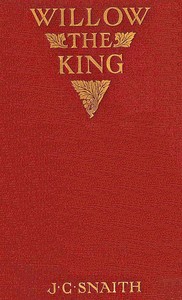
Willow the king — Edition Insights
(0 User reviews)
1555
Project Gutenberg
2024
Not confirmed
Humorous stories; England -- Fiction; Cricket stories
Readers of public-domain and historical texts
Project Gutenberg digital edition
en
Edition facts
Words
70,856
Reading time
309 min
Text sections
32
The catalog record for Willow the king — Edition Insights provides practical reading context through 70,856 words, 5 hr 9 min estimated reading time, and 32 detected text sections.
The text analysis averages about 14.7 words per sentence, while the detected sections provide another way to judge how the source is divided.
Project Gutenberg metadata also associates the work with “Humorous stories,” connecting these edition facts with the source record’s subject description.
Source:
Project Gutenberg record #73075
An editorial note on the structure and recurring imagery in J. C. Snaith's 1899 cricket novel, focusing on the movement between village match and first-class county cricket, and the use of humorous dialogue and character types.
Editorial Edition Score
4.8/5
★★★★★
★★★★★
Calculated from edition completeness, EPUB availability, text structure and catalogue metadata. Not a user rating.
How this score is calculated
- Description quality20 pts
- Title & short description10 pts
- Source metadata20 pts
- Text length15 pts
- Chapters / structure15 pts
- EPUB file integrity20 pts
Total of 100 points, scaled to a 2.5-5.0 range. Editions with an empty description or a missing EPUB file are not scored.
Edition quality
Read the Text
s cussedness incarnate. You rise in the morning like a giant refreshed: your blood is jumping, the ball looks as big as a balloon, and you have a go at one you ought to let alone, and spoon it up to cover. Excess of “fitness” gets more wickets than Lohmann ever took.
I was in the middle of the _Sportsman_ and my fourth egg when William appeared with a countenance of tragedy.
“I can’t find it, sir; it’s clean gone!” he said.
“Not the bat with the wrapping at the bottom?” I gasped, turning pale.
“No, sir; worse than that,” he said.
“Speak!” I cried; “what is it?”
“Your cap,” he said. “The one you made the 82, the 61, and 67 not out in.”
“What, the Authentics! It must be found, or I don’t go in to-day. Couldn’t get a run without that cap.”
The sweat stood on my brow.
“It’s my belief, sir,” said William darkly, “that this here’s a bit O’ Hickory. They knows how, like W. G., its always one particular cap you gets your runs in, and they’ve had it took according.”
This was very nice of William. His tact was charming. But the idea of my facing Hickory without my lucky cap was as monstrous as the captain going out to toss without his George II. shilling.
“William,” I said, “if you have to take the carpets up and have the chimneys swept, that cap must be found.”
William returned disconsolately to his search, whilst I fell into a train of dismal speculation. Falling to the _Sportsman_ in despair my eye fell on a few items of a cheerful and peculiar interest:--
“KENT _v._ NOTTS.--Rev. E. J. H. Elphinstone, c Jones, b Attewell, 172; J. P. Carteret, b Dixon, 103.
“This brilliant pair of amateurs completely collared the Notts attack at Canterbury yesterday, and in the course of two hours and a quarter helped themselves to 254 for the second wicket.
“MIDDLESEX _v._ YORKSHIRE.--A. H. Trentham, run out, 97.
“Yesterday, at Lord’s, that delightful batsman, A. H. Trentham, reduced the resourceful Yorkshire bowling to something that bore a family resemblance to common piffle. To the great disappointment of the enthusiastic company[B] he had the misfortune to be beautifully thrown out by F. S. Jackson when within three of the coveted three figures. Among his strokes were seventeen fours, including a couple of remarkable drives off Rhodes into the pavilion seats. Had he topped the century yesterday it would have been his fifth this season in county cricket. As it is, he is still second in the first-class averages; and we certainly think that the Old Country is to be congratulated on having A. H. Trentham to represent her in the forthcoming test games in Australia. His absolute confidence and his fine forcing method, it is not premature to say, will be seen to singular advantage on the fast and true colonial grounds.”
Reader (_loquitur_): “Damn his fine forcing method! I wonder why Wiggles hadn’t the sense to water that wicket. Anyway, I wish Jacker had let him have his fling. They’re always worse when they’ve been run out.”
“HOUSEHOLD BRIGADE _v._ ROYAL ARTILLERY.--Captain Trentham, c Wolseley, b Kitchener, 150.
“Playing for C.U.L.V.C. _v._ N. F. Druce’s XI. yesterday, H. C. Trentham, the crack Cambridge bowler, took nine wickets for eight runs. His performance included the ‘hat trick.’ The ball with which he bowled Prince Ranjitsinhji knocked one bail a distance of fifty-nine yards five and half inches. We believe we are correct in saying that this is a world’s record, providing that ‘up country in Australia,’ that home of the cricket miracle, is unable to furnish anything to beat it.
“HARROW WANDERERS _v._ GENTLEMEN OF CHESHIRE.--T. S. M. Trentham, not out, 205.”
“We have it from a reliable source,” says the _Athletic News_, “that the authorities at Old Trafford are making strenuous efforts to induce Mr. T. S. M. Trentham, this year’s captain at Harrow, and the youngest member of the famous brotherhood whose name he bears, to qualify for Lancashire. As doubtless our readers are aware, the authorities at Old Trafford have always been justly celebrated for their generous appreciation and encouragement of the cricketing talent of _other_ counties, and in the case of young Mr. Trentham there is something peculiarly appropriate in the benevolence of their present attitude, as it is rumoured that Mr. Trentham once had an aunt who lived near Bootle.”
The novel opens not on the pitch but in a billiard-room on the eve of a village match, where the team debates the coming contest with a blend of bravado and anxiety. The narrator immediately establishes a cast of stock types—the Optimist, the Pessimist, the Worry, the Humourist—whose voices are distinguished by their characteristic lines. The Humourist, for instance, cannot resist mentioning his “head-ball,” a running joke that reappears. This framing device sets up a pattern: the cricket action is repeatedly interrupted by conversational set-pieces, often involving the same characters trading quips.
From Village Green to Lord’s: A Two-Tier Structure
The book’s thirty-two chapters divide roughly into two halves. The first half (chapters I–XI) revolves around the match between Little Clumpton and Hickory, a fixture treated with mock-epic seriousness. The second half (chapters XII onward) shifts to the narrator’s debut in a first-class county match for Middlesex against Gloucestershire, featuring a fictionalised W. G. Grace. The transition is abrupt: chapter XI ends with the village match concluded, and chapter XII begins with “Middlesex won the toss.” No bridging explanation is given; the narrator simply appears at Lord’s. This structural leap suggests the book is less a continuous narrative than a diptych contrasting amateur village cricket with the professionalised county game.
Recurring Images: Windows, Bats, and Measurement
A notable recurring image is the breaking of a window. In the county match, Archie drives a ball through the library windows, prompting the reverend occupant to emerge with The Times and complain about the damage to the Encyclopædia Britannica. The incident is treated as both farce and a test of character: the batsman’s self-restraint gives way, and the bowler (Grace) has anticipated exactly this outcome. The window-breaking motif echoes an earlier moment in the village match, where a similar accident occurs (not excerpted here). Bats are also fetishised objects: Grace asks to feel Archie’s bat, and the distance of the hit is measured with a tape. These concrete details ground the humour in physical objects and their mishandling.
The Voice of the Narrator: Self-Deprecation and Understatement
The narrator, never named, speaks in a tone of wry self-mockery. He presents himself as a novice thrust into exalted company: “I was on the Rectory lawn, and preparing to engage in my first county match.” His awe is undercut by the absurdity of the situations he describes. When Grace bowls high-tossed half-volleys to tempt Archie, the narrator notes that “this proceeding on the part of W. G. savoured of cool cheek.” The humour relies on a shared knowledge of cricket conventions—the reader must understand that Grace’s tactics are both cheeky and brilliant. The narrator’s voice is consistently that of an amused insider, never a breathless fan.
Movement Between Scenes: The Billiard-Room as Hub
The billiard-room serves as a recurring setting for off-field discussion. In the opening chapter, the team gathers there to talk tactics; later, the same room hosts post-mortems and social banter. These scenes function as a chorus, providing commentary on the action without advancing the plot. The movement between the billiard-room and the pitch is swift and unmarked—the narrator shifts from dialogue to description without transitional phrases. This technique creates a rhythm of anticipation and reflection, as the reader hears the match discussed before and after it happens. The billiard-room thus becomes a structural anchor, a place where the novel’s comic voices can be sustained between bursts of cricket action.
Readers should note that the excerpts cover only the opening and the county match chapters; the middle section of the book, including the full village match, is not represented here. The novel’s humour depends heavily on period cricket jargon and the social codes of late-Victorian amateur sport. A familiarity with names like W. G. Grace, Stoddart, and Jessop will enrich the reading, but the comedy of character types—the Worry, the Humourist, the Pessimist—is accessible without specialised knowledge. Approach the book as a series of comic vignettes rather than a plotted novel.
There’s a sort of fondness in the way Snaith’s village cricketers chatter, a hopefulness wrapped in mud and good humour. It made me think of another quiet evening, tracing themes in Children of destiny — Reading Notes, and how both books seem to hold their characters close, letting small voices carry the whole weight of a story, as if sunshine were enough.
There are no reviews for this eBook.
There are no comments for this eBook.
Reader reflection
Before you leave, reflect on the book
Use these questions to collect your thoughts before moving on.
Your progress
0
/
10
2
How much did you enjoy the reading experience?
3
Is this a title you would suggest to others?
4
What was the reading difficulty like?
5
How strong was your personal connection to the text?
6
How did the pace of the book feel?
7
How valuable was this book for your own interests?
8
How understandable was the text?
9
In one sentence, what did you learn?
10