1

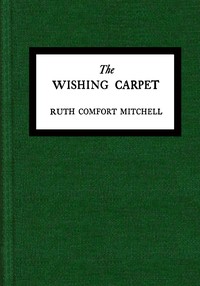
The Wishing Carpet — Context and Discussion
(0 User reviews)
1039
Project Gutenberg
2023
Not confirmed
Love stories; Mate selection -- Fiction; Southern States -- Fiction; Mills and mill-work -- Fiction
Readers of public-domain and historical texts
Project Gutenberg digital edition
en
Edition facts
Words
63,397
Reading time
276 min
Text sections
27
This digital edition of The Wishing Carpet — Context and Discussion is described by source-level measurements including 63,397 words, 4 hr 36 min estimated reading time, and 27 detected text sections.
The text analysis averages about 16.3 words per sentence, while the detected sections provide another way to judge how the source is divided.
Project Gutenberg metadata also associates the work with “Love stories,” connecting these edition facts with the source record’s subject description.
Source:
Project Gutenberg record #71301
Ruth Comfort Mitchell's 1926 novel uses a Persian rug as a lens on class and labor in a Southern mill town, where a doctor's daughter navigates family expectations, industrial strife, and a suitor from California.
Editorial Edition Score
4.8/5
★★★★★
★★★★★
Calculated from edition completeness, EPUB availability, text structure and catalogue metadata. Not a user rating.
How this score is calculated
- Description quality20 pts
- Title & short description10 pts
- Source metadata20 pts
- Text length15 pts
- Chapters / structure15 pts
- EPUB file integrity20 pts
Total of 100 points, scaled to a 2.5-5.0 range. Editions with an empty description or a missing EPUB file are not scored.
Edition quality
Read the Text
eautiful Oriental rug which seemed singularly out of place in the ugly and characterless sitting room. Color, design, and texture were exquisite. A fanciful person, contrasting it with the strident carpet, the atrocious vases and pictures, the glistening golden oak furniture, might have thought it was like a nobleman, briefly taking refuge in the mean hut of a peasant.
“Mummie, dear!” The child was insistent. “Is that a Wishing Carpet?”
Her mother did not answer immediately. Her blue gaze, with its habitual expression of brooding pathos, rested on the rug, and she sighed mistily before she spoke, which was her vaguely irritating custom. She had the effect of pleading with the world to be sorry for her. This seemed, to busy and hard-headed people, a waste of time--she was so patently and amply sorry for herself.
“Yes, darling,” she replied at length, gently and tremulously, “it _is_ a Wishing Carpet in a way, because, for nine long years I’ve been looking at it and wishing for things I knew I could never have!”
“Well, maybe,” Glen Darrow suggested hopefully, “you didn’t stand right on it with your eyes shut tight and your left hand on your heart, like the old witch said?” Then, as Mrs. Darrow shook her head--“Well, when I wish I’ll wish the right way!” She patted her mother’s knee again, consolingly, this time. “And I won’t wish till I have to, and then I’ll wish for something I think is going to happen anyway!”
That was her father in her, the woman reflected rather peevishly. That was Glenwood Darrow all over. No striving after higher things, no yearning.... Well, doubtless she would be better off. The fine-fibered, over-sensitive people of the world were never really happy, as no one knew better than herself.... Effie Darrow’s soft eyes filled and her soft chin quivered.
The doctor had married her eyes without noticing her chin. She had played the small, sobbing organ in the church he boredly attended while he earned a summer vacation by caring for a godly and epileptic youth. The top of the hymn book had cut her face in two. Glenwood Darrow saw only a white brow under fine, fair hair, a mild gaze, blue and beautiful, celestially sweet. The chin and the ineffectual mouth with its permanent sag at the corners were not discovered until too late.
Young Glen’s eyes were like her mother’s in size and coloring, but there was a drastic difference in their expression: they were not in the least wistful or appealing. Features, however, were not going to matter very much with Glen Darrow, because of the hair which framed her face in a veritable flame of shimmering, blazing red, bequeathed by some ancestor who was not even a legend on either side of the house.
People stopped and stared at it: sometimes the child could feel them touching it with a tentative finger, as if to see if it really radiated heat.
“All right. Never mind!” she said now, closing the issue of the Wishing Carpet. “Go on, Mummie!”
The woman read steadily in her pretty and plaintive voice, but she was not aware of the adventures of the prince and the princess and the wicked witch, because her thoughts were making a melancholy pilgrimage, walking backward....
When Dr. Darrow had brought her from her prairie town to Chicago she was startled to find that he had already furnished the flat, office and living quarters, in his own exuberant taste. She winced visibly when her eyes fell upon the magenta and mustard colored roses in the carpet, and lifted to the idealized Brussels sprouts on the wall paper, but she had darted toward the Persian rug with a little cry of pure pleasure.
“Oh, Glenwood! How _lovely_!” Here, at last, was something she could whole-heartedly praise, and she knelt and worshiped it. “I heard a missionary lecture on Oriental rugs, once, and then I got a book and studied, and I know enough to realize that this is really fine!” Her soft little hand was held up to him. “Oh, dearest, I think you were wonderful to choose it for me!”
Her bridegroom was ruefully honest. “Didn’t choose it. It’s a G. P.”
“‘Grateful Patient.’ Old Mrs. Ludermann, only rich family on my books. Most of this junk”--he waved a complacent hand--“is wedding presents.”
The Wishing Carpet opens not with a magical artifact but with a chapter heading that pairs a man's gaze with a rug: 'Glenwood Darrow, looking only at the eyes, overlooks the chin, and a rarely beautiful Persian rug is overshadowed by golden oak.' The titular carpet, a 'Wishin' Cyarpet' in the dialect of a dying child named Gloriana-Virginia, becomes a recurring emblem for longing and escape. Mitchell's prose is laced with sharp social observation—Glen Darrow, the doctor's daughter, finds herself 'accumulating a small and austere trousseau' while the mill teeters on ruin. The catalog subjects list 'Love stories' and 'Mate selection,' but the excerpts reveal a narrative equally concerned with labor, debt, and the friction between Northern capital and Southern tradition.
A Rug, a Mill, and a Divided South
The catalog assigns 'Southern States -- Fiction' and 'Mills and mill-work -- Fiction,' and the excerpts bear this out. The Altonia mill, owned by the ailing Mr. 'Gene Carey, is threatened by 'old Ben Birdsall’s duplicity' and kept afloat only by the superintendent Luke Manders, who has been 'putting his own salary back into the business.' The setting is a 'heavy and languid spring, humid and enervating,' where the mill's fate intertwines with personal loyalties. Mitchell contrasts the mill's gritty economics with the domestic sphere: Glen Darrow's house is being 'transformed to harmonize with her Wishing Carpet,' a Persian rug that symbolizes aspiration. The Southern setting is not merely backdrop but a force that shapes characters' choices—Luke Manders, called a 'young savage' by the narrator, shows 'gentleness' and 'veneration' toward his employer, a dynamic that complicates any simple reading of class or region.
Peter Parker of Pasadena and the California Contrast
One of the novel's more unusual elements is the figure of Peter Parker, a Californian whose mother, Mrs. Eugenia Parker, is 'President of the Federated Women’s Clubs of the United States.' In a chapter titled after her, Mitchell describes her morning routine with clinical precision: 'awake at five,' 'brisk Daily Dozen,' 'stone-cold tub,' 'fruit, dry toast, one slightly boiled egg, black coffee.' Peter, by contrast, is still in bed at eight, 'just settling down into the final, delicious doze.' The catalog does not list California or clubwomen as subjects, yet these details occupy significant space. Peter's role as an outsider—visiting 'his mill for the first time'—introduces a cultural clash between Southern mores and West Coast leisure. Glen Darrow's wish to see 'what our Peter Parker of Pasadena is doing this moment' suggests that the romance plot hinges on this geographic and temperamental distance.
Dialect, Voice, and the Limits of the Excerpts
Mitchell uses dialect sparingly but pointedly. Gloriana-Virginia speaks in a thick Southern vernacular: 'ef yo’all was to stand on that Wishin’ Cyarpet, wishin’ so hard yo’ jes’ pintly bend yo’ wishbone, whar’d yo’ wish to be at?' The child's voice contrasts with the narrator's more standard prose, which can be wry ('the young savage') or clinical ('the weeks went on in a dull procession'). The excerpts do not reveal the resolution of the mill's financial crisis, the fate of Gloriana-Virginia, or whether Glen marries Peter or Luke. The catalog's 'Love stories' and 'Mate selection -- Fiction' suggest a romantic outcome, but the available text emphasizes economic anxiety and family obligation over courtship. Readers should note that the novel's full arc may not align neatly with the catalog's genre labels.
Because the excerpts cover only the first half of the novel, readers will encounter unresolved threads: the mill's survival, Gloriana-Virginia's illness, and the triangular tension among Glen, Luke, and Peter. Mitchell's attention to material culture—the rug, the mill, the trousseau—rewards close reading. Pay particular attention to how characters use objects to express desire or duty, and how the Southern setting inflects every interaction.
Years among these shelves taught me that both Mitchell and the author of Louie's married life — Context and Discussion understood quiet constraint—how a home’s woven patterns bind as surely as any loom. Louie’s story hums with that same domestic friction, the hidden warp beneath a tidy hearth. I’ve always found them neighbors in spirit, sharing a patient, knowing glance across decades.
There are no reviews for this eBook.
There are no comments for this eBook.
Reader reflection
How will you remember this book?
Save your reaction, strongest insight, and memorable passage.
Your progress
0
/
10
2
How much did you enjoy the reading experience?
3
Would you encourage someone else to read it?
4
How demanding did the text feel?
5
Was the book moving at the right speed?
6
How valuable was this book for your own interests?
7
How understandable was the text?
8
How would you rate its originality?
9
What is the main idea you are taking away?
10