1

The things which belong— — Reading Notes
(0 User reviews)
290
Project Gutenberg
2023
Not confirmed
England -- Fiction; Spouses -- Fiction; Canada -- Emigration and immigration -- Fiction; Older couples -- Fiction
Readers of public-domain and historical texts
Project Gutenberg digital edition
en
Edition facts
Words
52,055
Reading time
227 min
Text sections
18
Before opening The things which belong— — Reading Notes, the edition data offers a quick orientation: 52,055 words, 3 hr 47 min estimated reading time, and 18 detected text sections.
The text analysis averages about 19.7 words per sentence, while the detected sections provide another way to judge how the source is divided.
Project Gutenberg metadata also associates the work with “England -- Fiction,” connecting these edition facts with the source record’s subject description.
Source:
Project Gutenberg record #70485
Constance Holme's 1925 novel traces an older couple's decision to emigrate from England to Canada, using precise physical detail and restrained dialogue to expose the unspoken tensions in a long marriage.
Editorial Edition Score
4.8/5
★★★★★
★★★★★
Calculated from edition completeness, EPUB availability, text structure and catalogue metadata. Not a user rating.
How this score is calculated
- Description quality20 pts
- Title & short description10 pts
- Source metadata20 pts
- Text length15 pts
- Chapters / structure15 pts
- EPUB file integrity20 pts
Total of 100 points, scaled to a 2.5-5.0 range. Editions with an empty description or a missing EPUB file are not scored.
Edition quality
Read the Text
ittle in the letter, but it had taken a long time to put it down. They had been so long over it, indeed, that already it was time for bed. The kitchen clock told them that, breaking the silence almost impertinently, and Mattie started. And then she, too, broke silence.
“Eh, well! So that’s the end of that!” she said, from the stairfoot, speaking apparently not so much to him as to a hundred other things about her; and, turning determinedly towards the stairs without further comment, mounted them with her strong though heavy step, and vanished.
He sat still for some time after she had gone, feeling a little defrauded and more than a little exasperated. Even now, when she had spoken, her voice had told him nothing. It was rather unfair, he said to himself.... It seemed incredible that the great moment of her life should have come and gone, and that she should have had so few words,--and none too comprehensible words, either,--with which to greet it.
But she was glad,--he did not need telling that; so glad, perhaps, that only tears could really express her gladness. Probably she was crying upstairs, even now, weeping the tears which it is better not to stop. Because it was wiser to let her weep he stayed on where he was, watching the night deepen over the gardens and droop closer upon his cottage.
He was glad, too, he said to himself; relieved, too, even though he did not feel inclined to weep about it. He felt instead that lightness which comes with choice after a long and difficult approach to a parting of the ways. He told himself as he waited that he had only hesitated until now because he knew that the moment had not arrived. He had hesitated and rebelled, and therefore he had suffered; but he did not suffer now. On the contrary, in this curious, almost unbelievable way, he actually felt glad.
He got up, after a while, and on a sudden impulse went and opened the house-door. He knew that the gardens were there, the moment he did that. It was only through the window that they seemed to have faded away. He could feel them stretching about him on either hand; could see, without knowing how he saw, the actual shapes of bed and tree. But to-night he felt no thrilling link with the place which had been in his charge for the last forty years. He had passed on, as Mattie had long ago passed on. He had written the letter, and he was glad.
Without being conscious that he had done so, he left the door still open when he went upstairs to bed.
The letter was still there when he came down....
He had known that it would be there, of course,--had, indeed, lain awake half the night, thinking about it,--but he was surprised to see it, nevertheless. More and more, as he thought, it had taken upon itself the quality of a dream; so that, when he saw it again, a white shape set upon an expanse of red-clothed kitchen table, it met him with a shock.
He put it away from him, however, at once. After that first glance, which was not so much a glance as an actual physical encounter thrust upon him as he came in, he did not look at it again. But he was aware of it even while he refused to recognise it. He ignored it, indeed, with something of the self-conscious effort with which one ignores a vivid human presence, going about his tasks as if under actual human eyes. That he was oppressed by it was evident from the way in which he flung the window wide and the door wider, as if in an attempt to get rid of something which threatened to take up its permanent abode.
For this morning he was not quite so sure that he was glad....
The novel opens not with action but with a dropped pen—an object that seems to fall 'as if weighted' from the husband's fingers, signaling a threshold crossed. Constance Holme builds the entire prologue around the silence that follows a momentous decision, letting gesture and physical detail carry the emotional weight. Mattie's hand reaches for the poker 'to the wrong side,' a small dislocation that speaks louder than any speech. The prose attends to the body's betrayals: a sigh 'such as the dying give,' a face grown 'strangely inexpressive.'
Holme's method is one of indirection. She withholds the content of the letter for pages, forcing the reader to read the room—the kitchen, the fire, the furniture that 'clogged and held' Mattie's spirit. The authorial choice to dramatize a life change through its immediate, mundane aftermath gives the opening a concentrated power.
Silence as a Dramatic Instrument
Holme repeatedly stages scenes around what is not said. In the prologue, Mattie's husband expects 'a flood of joyful speech' but meets only dumbness. The narrator notes that 'people often did fall silent at the late fulfilment of a long desire,' turning a psychological observation into a structural principle. Later, when Mattie wonders why Kirkby was absent from her dream, she feels 'a queer, jealous gladness which she did not understand'—an emotion she cannot articulate even to herself.
The author uses silence to create dramatic tension and to suggest inner lives too complex for direct statement. Mattie's mother, recalled in dialogue, is blunt and practical; but Mattie herself, in the present of the narrative, is rendered through what she doesn't say. Holme trusts the reader to infer the weight of unspoken history from the way a character pauses, reaches for the wrong object, or sighs.
The Body as a Register of Restraint
Holme's diction is notably physical. Mattie dresses 'quickly, although not so quickly as she was in the habit of dressing, for her limbs felt heavy.' The body has 'travelled in the night' even while she slept. Small actions—fastening a button, pausing to answer a voice 'three thousand miles away'—become indices of inner dislocation.
The author also uses the body to mark class and temperament. Mattie is 'a splendid woman, growing old,—and older in the evenings than in the mornings,—but still full of vitality and fire.' Her mother's remembered speech is earthy and direct: 'pushing and shoving at t’ pots till she’s got ’em away from her!' The dialect phrase 't’ pots' grounds the family in a specific regional voice, while the image of pushing things away becomes a lifelong metaphor for Mattie's need for space.
Place as Antagonist and Mirror
The house itself is a hostile presence. Mattie 'had not known that she was going to dislike the place,' but the kitchen furniture seems to 'clog' her spirit. She sings so rarely that the number of times can be counted 'on her ten fingers'—singing would imply she was 'beginning to “settle down,”' a capitulation she resists.
Holme extends this animism to the natural world: Mattie, like Kirkby's 'precious plants,' needs 'a special soil on which to thrive.' The emigration plot is thus not merely geographical but elemental. The author's choice to personify place—making it 'either your enemy or your friend'—gives the setting a psychological weight that matches the characters' inner conflicts.
Memory and the Unreliable Past
Holme handles memory as a fluid, selective force. Mattie's recollections of her mother are presented as 'vaguely recall[ed]' fragments, not as objective history. The mother's advice to the school-teacher—'Best give her two folks’ room'—is filtered through Mattie's own need to understand her restlessness.
The dream that opens Chapter II is another layer of subjective reality. Kirkby's absence from the dream 'rather frightened her,' and the 'superstition always dormant at the back of the country mind' rises to suggest he will not survive the crossing. Holme does not confirm or deny this fear; she lets it sit as one more piece of evidence in a portrait built from impressions, not certainties. The narrative voice moves between close third-person and a more detached observation, creating a texture of remembered and immediate experience.
Holme's prose rewards attention to its small, precise choices: the dropped pen, the wrong-sided poker, the dream that excludes a husband. These details are not decorative but structural, each one a clue to the unspoken history between Mattie and Kirkby. Readers will find that the novel's power accumulates in these gaps and gestures, not in dramatic revelations. The emigration plot is a frame; the picture is the marriage itself, rendered in sidelong glances and half-finished sentences.
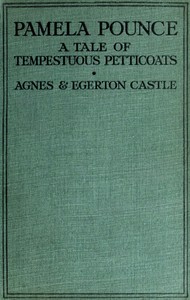
Reading The Things Which Belong, I kept thinking about how much silence can hold—all those unspoken things between two people who’ve shared decades. There’s a similar undercurrent in Pamela Pounce: A tale of tempestuous petticoats — Themes and Context, though with more rustling fabric. Both leave me a little wistful for the weight of what never gets said aloud, only carried.
There are no reviews for this eBook.
There are no comments for this eBook.
Reader reflection
How will you remember this book?
Save your reaction, strongest insight, and memorable passage.
Your progress
0
/
10
2
How did the book work for you overall?
3
Would you recommend this book to another reader?
4
How demanding did the text feel?
5
Did the book offer a fresh perspective?
6
Would you start a conversation about this book?
7
What did you think about the pace?
8
Could you apply anything you learned?
9
What did this book teach you most?
10