1

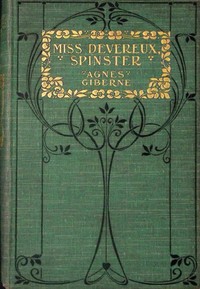
Miss Devereux, spinster — Reading Companion
(0 User reviews)
623
Project Gutenberg
2024
Not confirmed
England -- Social life and customs -- 19th century -- Fiction; Villages -- England -- Fiction; Love stories; Guardian and ward -- Fiction
Readers of public-domain and historical texts
Project Gutenberg digital edition
en
Edition facts
Words
124,932
Reading time
544 min
Text sections
11
Before opening Miss Devereux, spinster — Reading Companion, the edition data offers a quick orientation: 124,932 words, 9 hr 4 min estimated reading time, and 11 detected text sections.
The text analysis averages about 12.6 words per sentence, while the detected sections provide another way to judge how the source is divided.
Project Gutenberg metadata also associates the work with “England -- Social life and customs -- 19th century -- Fiction,” connecting these edition facts with the source record’s subject description.
Source:
Project Gutenberg record #72933
Agnes Giberne's 1893 novel traces Sybella Devereux's late-blooming independence through precise diction, dialogue, and descriptive contrasts, from a sheltered spinsterhood to the moral and social complexities of village and London life.
Editorial Edition Score
4.8/5
★★★★★
★★★★★
Calculated from edition completeness, EPUB availability, text structure and catalogue metadata. Not a user rating.
How this score is calculated
- Description quality20 pts
- Title & short description10 pts
- Source metadata20 pts
- Text length15 pts
- Chapters / structure15 pts
- EPUB file integrity20 pts
Total of 100 points, scaled to a 2.5-5.0 range. Editions with an empty description or a missing EPUB file are not scored.
Edition quality
Read the Text
I. A MIDDLE-AGED YOUNG LADY
VI. AN APPEAL AND ITS RESULTS
I. MRS. KENNEDY'S NOTIONS
III. HUSBAND AND WIFE
IV. A STRIFE FOR THE MASTERY
V. IN THE GORGE AGAIN
VII. AN UNWILLING WITNESS
XII. THE WIGGINSES AND MAIDENHAIR
II. OLD FATHER THAMES
III. AMATEUR CRITICISM
IV. THE PROCESS OF FORMATION
V. PROTECTOR AND PROTECTED
VII. THE SOCIAL BOARD
VIII. DARK-EYED EMMIE
IX. COMPLEXITIES OF LIFE
X. CONFIDENTIAL WITH THE DOCTOR
THE UPSHOT OF IT ALL.
II. THE "SPANISH GIPSY"
MISS DEVEREUX, SPINSTER
"A silent creature, thoughtful, grave, sincere." JEAN INGELOW.
A MIDDLE-AGED YOUNG LADY.
"Sensibility, how charming!" BURNS.
"IF only I had some one to tell me what to do!" sighed Miss Devereux, an anxious pucker wrinkling her forehead.
It was the first time in Sybella Devereux' life that she had ever had to stand alone.
The morning-room which she occupied was better fitted for summer than winter uses. Indian matting covered the floor; Indian drapery clothed the walls; light cane chairs of foreign make were scattered among tables no less fragile. This being June, a fringe of Gloire de Dijon roses peered in at the open French window. Had it been December, the morning-room would have been forsaken.
Sybella Devereux had taken one of the slight chairs, beside one of the flimsy tables. A writing-case was open, and two or three letters were outspread.
Few would have guessed her at first sight to be within a few months of forty. She had lived the sheltered life of many English daughters in easy circumstances—a life of moderate occupation, of small trouble or responsibility. Sybella had taken life as she found it. She was not a woman to carve out a career for herself in the face of circumstances. She counted herself delicate, and liked to be comfortable. If any latent force of character had existed in her originally, circumstances had tended to smother rather than to draw it out.
From babyhood she had been thought of, guarded, cared for, directed, never left to decide for herself. As an arm or leg will wither if tied up and not used, so the power of mental decision had withered in her from lack of exercise.
Years had trickled past in monotonous ease, and her girlhood had lingered long after the lawful stage, "dying hard." It was ample time for Sybella to be settling down into old maidhood; at least according to all laws of fiction. She did not, however, yet count herself to be an old maid.
There were no lines of grey in her hair; and if the cheeks were rather thin, rumpling into suspicious ridges when she smiled, that was only because she had always been "so delicate, you know!" She wore slight mourning for a sister-in-law, the wife of her only brother, who was expected home shortly from India; otherwise she would not have hesitated to sport a white dress with blue ribbons, as suited to the season.
That which marked Sybella as apart from the young ladyhood of the day was not so much any definite look of middle-age; it was rather a certain sentimentality, a self-conscious bashfulness, belonging entirely to a past generation. Girls of sixteen and eighteen growing up around Sybella were twenty times as practical, as independent, as much at their ease, as was she.
Sybella's father, Sir John Devereux, a kind-hearted and placid old gentleman, who, like his daughter, took life much as he found it, had died two years earlier. He left his small property of Ripley Brow, with the Baronetcy, to his son Theodore, a successful Indian civilian, stipulating only that his widowed sister, Mrs. Willoughby, for thirty-five years his companion and stay, should live there during the rest of her life. Theodore offered no objections to this proviso. Until the loss of his own wife broke him down, and destroyed the charm of India, he much preferred to stay there, leaving Ripley Brow to the management of his aunt and sister.
Or, rather, of his aunt. Sybella was the managed, not the manager. The loss of her father made little difference in this respect. She was still hedged round with care. She could still go on with her mild circle of occupations—her attentions to pet plants, her scraps of useless fancy work, her chit-chat calls upon neighbours, her epistolary gushes to bosom friends. The circle of occupations included also futile attempts at painting, fitful readings and copyings of poetry, dilettante dippings into social questions beyond her depth, and through all an unswerving devotion to her own health.
The novel opens with Sybella Devereux sighing, 'If only I had some one to tell me what to do!'—a line that immediately establishes her as a woman whose power of mental decision has 'withered from lack of exercise.' Giberne uses the morning-room's Indian matting and flimsy cane chairs to mirror Sybella's own fragility, while the June roses peeping in hint at a vitality she has yet to claim. The narrator's clinical observation that Sybella's girlhood 'lingered long after the lawful stage, dying hard' sets a tone of psychological realism that persists throughout the book.
Diction and the Spinster's Voice
Giberne's word choices consistently reinforce Sybella's arrested development. The phrase 'middle-aged young lady' from the chapter title is not merely ironic but diagnostic: Sybella is described as 'a silent creature, thoughtful, grave, sincere' in the epigraph, yet her own speech is marked by hesitations and appeals for guidance. The narrator's vocabulary—'sheltered,' 'monotonous ease,' 'latent force of character smothered'—creates a clinical distance that invites readers to see Sybella as a case study in the consequences of overprotection. In contrast, Madame Collier's dialogue is blunt and imperative: 'Now, young woman! It's my turn, if you please.' Her speech is peppered with exclamations and practical concerns ('Eleven packages—and—'), revealing a woman who has learned to assert herself through necessity. Giberne uses such contrasts to map the spectrum of Victorian womanhood, from the infantilized spinster to the ruggedly independent aunt.
Dialogue as Social Barometer
Conversations in the excerpts serve as precise indicators of class, intimacy, and power. Madame Collier's farewell scene is a masterclass in subtext: her gruff commands ('Keep off—trains are so dangerous') barely mask her grief, while her whispered exchange with Jem Trevelyan—'I am glad! Things do come about queerly'—hints at a private understanding the reader is not yet privy to. The frizzly-haired young women at the window, with their 'shrill voices,' are dismissed by Madame Collier with 'Now, young woman! It's my turn,' a rebuke that establishes her as unapologetically direct. Giberne also uses dialogue to expose social friction: the murmured 'What an old fogey!' from the platform is met with 'scant ceremony,' showing how speech can be a weapon of both offense and defense. These exchanges are never filler; each line advances character or relationship, often through what is left unsaid.
Descriptive Setting as Moral Landscape
Giberne's descriptions do more than set a scene; they encode the emotional and moral states of her characters. The morning-room, with its 'Indian matting' and 'light cane chairs,' is 'better fitted for summer than winter uses'—a metaphor for Sybella's own unsuitability for life's harsher seasons. The 'fringe of Gloire de Dijon roses' at the window is a rare note of beauty, but it is external, not of her making. In contrast, the railway station is a chaos of 'smoking carriage[s],' collisions, and 'frizzly-haired' crowds, demanding the very decisiveness Sybella lacks. Madame Collier's anxiety over seating—'Not too much in front. If there's a collision, people in front are sure to be killed'—reveals a mind habituated to risk assessment, a skill Sybella has never needed. The physical environments thus become extensions of the characters' inner lives, with Giberne using details like 'Indian drapery' or 'poke bonnet' to anchor her psychological observations in tangible reality.
Recurring Motifs of Constraint and Agency
Throughout the excerpts, Giberne returns to the imagery of confinement and release. Sybella's 'withered' power of decision is likened to an unused limb, a metaphor that recurs in the novel's preoccupation with physical and mental paralysis. The train journey, by contrast, is a space of movement and choice: Madame Collier counts and recounts her 'eleven packages,' negotiates her seat, and ultimately departs, however reluctantly. The phrase 'What has to be, has to be' becomes a mantra of resigned agency, acknowledging constraint while still acting. Giberne also uses the motif of the 'whisper'—Jem's murmured confidence to Madame Collier, the 'whiff of tobacco'—to suggest that crucial communications often occur in the margins of social life. These details accumulate into a subtle argument about the limited but real spaces for autonomy available to women in this world, even those, like Sybella, who have been trained to wait for instructions.
Readers attentive to Giberne's craft will find a novel that rewards close reading of its verbal and structural patterns. The author's choice to begin with a sigh and end with a departure is no accident; the trajectory from paralysis to motion is embedded in the very texture of the prose. Pay particular attention to the way minor characters—especially the blunt Madame Collier—serve as foils to Sybella's hesitancy, and to how descriptions of rooms and landscapes double as moral commentaries. The novel's title, with its pointed 'spinster,' is not a label but a question the narrative explores through every sentence.
That rainy afternoon, I kept returning to Sybella’s quiet rebellion—how a single precise sentence could shift a whole room’s mood. Later, thumbing the shelf for something lighter, I found The gray brotherhood — Reading Notes, and it felt like eavesdropping on a similar, murmured defiance among strangers. The rain never stopped, and neither did the two voices, almost conversing across a century.
There are no reviews for this eBook.
There are no comments for this eBook.
Reader reflection
What was your reading experience?
Capture what you thought, learned, and would like to remember.
Your progress
0
/
10
2
Did this book hold your interest?
3
Would you encourage someone else to read it?
4
How demanding did the text feel?
5
Could you see yourself revisiting this book?
6
How valuable was this book for your own interests?
7
Did any part of the book feel personally relevant?
8
How clearly were the main ideas presented?
9
What changed or sharpened your thinking?
10