
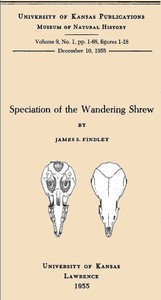
Speciation of the Wandering Shrew by James S. Findley
Let's be honest, the title 'Speciation of the Wandering Shrew' might not scream 'page-turner.' But trust me, James S. Findley crafts a narrative that's far more compelling than it sounds. The book follows the painstaking, often frustrating, work of a field biologist trying to solve a zoological puzzle. The 'Wandering Shrew' presents a paradox: physically identical populations are found in completely separate, isolated areas with no clear way they could have traveled between them.
The Story
The book isn't a novel with a villain and a hero. The 'story' is the scientific process itself. We follow the researcher from muddy field sites to quiet museum collections, measuring skulls, analyzing habitats, and comparing DNA long before it was a common tool. Each chapter feels like peeling back a layer of the mystery. Is it one super-species that survived ice ages in scattered refuges? Or have we been fooled by looks, and these are actually several distinct species that evolved to look the same? The tension builds not with car chases, but with each new piece of evidence that either supports or shatters the current theory.
Why You Should Read It
What I loved most was how it humanizes science. Findley shows the grit required—the failed expeditions, the years of meticulous note-taking, the thrill of a tiny breakthrough. It makes you appreciate the sheer amount of work behind a single line in a textbook: 'Species X is found in these disparate locations.' The shrew itself becomes a character, a resilient little survivor whose history is written in its bones and genes. It's a powerful reminder that wonder and big questions aren't reserved for galaxies and dinosaurs; they're crawling through the leaf litter right under our feet.
Final Verdict
This isn't a book for everyone. If you want a fast-paced thriller, look elsewhere. But if you're curious about how we understand the natural world, if you enjoy stories of quiet obsession and discovery, or if you're a fan of writers like David Quammen or Helen Macdonald, you'll find a lot to love here. It's perfect for nature lovers, aspiring scientists, or anyone who likes a real-life mystery solved by patience and perseverance, not luck. You'll never look at a small, scurrying creature the same way again.
This is a copyright-free edition. Distribute this work to help spread literacy.
Patricia Thompson
1 year agoRecommended.
Elijah Hill
4 months agoClear and concise.
Kenneth Martin
1 year agoBased on the summary, I decided to read it and the atmosphere created is totally immersive. This story will stay with me.
Charles Davis
2 months agoFive stars!








William Anderson
4 months agoThe clarity of the concluding remarks is very professional.